Commercial Roofing Along Braselton’s Highway 211 Corridor
Home / Service Areas / Braselton Highway 211 Corridor
Braselton Highway 211 Corridor
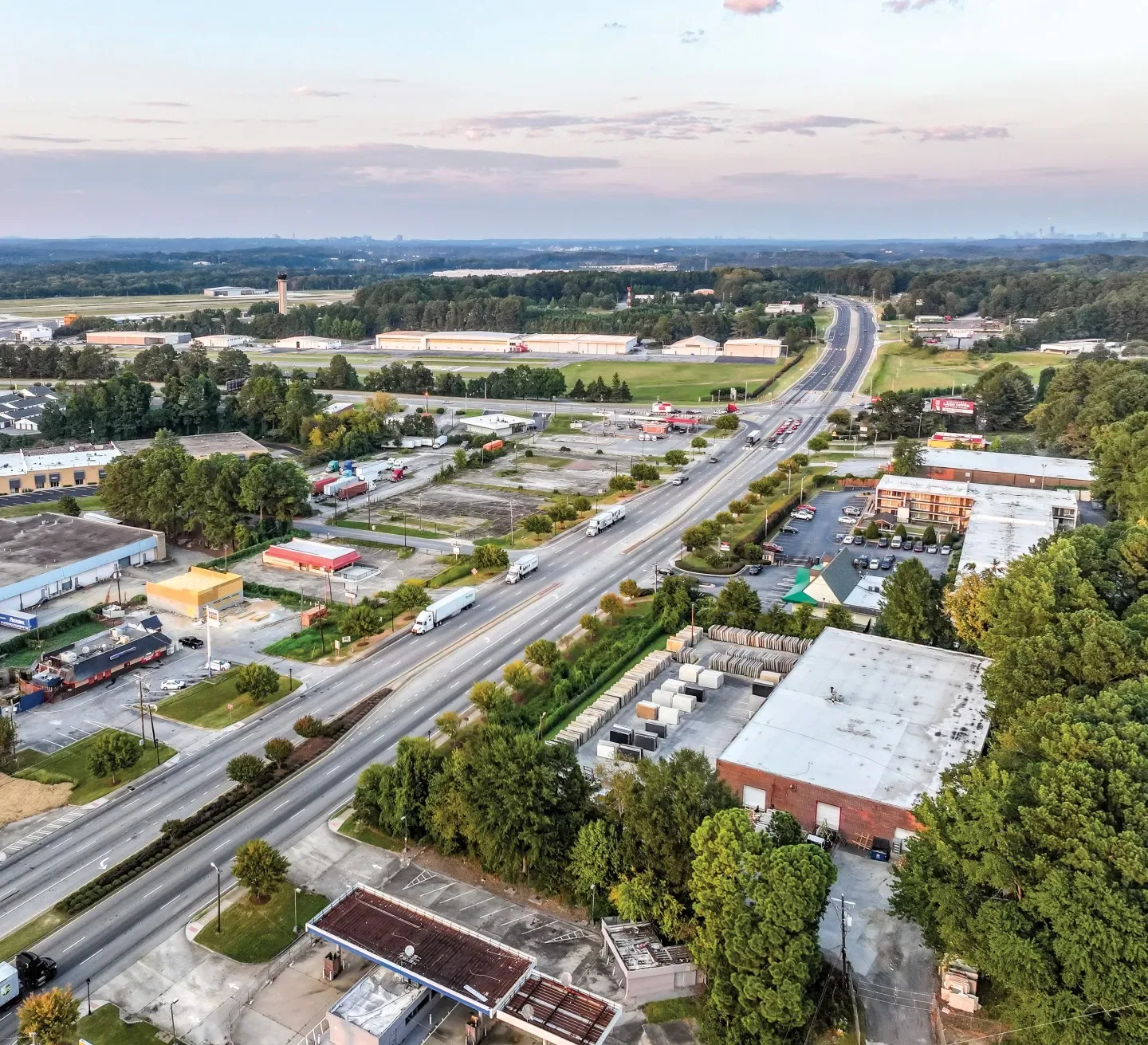
Braselton’s Highway 211 corridor includes commercial development and connections to the town’s wider I-85 logistics network. Town planning describes commercial growth along Highway 211 and industrial and warehouse uses near I-85, making truck and customer circulation part of roof-work planning. We confirm the selected property’s building, loading route and work contact before mobilizing. We identify the building in scope, measure its roof, map drains and edges, and confirm delivery and dock constraints with the property contact. Work is phased by roof zone so truck circulation remains available and each opening can be secured within the shift. Any concealed condition is documented for owner approval before the scope changes.
Keep trucks clear of the work zone
Commercial activity and freight movement make circulation a primary item to review before a roofing delivery. We confirm the building entrance, truck turn, receiving window and route to the laydown area with the facility contact. Staging is planned so insulation, membrane and removed material do not occupy a loading path or emergency route. If a crane pick is needed, setup, lift timing and pedestrian control are reviewed separately. The property contact identifies shifts, active docks and equipment that must remain accessible. A property along Highway 124 or near I-85 is separate from a Highway 211 address and cannot stand in for its access route. The same applies to East Jackson Industrial Park and Downtown Commerce, which have their own facilities and contacts. We record the specific building before materials are ordered.
Survey the property in scope
The town’s planning documents describe activity across several commercial corridors; we measure the selected roof planes and drainage before estimating materials. We measure the selected roof and inspect membrane, seams, perimeter metal, walls, curbs, penetrations, drains and scuppers. Photos are tagged by roof zone so the facility can review each defect. We check whether ponding, open seams or punctures are isolated or part of a larger failure. If insulation moisture, deck condition or existing attachment is concealed, we recommend a test cut or targeted survey before pricing removal. A recover depends on layer count, drainage, edge height and the assembly below. A drone roof survey establishes visible conditions, and a due-diligence survey records confirmed findings and open tests. Truck turns, receiving hours and property access inform delivery planning; we measure roof areas and inspect deck conditions at the selected building.
Compare repair with full replacement
A local seam or flashing can be repaired where adjacent membrane and substrate remain sound. If water reaches insulation, attachment is failing or deck deterioration extends beyond one detail, replacement may be more appropriate. Recover is evaluated after layer count, deck, drainage and perimeter details are checked. Coating requires a compatible and dry roof. We explain how the inspection supports each option and list cost factors: roof area measured in the field, tear-off, disposal, insulation, deck repairs, edge details, equipment and access around active loading. Any concealed condition that might change scope is shown before work. A membrane-puncture repair may address a leak documented during the survey; a recover evaluation accounts for broader failure and its effect on dock operations. The written proposal separates emergency protection, permanent repairs and quantities that still depend on testing.
Phase by dock and roof section
Each phase links a roof zone to a loading area, interior protection plan and time when the tie-in must be closed. The facility contact approves dock access, notice, equipment interruptions and any movement restriction before mobilization. The crew removes only the area it can protect and dry in during the shift, then installs the specified assembly and checks drains, curbs and perimeter details. Material delivery follows the ready section, reducing roof storage and avoiding dock conflicts. Should removal uncover a deck or insulation condition absent from the survey, we secure that section, record the change and wait for written scope direction. An multi-building phasing can set notices and shift handoffs; penetration flashing review schedules service access before new membrane is closed around a unit. The property contact receives updates before any crew or truck moves to another zone.
Although Highway 211 connects multiple business properties, each roof needs a separate survey and work map. Our field survey records roof dimensions, assembly layers, drainage and edge details so quantities and system options reflect the actual structure. We confirm which building is in scope, identify the loading doors and truck courts that must remain available, and sequence work by a roof section that can be secured within the shift. Where ownership or tenant use differs between buildings, approvals and closeout stay separate. This keeps one facility’s quantities, access plan and leak history from being applied to the second structure.
Protect each opened section
Before a roof section is opened, the supervisor names the amount of membrane that can be covered before the shift ends and stages its temporary cover. Temporary cover is staged and a facility contact is named to call a weather hold. The field lead checks conditions, secures material and closes the tie-in before leaving the roof. If rain, lightning or unsafe wind approaches, the crew stops at the approved limit, protects exposed areas where conditions allow and reports the secured boundary. The next delivery is timed with facility operations. Warm-season storms can affect commercial work windows; we phase each roof section around a secure dry-in point and inspect reported impact before setting repairs. For water entering an occupied area, wind-damage response can be documented separately from the permanent repair and any test needed after protection is in place.
Close out the selected corridor property
At turnover, we inspect seams, flashings, drains and tie-ins, then attach photos to the roof-zone map and building identity. The record lists completed work, materials identified from approved documents, inaccessible areas and any open testing. Temporary protection is marked separately from permanent repair. The facility contact confirms the dock and delivery route are clear before barriers are removed. If the second building or a later phase remains, the next work boundary and access window are specified separately. A Highway 211 property and an I-85 distribution site are separate locations, even when the same owner manages both. Each inspected property receives its own roof-zone map, repair history and closeout record for maintenance planning. Book a Highway 211 roof walk to identify the building, map its access route and establish the dry-in boundary before quantities are prepared.
At turnover, the roofing lead and facility contact walk the completed zones and verify that dock canopies, drains, roof hatches and service paths are clear. We provide photographs tied to roof areas, summarize the installed assembly and record any manufacturer inspection or warranty step still pending. If work was completed in multiple shifts, each day’s stop point and protection condition is included so the owner can trace when a section was exposed and secured. Open items are assigned to a named contact with a target date; they are not folded into a generic completion record. This gives operations and maintenance teams a clear basis for future roof access.
Related Roofing Work
Frequently Asked Questions
Does corridor development acreage establish roof area?
No. Development area describes land or building context. We measure each roof directly and verify the structure and details before setting quantities.
How do you prevent roofing delivery from blocking truck docks?
The facility contact approves the route, laydown area and receiving window. We match deliveries to the phase that can use them and keep active circulation clear.
Does a warehouse use tell you the roof deck construction?
No. We inspect the assembly and verify deck and attachment conditions during the roof survey.
Can two Highway 211 properties be scheduled together?
Only after each contact confirms access and operating windows. We keep measurements, scopes and work-zone plans tied to the individual building.
What if tear-off exposes a different assembly?
We pause at the exposed limit, photograph the layer transition and get approval for any added removal before the crew advances.