Commercial EPDM Roofing in Athens, GA
Home / Roof Systems / Commercial EPDM Roofing
Commercial EPDM Roofing
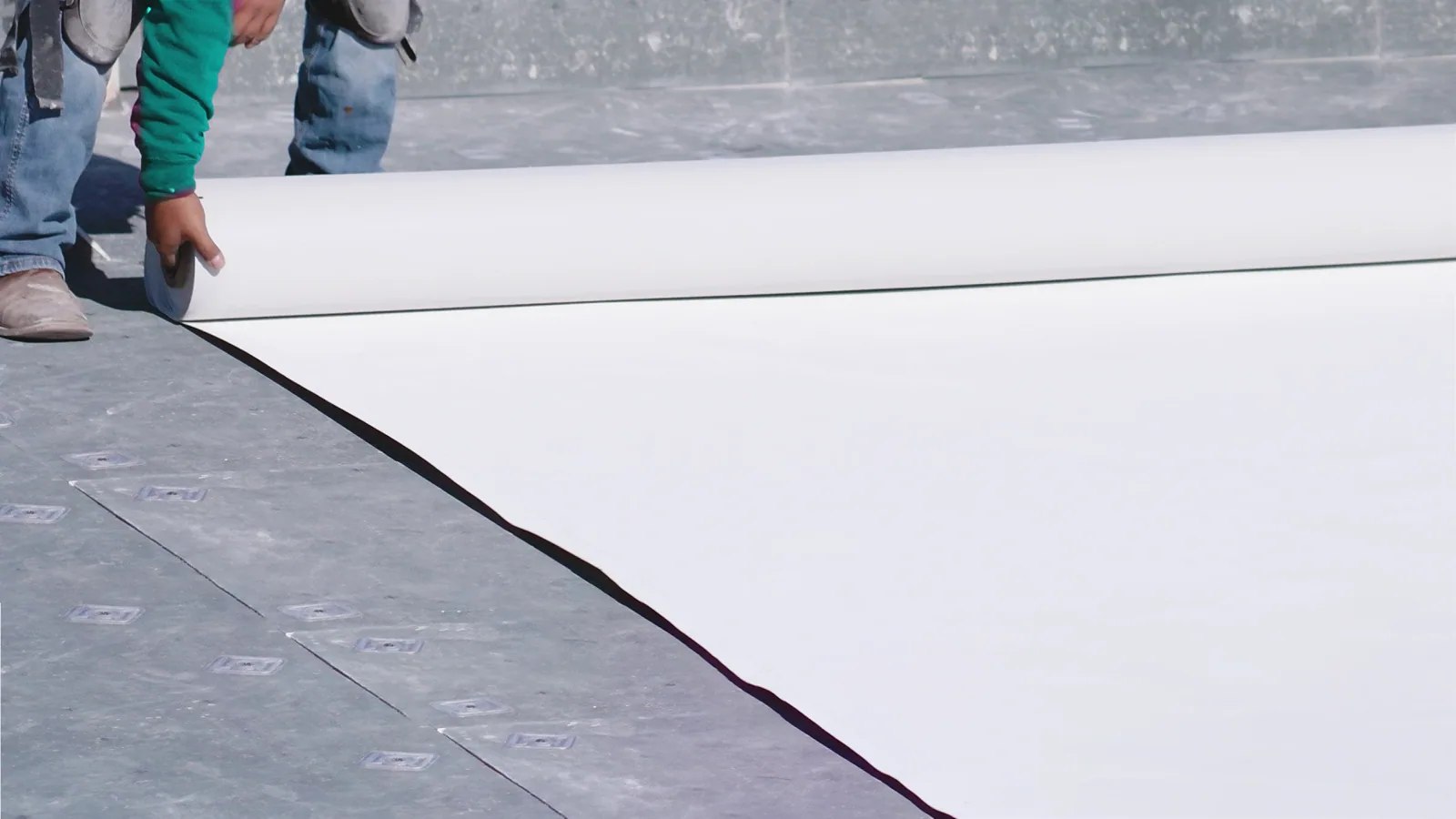
A wide EPDM sheet can cover a broad low-slope area, but the roof performs only as well as its seams, edges and penetrations. We check existing membrane, deck, insulation and drainage, then select an attachment method and detail package for the building. Downtown Athens properties may have narrow staging and pedestrian routes; an institutional roof near the UGA Health Sciences Campus may require escorted access and equipment coordination. The manager confirms the work window before material arrives. A roof inspection records the assembly and identifies areas needing repair before new EPDM is considered.
Select the sheet and attachment
EPDM is a synthetic rubber membrane commonly installed in large sheets over an approved substrate. It may be mechanically attached, adhered or ballasted where the project and roof design permit. We review the deck, insulation, wind design, perimeter zones and roof access before specifying the approach. Sheet size and layout affect seam placement, so the plan should avoid unnecessary joints near drains, equipment or areas that will need service.
Before recover or replacement, we inspect visible edges and make test openings when concealed layers affect the decision. Wet insulation, loose membrane, damaged deck or multiple existing layers may call for removal rather than another layer. A cover board and insulation plan identifies the base, attachment and finished elevation. If an overlay is being considered, recover review should establish moisture and code conditions before the sheet layout is approved.
Build seams and flashings as a system
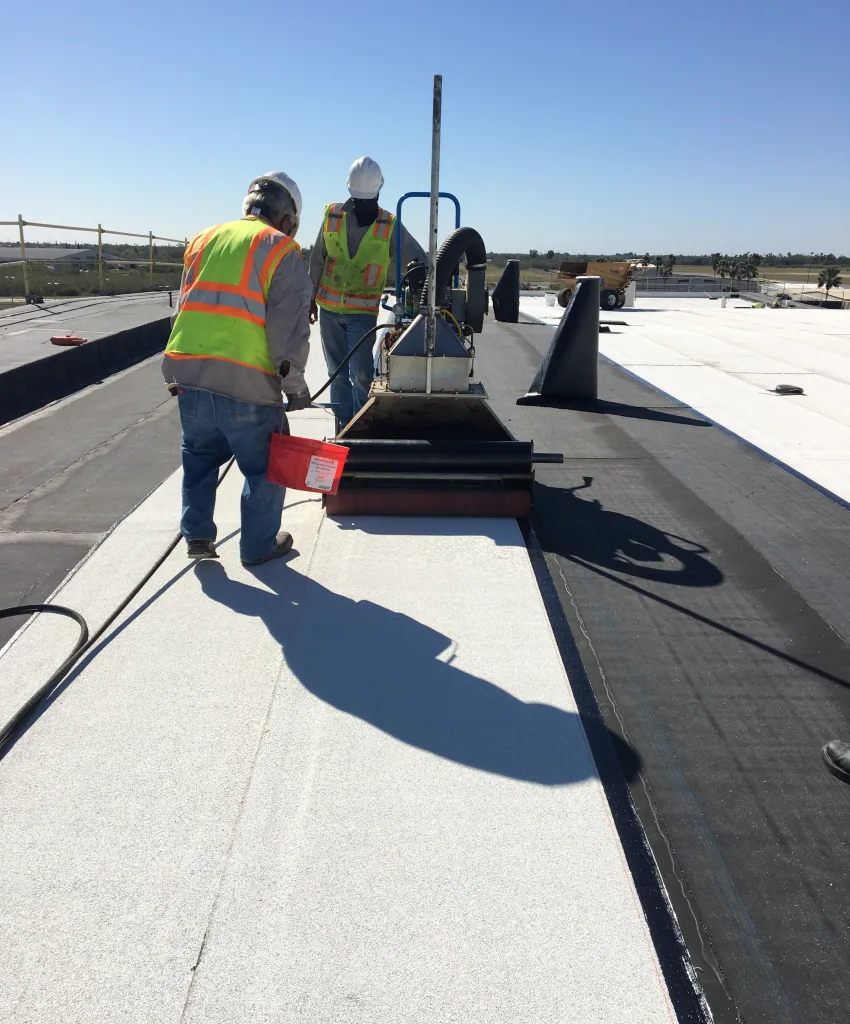
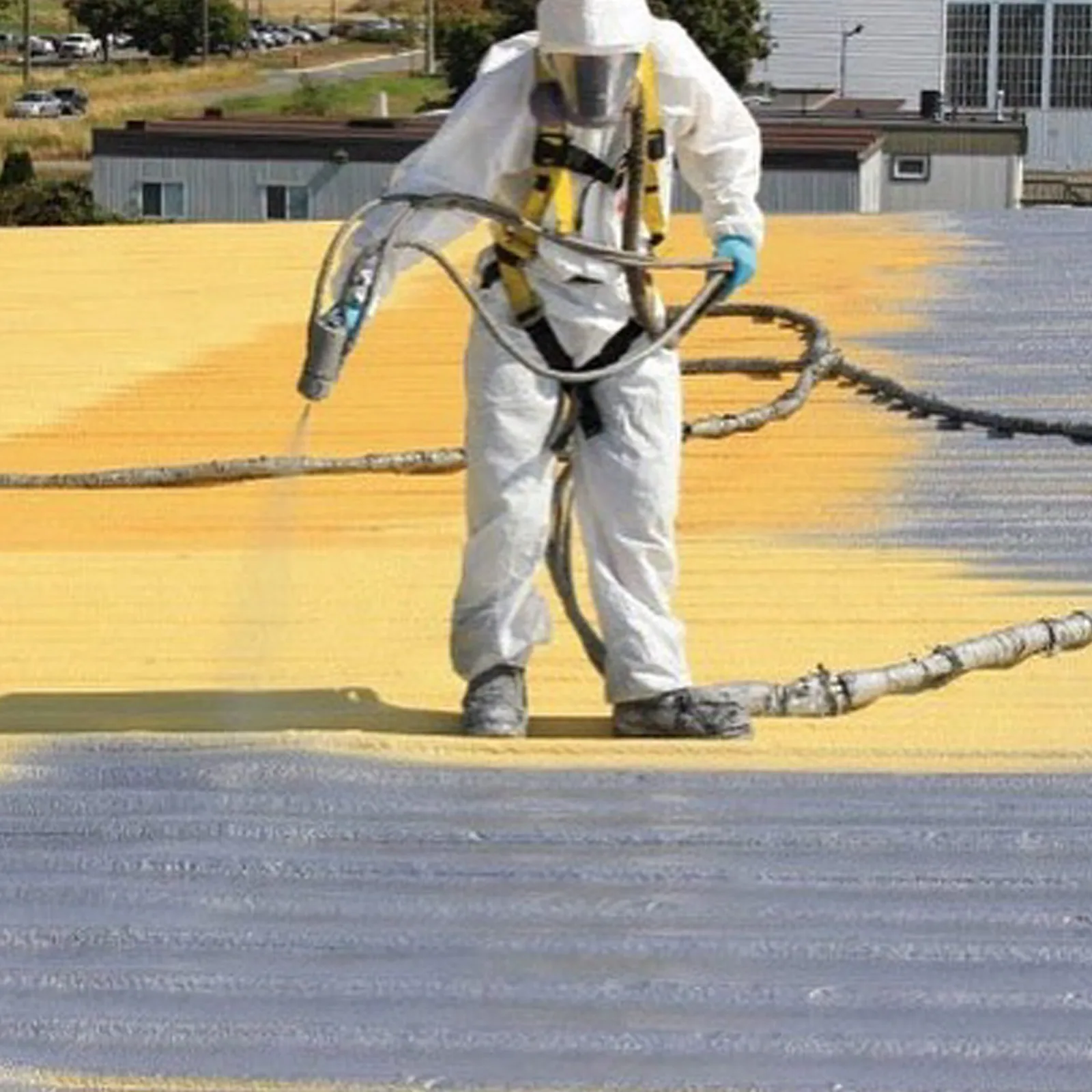
EPDM field seams use compatible joining methods and careful surface preparation. The crew cleans and primes lap areas where specified, applies seam tape or adhesive, and rolls the connection to achieve contact. Corners and changes in plane need separate detail work. We check lap alignment, adhesion, terminations and patches as installation advances rather than waiting until the entire sheet is in place.
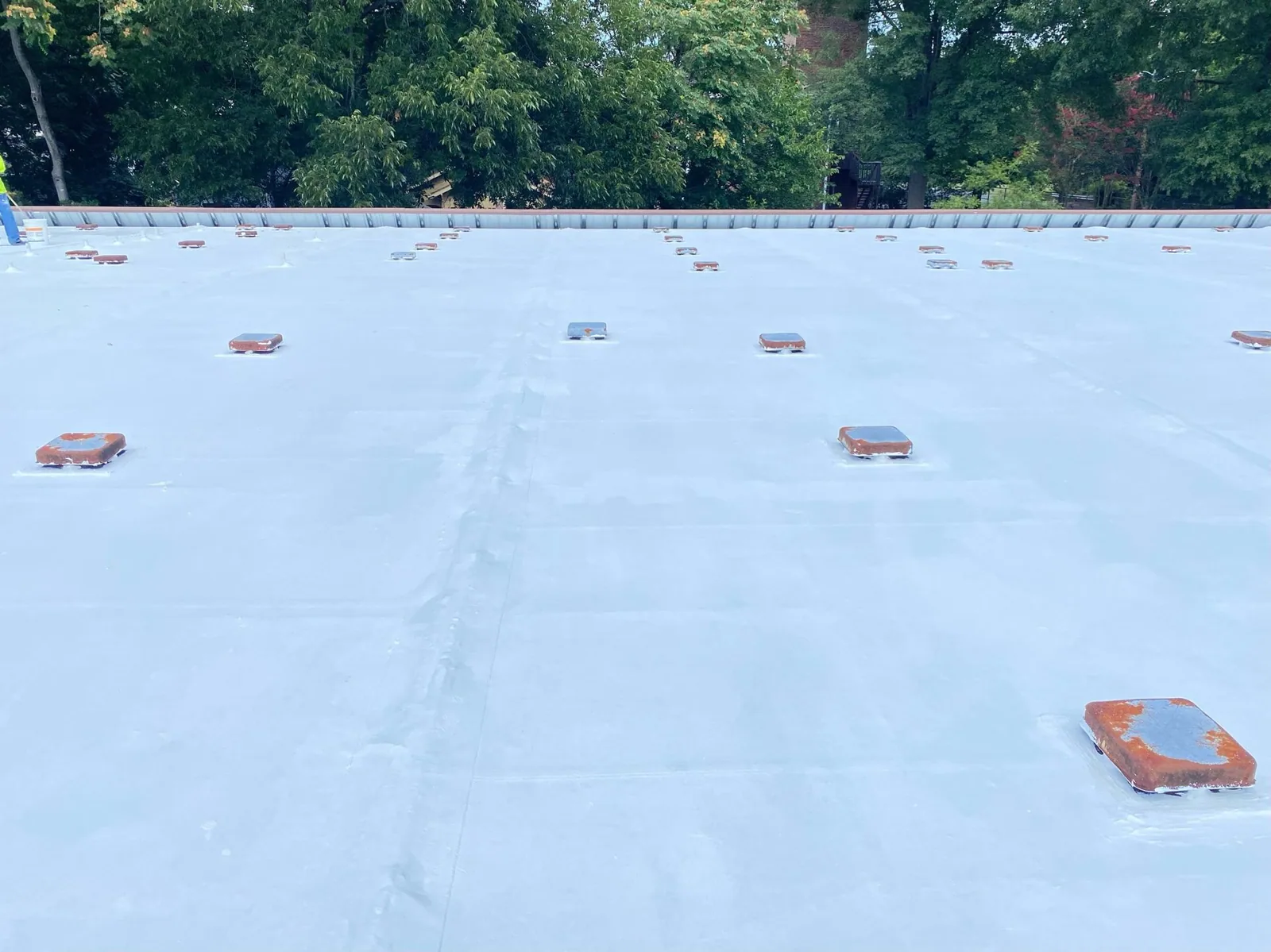
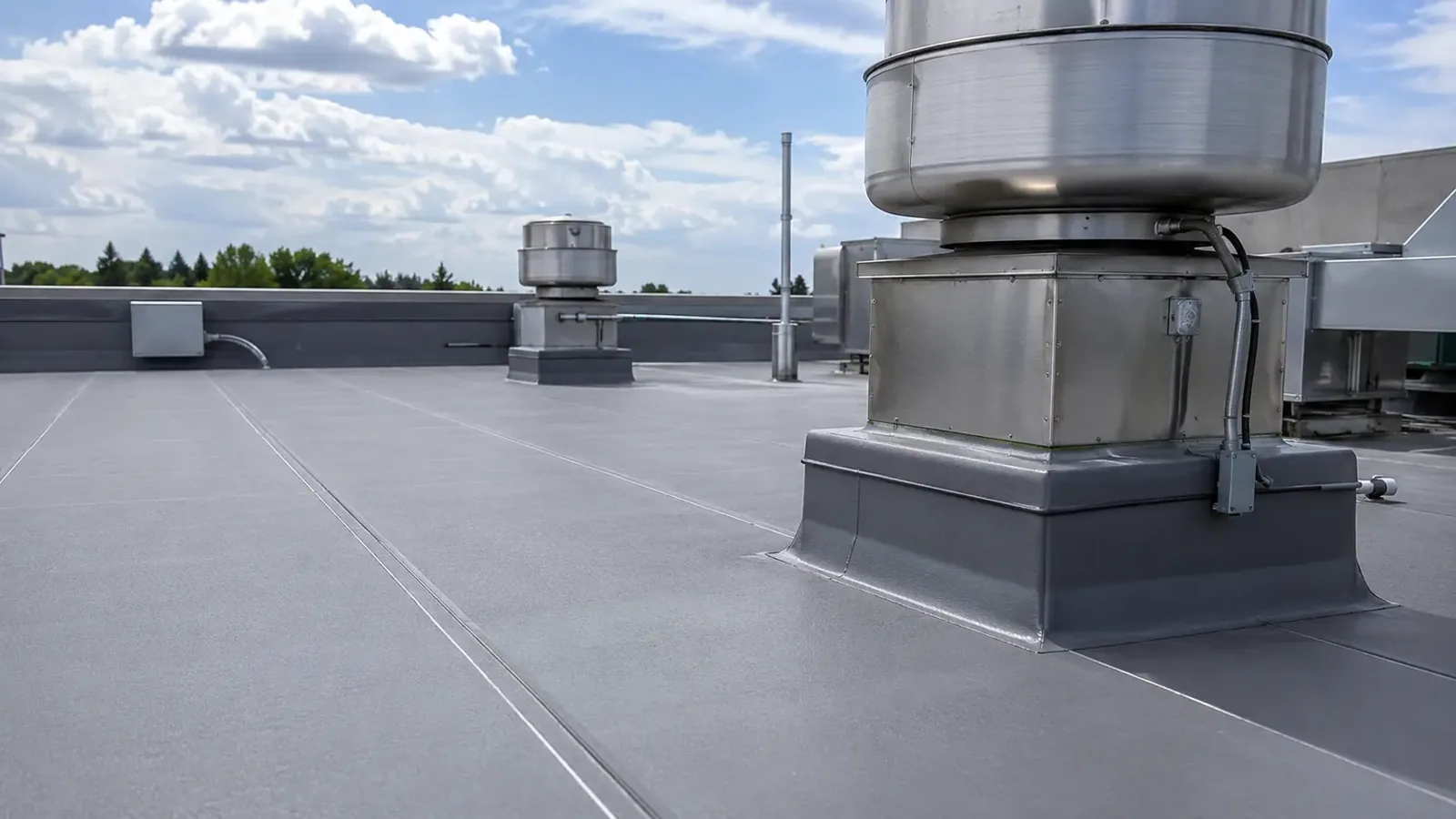
Flashing at curbs, pipes, skylights and walls connects the field membrane to the opening. We inspect where water can collect and how the membrane terminates at the edge. A drain assembly needs a secure connection at its bowl, and an edge needs attachment that holds through wind exposure. A drain and scupper scope or perimeter repair can be coordinated with the EPDM installation so all interfaces are included.
Choose a dry installation window
Adhesives, primers and seam materials have installation conditions that must be met. Athens’ humid summers and warm-season thunderstorms mean crews review surface moisture, temperature, wind and forecast before opening a roof area. We size the section to the labor available, complete the tie-in and protect the edge before rain arrives. If the substrate is wet or conditions fall outside product requirements, the crew pauses rather than bonding material to an unsuitable surface.
The work plan records the weather hold point, dry-in method and area expected to be complete at turnover. After hail or strong wind, we inspect the actual roof and do not assume that a regional event damaged a particular membrane. If the roof is already installed, a storm assessment can document visible movement, punctures or seam concerns. The manager gets a route for staging, material delivery and access before the crew mobilizes. At turnover, the field lead checks laps, temporary protection and drains, then tells the contact which roof section can receive follow-on work.
Protect the occupied operation
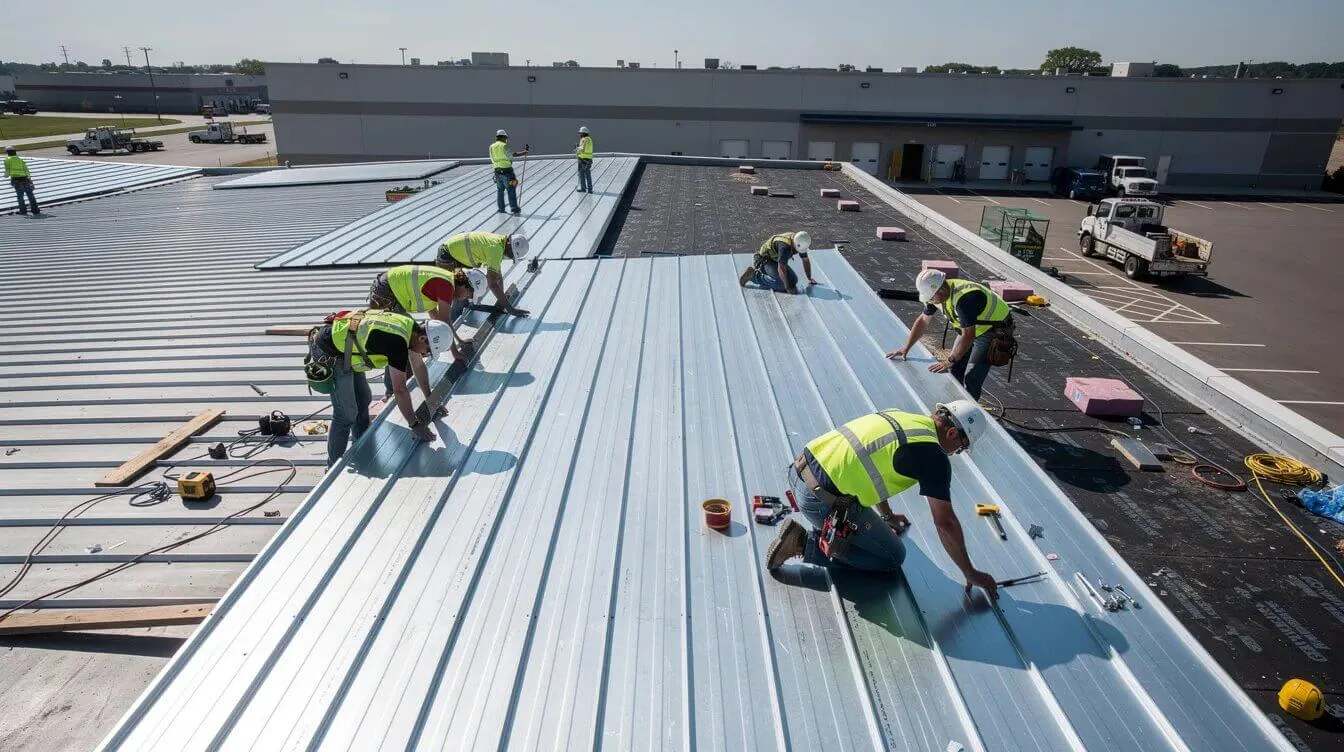
EPDM installation can involve adhesives, lifts, sheet movement and daily roof access. We coordinate the laydown area, delivery time, equipment clearances and pedestrian route with the property contact. At Piedmont Athens Regional, the facility manager identifies clinical and service routes; around the Downtown Athens commercial district, staging may need to account for sidewalk or loading access. Each building’s actual rules govern how the work is phased.
On large roofs, sections are released in sequence after substrate review and seam inspection. The crew keeps drains clear, protects rooftop units and records any area that could not be completed. If the project uncovers moisture or deck damage, the affected section is secured while the owner reviews the added scope. Final turnover includes the areas installed, details checked and any follow-up work not included in the EPDM scope.
Compare EPDM with other low-slope systems
EPDM uses different seam and flashing methods from heat-welded TPO, PVC and KEE. Modified bitumen and built-up roofing use multi-ply layers; coating systems are considered only on a suitable, prepared substrate. We compare these choices by deck, slope, exposure, access, maintenance needs and project criteria. A TPO alternative or modified-bitumen assembly may suit different conditions, and the proposal should state why the selected system fits the building.
For repair, we identify the existing EPDM product and compatible materials before patching. A split lap or puncture can often be addressed locally if surrounding material is sound, while widespread deterioration or wet layers may point to a larger roof scope. We can inspect the roof and compare replacement after documenting what remains below the membrane.
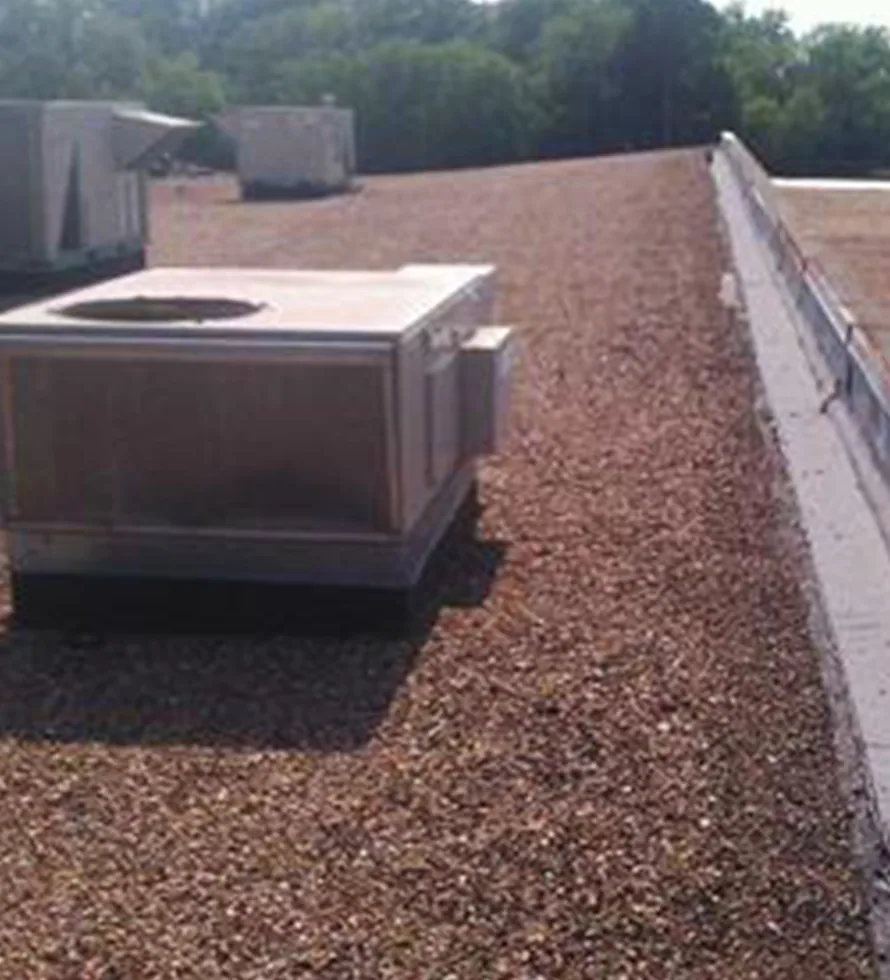
Attachment choice affects both the installation sequence and the roof’s response to wind loads. A fully adhered system, mechanically attached sheet and ballasted assembly each require a suitable substrate, edge restraint and approved design. Existing deck condition, building height, perimeter geometry and rooftop equipment all influence the specification, so a membrane name by itself is not enough to price the work. The estimate should identify the attachment method, insulation and cover board, perimeter details, flashings and any tear-off. That level of definition makes bids comparable and helps the owner understand what is included if hidden conditions change the scope.
Confirm the EPDM scope
Provide the address, roof plan, existing system records, leak history, insulation information and access limitations. We will inspect seams, drains, perimeter details and rooftop penetrations, then define the assembly and work boundary. If a building is occupied during installation, identify routes and hours that must remain available.
Commercial Roofing Athens can prepare an EPDM scope with sheet layout, attachment, flashing and phased installation described by roof section. Schedule a roof walk to map staging, weather holds and daily turnover before the material is ordered.
Frequently Asked Questions
How are EPDM seams joined?
Seams use compatible tape or adhesive with specified surface preparation, pressure and lap geometry. We inspect the finished joint and detail the corners and terminations separately. The installation record should identify any seam area that remains inaccessible or needs later review.
Can EPDM be installed over another membrane?
A recover may be appropriate if the existing roof is dry, stable and permitted to remain. We inspect the layers and can make test cuts to confirm moisture or substrate condition. A wet assembly or weak deck needs to be addressed before a new sheet covers it.
Is EPDM suitable for an Athens summer installation?
Work can proceed when surface, temperature, wind and product requirements allow proper bonding. Warm-season storms and humidity affect the schedule, so we protect the daily tie-in and pause if rain or wet surfaces interfere with installation.
What repairs are common on EPDM roofs?
Inspection may identify an open seam, puncture, loose flashing, drain detail or damaged edge. We verify the membrane and surrounding material before selecting a compatible repair. If the affected area is broad or insulation is wet, the owner may need to compare a larger replacement scope.
Does EPDM need special access planning?
The property contact should identify roof hatches, delivery routes, equipment service paths and occupied areas below. Large sheets and adhesives may require staging and lift coordination. We phase the work so completed seams and tie-ins can be protected at each turnover.