Commercial Roofing for Logistics and 3PL Operators in Athens, GA
Home / Industries We Serve / Logistics and 3PL Operators
Logistics and 3PL Operators
A dock schedule is a roof constraint when material trucks, lifts and warehouse traffic compete for the same approach. We walk the route with the facility contact, mark the laydown area and identify roof sections that can be isolated without blocking receiving or dispatch. Regional distribution assets include two rear-load buildings in Braselton 85 Phase II and industrial properties near Commerce. In Athens, a site in Athens Commerce Park has its own drive and delivery pattern. We document the roof, loading lanes and work boundary before pricing a phased reroofing scope.
Keep dispatch and roof access on separate paths
The mobilization plan starts at the gate. We identify truck turns, trailer parking, employee entrances, emergency lanes and where a crane can be positioned without occupying a dock approach. A facility contact confirms peak receiving periods, driver check-in rules and the route for maintenance staff to reach the roof. The crew’s material delivery and debris removal are then scheduled against those movements. For a multi-tenant property, the property manager identifies each operator who needs notice before a route or parking area changes.
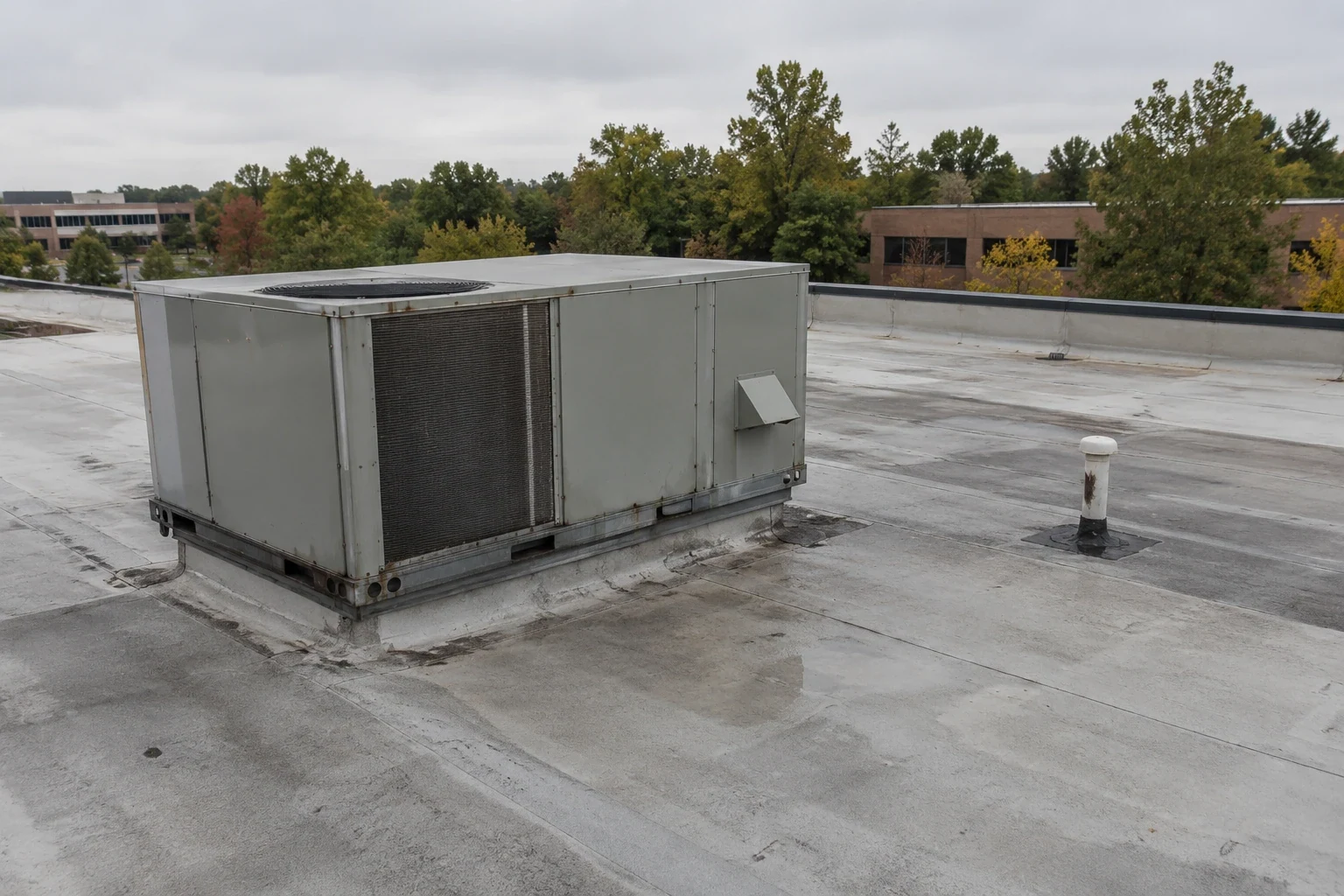
At a distribution building, rooftop units and penetrations may sit over active storage or picking areas. We record interior zones that need protection, the roof hatch route and any equipment shutdown window. Each phase names its start boundary, daily production limit and tie-in detail. If an aisle or dock must remain available, the schedule identifies the constraint instead of treating the entire building as a clear work area. A property-management contact can coordinate tenant notices while the operator owns the loading plan.
Trace leaks to the roof assembly
A wet carton, ceiling mark or floor report gives a location inside the operation, not necessarily the roof defect. We compare its time and position with the membrane above, then inspect seams, drains, curbs, wall transitions and earlier patches. The inspection record includes photos and the affected zone. If moisture may extend below the surface, we identify a test area instead of assigning a broad repair from an interior symptom. A moisture survey can help guide that investigation, with sampling used to confirm concealed conditions.
The roof map records existing system, drainage direction, equipment and access points by building. Braselton 85 Phase II is described as two rear-load distribution facilities with truck-trailer parking, while a local Athens property may have a different layout. Those facts help explain regional logistics activity but do not establish roof type or condition. We inspect the actual facility and verify which loading route, roof zone and interior operation are affected before selecting a repair or replacement boundary.
Stage material without losing the shipping window
Before delivery, we confirm vehicle dimensions, unloading area, crane pick location, hoisting path and storage limits. The work plan identifies when a lane needs a temporary restriction and which operator approves it. On a constrained site, material can be delivered in sequenced loads rather than occupying a dock apron for an entire shift. We include debris removal and daily cleanup so packaging and tear-off do not migrate into truck paths or customer pickup areas.
The roof assembly drives how the field sequence proceeds. A wet or unstable layer may require removal, while a dry and sound assembly could be evaluated for recover if code and deck conditions permit. We document curb heights, insulation transitions, drainage and edge details before the scope is released. A replacement plan sets a protected tie-in and a recover assessment records why existing layers may stay or must come out. The decision should match field evidence and the operator’s schedule.
A distribution schedule has fixed cutoffs that a roofing plan should protect. The facility lead identifies appointment windows, yard circulation, trailer staging and the doors that cannot be blocked, then chooses a laydown area outside those movements. If a repair reaches a dock canopy or a roof zone above active conveyance, the sequence names the owner who can approve a short pause. We document the delivery and dry-in times with each phase so dispatch can keep operating while the contractor works through a controlled boundary.
Hold the work at a safe stopping point
Athens has frequent warm-season thunderstorms, with regional risk from damaging wind, hail and tornadoes. We set a weather hold point, define how much roof can be opened and stage dry-in material before tear-off begins. The site contact receives notice if a forecast changes the work window. If the roof is not safe to access, crews do not continue into an exposed area simply to preserve production. The plan records the completed boundary and protects the operation below before the shift closes.
The dispatcher confirms safe access and the facility’s check-in rules. We inspect the affected area, apply temporary protection where conditions permit and document what remains for permanent repair. That record helps the next shift distinguish immediate stabilization from a planned capital scope and gives operations a location-specific update before normal dispatch resumes.
Return the dock and roof to operations
Turnover confirms the finished membrane and flashing, clear drains, removed debris and released access routes. We compare completed work with the phase map, photograph tie-ins and list any open item by roof zone. The facility contact can then verify that dock circulation, roof access and equipment service paths are back to the agreed configuration. If follow-up testing remains, the closeout identifies who needs to approve it and whether it affects a future delivery window.
For a portfolio with several distribution buildings, a common reporting format can make condition comparisons easier, but findings stay separate by address. A multi-site program can coordinate visit timing, while each roof keeps its own system record, quantities and loading constraints. We can also share the work sequence with a manufacturing operator managing adjacent facilities, keeping site-specific approvals intact.

Set a logistics roof walk
Provide the facility address, operating hours, dock calendar, roof plans and any rules for driver access or crane staging. We will trace the roof route with operations, document the assembly and identify which testing, lane restrictions or equipment windows control the work. That gives the schedule a defined first section and a realistic daily stopping point.
Commercial Roofing Athens can prepare repair, recover or replacement options with material delivery, weather holds and turnover included. Contact us to coordinate the walk with dispatch and maintenance before setting a mobilization date.
Frequently Asked Questions
Can reroofing happen without closing a loading dock?
A dock can remain in use when the approved phase and material route keep it clear. We map the specific turns, delivery periods and crane positions with operations before setting the daily boundary.
How do you protect inventory beneath the work?
We identify interior zones under each phase and agree on protection, dust and access controls with the facility contact. Any leak or exposed condition is logged by location and time.
What happens when storm timing changes the delivery plan?
The crew follows the weather hold point, secures the open area and tells the site contact what work is complete. The next material move is rescheduled after access is safe.
Can an existing distribution roof be recovered?
Only when inspection confirms the existing layers are dry, stable and suitable to remain, and the proposed assembly meets applicable requirements. Test results may change the recommendation.
How is roof status shared across multiple sites?
We can use a consistent report format, with separate maps, photos and action lists for every address. Each facility retains its own access, loading and shutdown decisions.