Infrared Roof Moisture Survey in Athens, GA
Home / Commercial Roofing Services / Infrared Roof Moisture Survey
Infrared Roof Moisture Survey
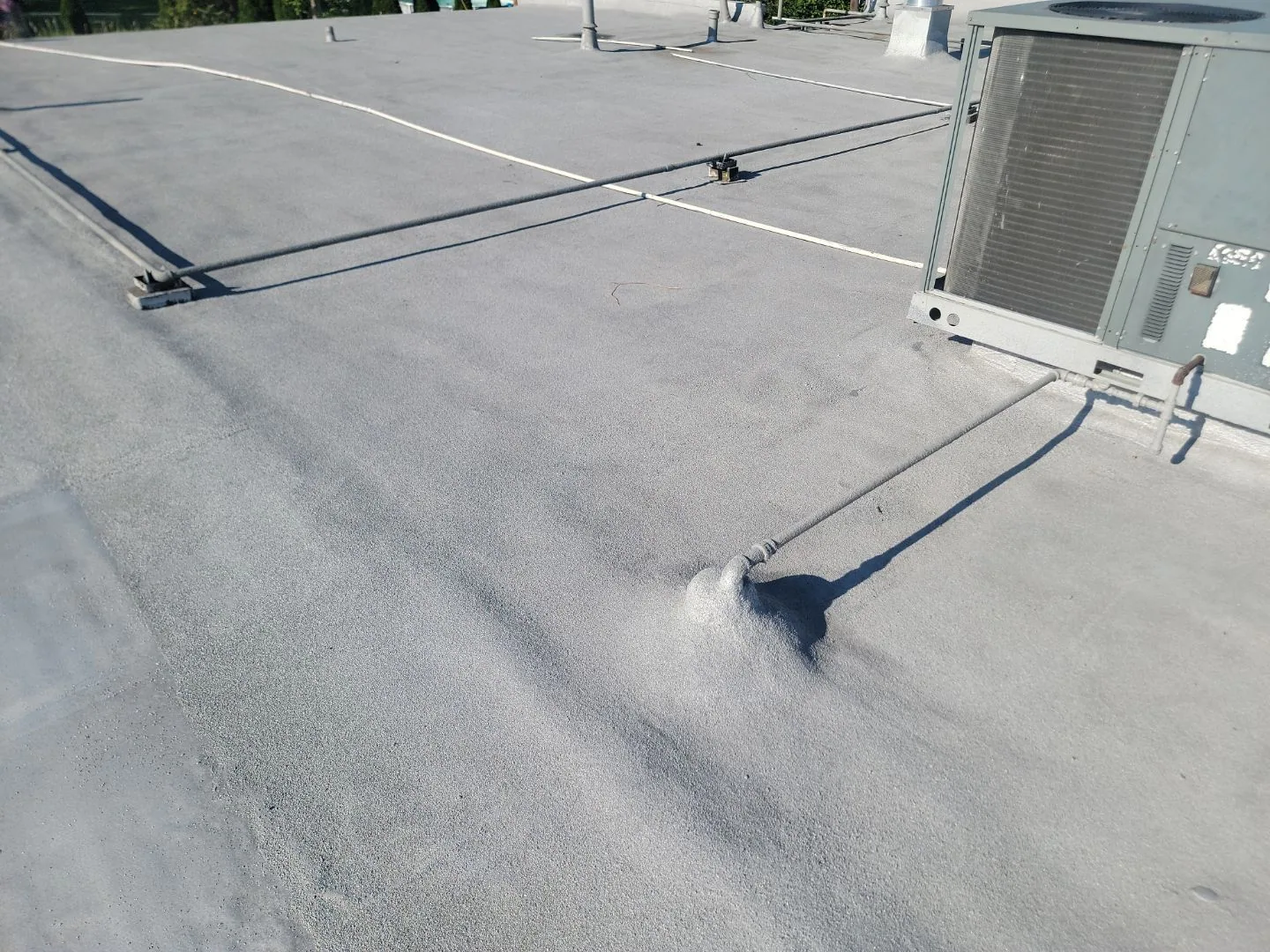
A temperature pattern on a roof is a lead for investigation, not a moisture diagnosis by itself. We plan an infrared survey around the roof assembly, weather, access and the question the owner needs answered, then identify candidate areas for confirmation. A broad campus such as UGA, with hundreds of buildings and varied facility uses, may require a defined building and roof zone; a retail property near Georgia Square needs a different access window and staging plan. The deliverable marks where readings warrant test cuts or hands-on review, so the owner can decide whether repair, recover or replacement is supported by the evidence.
Define the question first
Before collecting readings, we review roof plans, assembly records, previous repairs, interior leak reports and the owner’s decision point. Is the survey meant to locate suspected wet insulation, compare roof sections before replacement, or check areas where moisture may have traveled? The boundary should state which building and roof area are included and whether the scan is ground-based, drone-assisted or completed from the roof. If the property has multiple assemblies, each should be recorded separately so the result is not treated as one uniform surface.
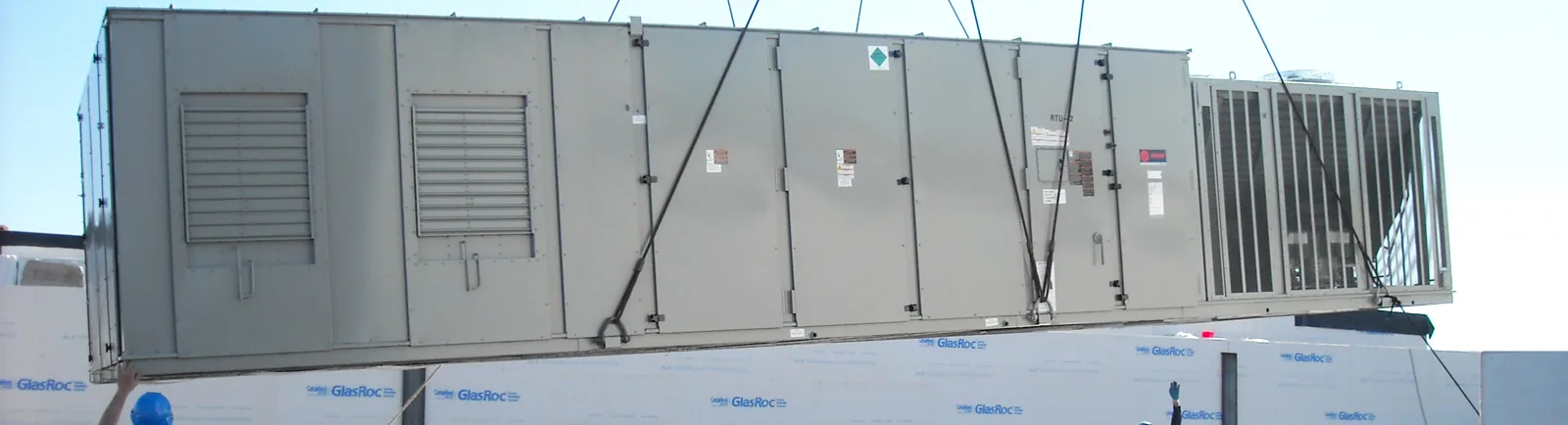
We also identify materials that can affect thermal readings, including rooftop equipment, reflective surfaces, shading and recent weather. Access to a roof hatch, safe walk path and permission for any aerial imaging must be arranged before mobilization. If the site is near East Athens commercial area or an active aviation route, drone operations need an airspace review and may not be available. The work plan establishes the method before a survey is scheduled.
Read patterns with context
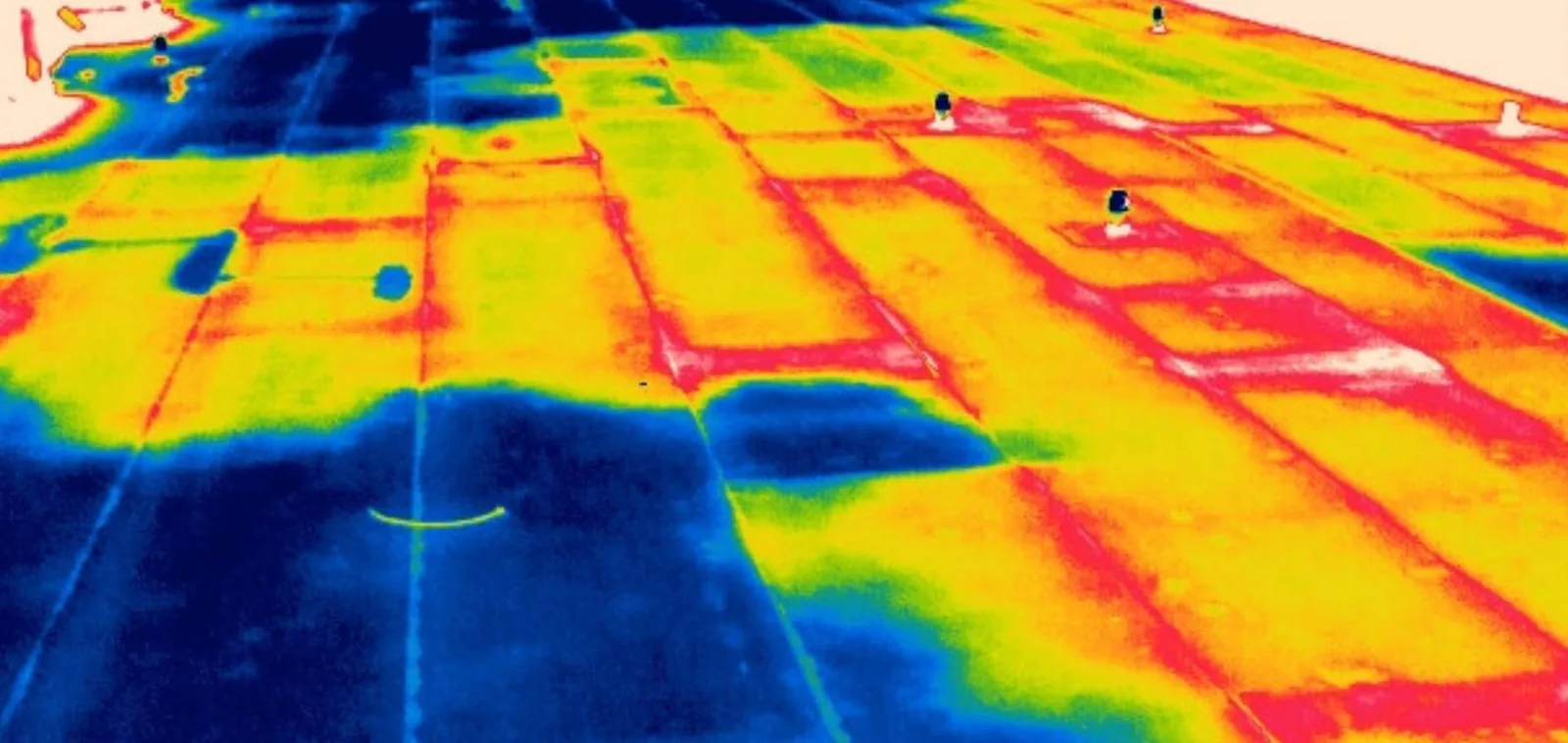
Infrared equipment records surface temperature differences that can help identify areas for closer investigation. A pattern may be consistent with retained moisture, but it can also reflect insulation changes, shadows, equipment, surface color or recent solar heating. We review the image against roof layout, time of capture, ambient conditions and visible field details. The interpretation records likely anomalies and limits rather than coloring every warm or cool area as wet.
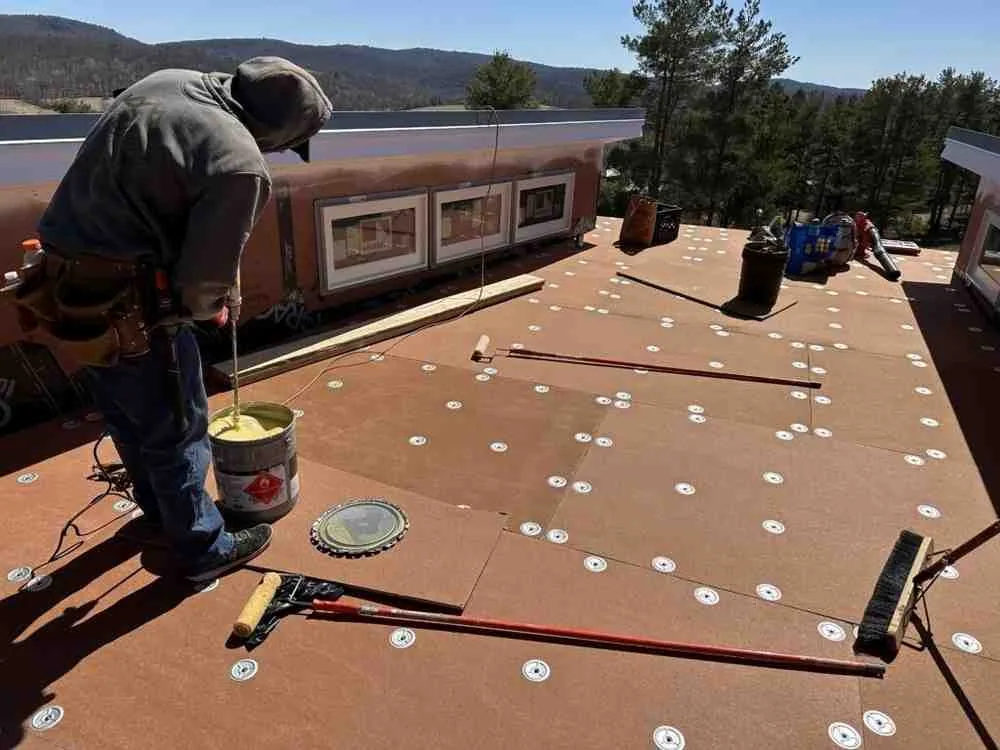
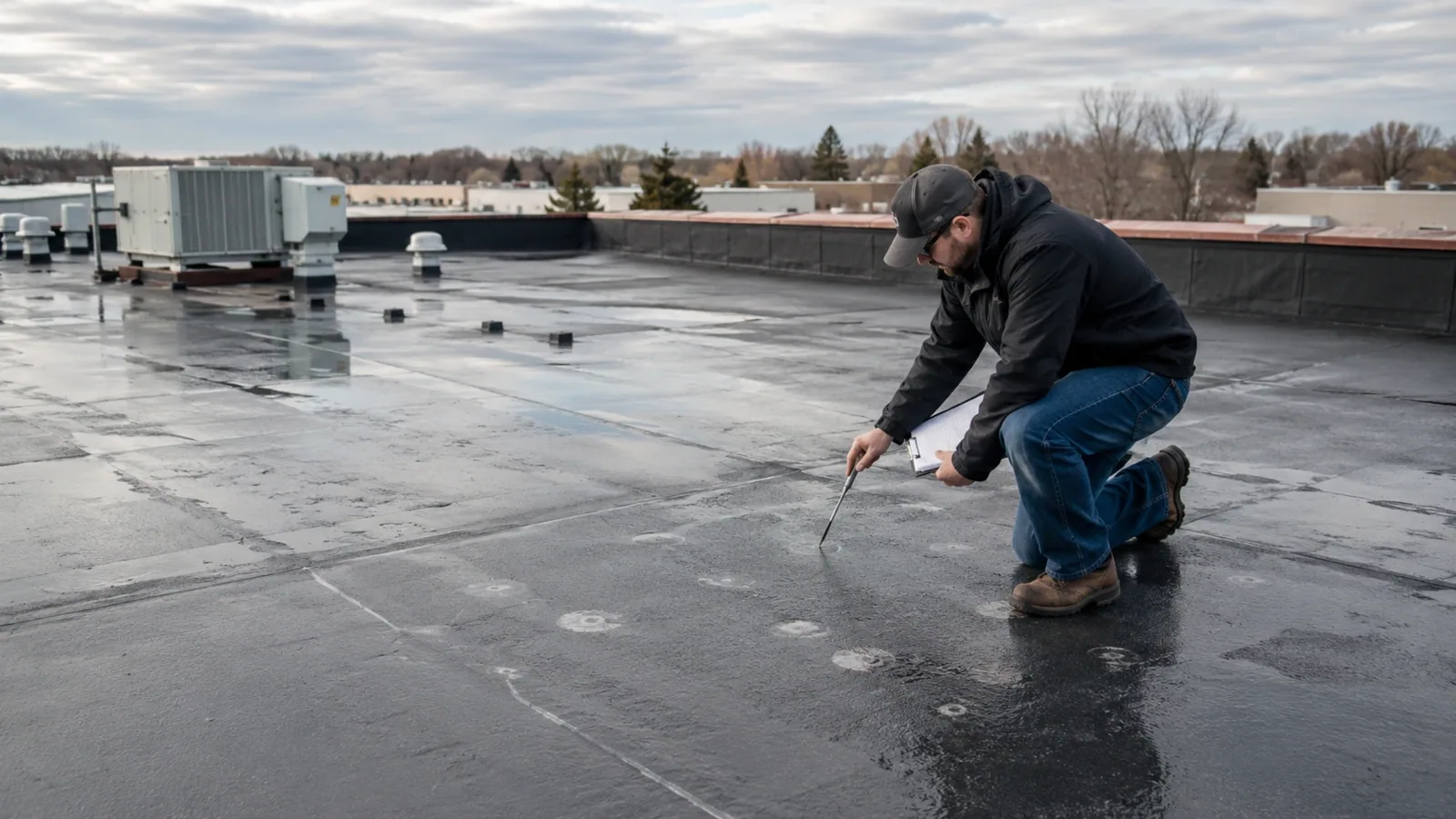
Where the survey supports further review, we mark target locations on a roof plan or image and make test cuts to confirm the layers. A test cut can show membrane, insulation and deck conditions at that point, while the scan helps select where confirmation may be useful. The survey is not a substitute for a hands-on inspection, and one confirmed wet location does not establish that every similar pattern has the same cause. We connect each finding to the specific roof zone tested.
Protect the roof during confirmation
Test cuts must be planned so the assembly can be restored after inspection. We mark each location, remove only the layers needed to view the assembly and document moisture or material condition before rebuilding the opening. The patch method must be compatible with the roof system and restore watertight continuity. If the test reveals wet insulation, we explain the extent visible at that location and identify whether additional cuts are needed before pricing removal.
For a membrane over insulation, test results should be combined with drainage, seam and flashing observations. Water can enter at a penetration, travel laterally, and collect away from the initial opening. We compare the suspected wet pattern with interior reports and roof details such as drains, curbs and parapets. If the scan finds no useful temperature contrast because conditions were unsuitable, we state that limit and recommend another method rather than forcing a conclusion from poor readings.
Choose a workable Athens window
Athens’ hot summers, humidity and frequent warm-season thunderstorms affect survey timing and roof access. We account for recent rain, solar exposure and changing cloud cover because surface heating influences the patterns being reviewed. Severe-weather conditions can also delay roof work and test cuts. The weather plan includes a hold point and dry-in method for every opening, so survey work does not leave a membrane exposed while conditions change.
The scope follows the building’s operations. A survey near Prince Avenue may need to avoid patient and service routes, while an industrial property at Coggins Park may have truck activity and controlled equipment zones. A manager identifies restricted areas, access contacts, delivery windows and roof equipment before we establish the route. For a multi-building owner, we rank requested areas and schedule each structure with its own contact rather than grouping addresses by proximity.
Turn readings into a decision
The report organizes images, marked anomalies, confirmation locations and test results by roof section. It separates confirmed wet material from areas that only showed a thermal pattern and records any inaccessible or inconclusive zones. The owner can then compare selective removal, a broader repair, recover or full replacement. A recover discussion should consider the amount and distribution of moisture, deck condition, existing layers, drainage and applicable code; a new membrane should not be used to conceal a wet assembly.
Cost and schedule depend on survey area, roof access, number of confirmation cuts, patching, removal boundaries, disposal and the chosen assembly. We explain those drivers before the work is authorized. If moisture is localized, repair or selective replacement may be considered; if the pattern spans large connected areas, we can compare a recover with full replacement. Any next scope lists the evidence it relies on and the conditions that remain unconfirmed.
Prepare the survey package
Provide roof plans, assembly information, leak locations, recent repair records, operating restrictions and the decision the survey should support. Identify the person who can approve test cuts and the locations where a patch must be completed before crews leave. We will confirm the roof sections, access method, weather window and whether aerial imaging is feasible for the address.
Commercial Roofing Athens can perform an infrared survey, mark areas for confirmation and explain what the readings establish. Schedule a roof walk to agree on the survey boundary, staging and operating hours. The completed record will keep readings, confirmed conditions and recommended follow-up distinct so the owner can choose the next step with usable information.
Frequently Asked Questions
Does an infrared reading prove that insulation is wet?
No. Thermal patterns can indicate areas worth checking, but shading, equipment, surface properties and recent weather can create differences too. We compare the scan with the roof layout and confirm selected locations with test cuts or other field inspection before defining wet material for removal.
How does a test cut fit into the survey?
A test cut reveals the roof layers at a specific marked point and helps confirm what the thermal image suggested there. We document each layer and restore the opening with a compatible patch. Additional cuts may be needed if moisture conditions vary between roof sections.
What conditions can delay the scan?
Recent rain, changing cloud cover, strong wind, thunderstorms or unsafe roof access can make readings or field work unreliable. We review conditions before mobilization and set a hold point. If the survey cannot produce useful information, we record the limitation and reschedule or recommend another inspection method.
Can this survey tell us whether to recover or replace?
It contributes evidence, but the decision also depends on the existing layers, deck, drainage, code requirements and distribution of confirmed moisture. We combine the readings with test cuts and roof inspection, then explain which sections support repair, recover or tear-off and what remains uncertain.
Can one survey cover several buildings?
Yes, when the scope identifies each address, roof zone, access contact and priority. We label results by building rather than blending readings from different assemblies. The owner should supply plans and operating limits for each structure so survey time and test locations can be assigned clearly.