Commercial Roof Leak Repair in Athens, GA
Home / Commercial Roofing Services / Commercial Roof Leak Repair
Commercial Roof Leak Repair
A wet ceiling in an operating building changes the next hour: protect people and equipment, contain the water, then arrange roof access to locate the entry. The stain may appear below a seam, drain, wall or rooftop unit without identifying which detail failed. The UGA Veterinary Teaching Hospital is one clinical and academic property in Athens, while Barnett Shoals Road is a county-identified commercial corridor through the city’s East Side. We confirm the building contact and entry route before roof access. We coordinate the initial response, trace the likely water path and separate temporary containment from the permanent commercial roof repair.
Protect the occupied space
Start by moving movable equipment, placing a suitable container under active drips and keeping people away from wet floors or ceiling materials that may be loose. The building contact identifies affected rooms, electrical or clinical restrictions, and any area that must stay open. A 24-hour emergency call should include the address, the amount of active water and a contact who can authorize entry.
Inside, we record when the water began, whether it changes with rainfall, and which rooms or equipment are affected. Photos from the interior help document the report, but the roof still needs inspection. If a ceiling tile is saturated or a fixture is involved, the property team handles any building-system safety issue before a roofer enters. Temporary measures limit additional exposure; they do not establish that the roof has been permanently repaired.
Follow the water to its entry
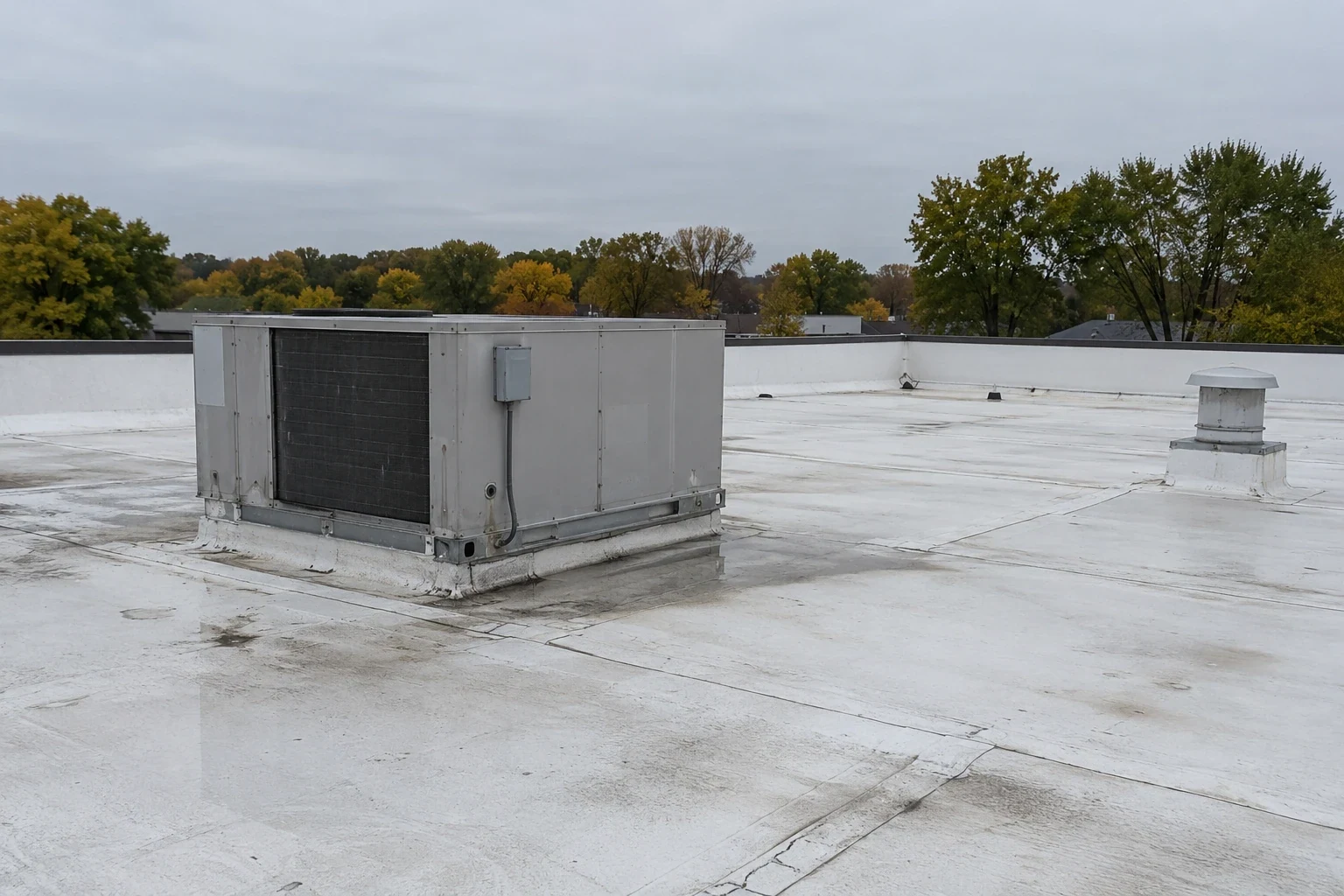
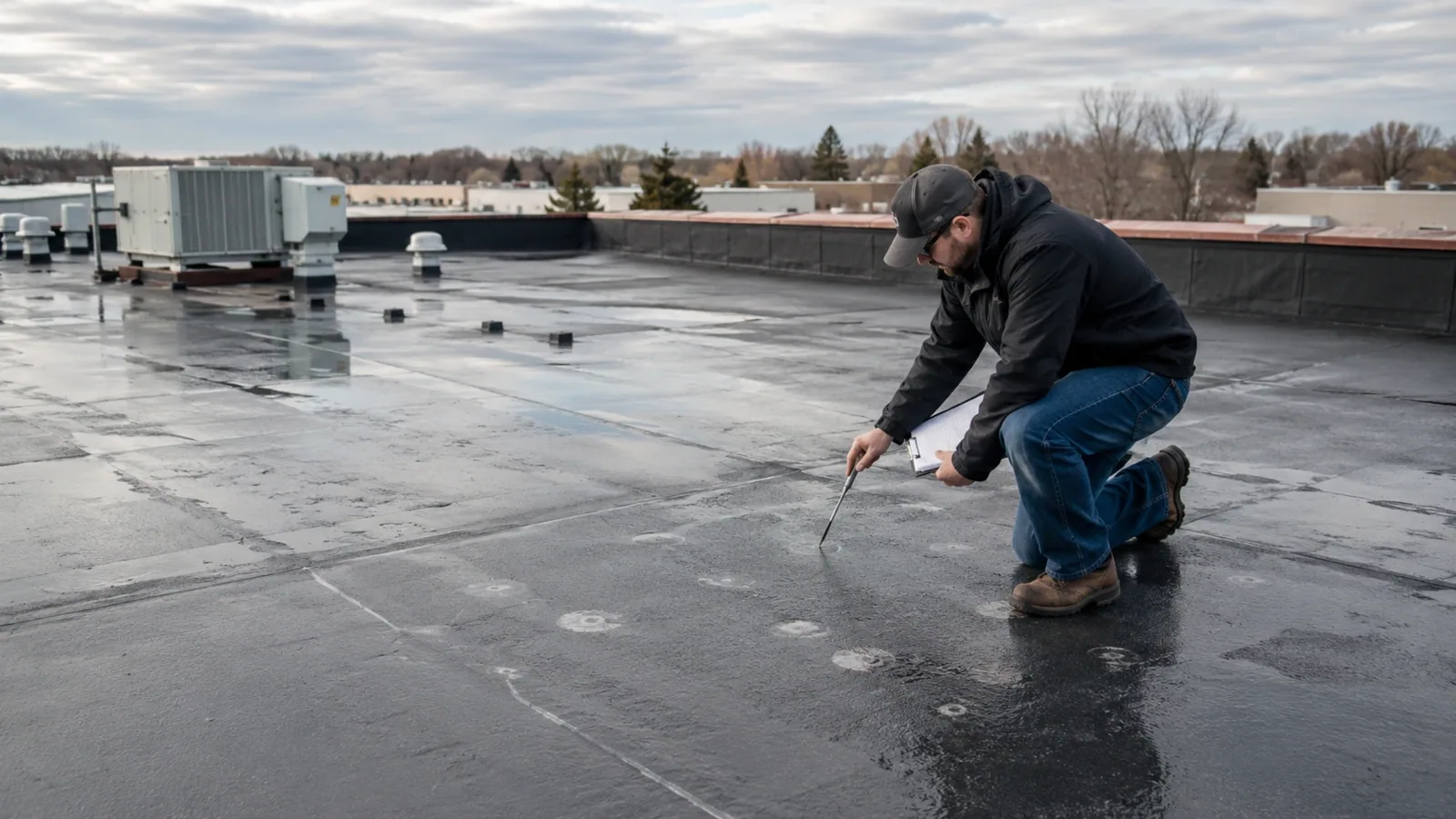
On the roof, we begin above and around the reported area, then inspect the route water could take across the assembly. Seams, penetrations, curb flashings, parapet transitions, drains and scuppers each create a different detail to test. Water can move laterally through insulation or along a deck before appearing inside, so a visible ceiling mark does not set the repair point. We compare roof conditions with the interior report and record the evidence supporting the likely entry location.
We also check adjacent sections for secondary openings and review whether ponding or blocked drainage is keeping water against a detail. Where the assembly is hidden or moisture may extend beyond the wet room, an infrared moisture survey can help prioritize test cuts. The survey is a tool for selecting locations, not a substitute for confirming what materials are wet. At the College Station Road commercial corridor, the service plan should include the building contact’s access and operating requirements.
Choose a safe dry-in
If rain is continuing or a permanent repair cannot proceed safely, we identify a temporary dry-in suited to the roof and weather conditions. The protection must be secured against wind, routed to shed water and checked at its edges. We record the location, installation and limits so the property contact knows what remains exposed. A temporary cover can reduce water entry, but it is not a permanent membrane repair and may need inspection after changing weather.
Athens sits in the north-central Georgia severe-weather region, where damaging thunderstorm winds, large hail and tornadoes occur annually. We set a weather hold point before material is opened and avoid leaving a roof section exposed beyond what can be secured. If the roof is wet, slick or subject to unsafe wind, the crew waits for safe access while the building team maintains interior protection. After the weather clears, we return to inspect the temporary work and determine the permanent scope.
Repair the detail that failed
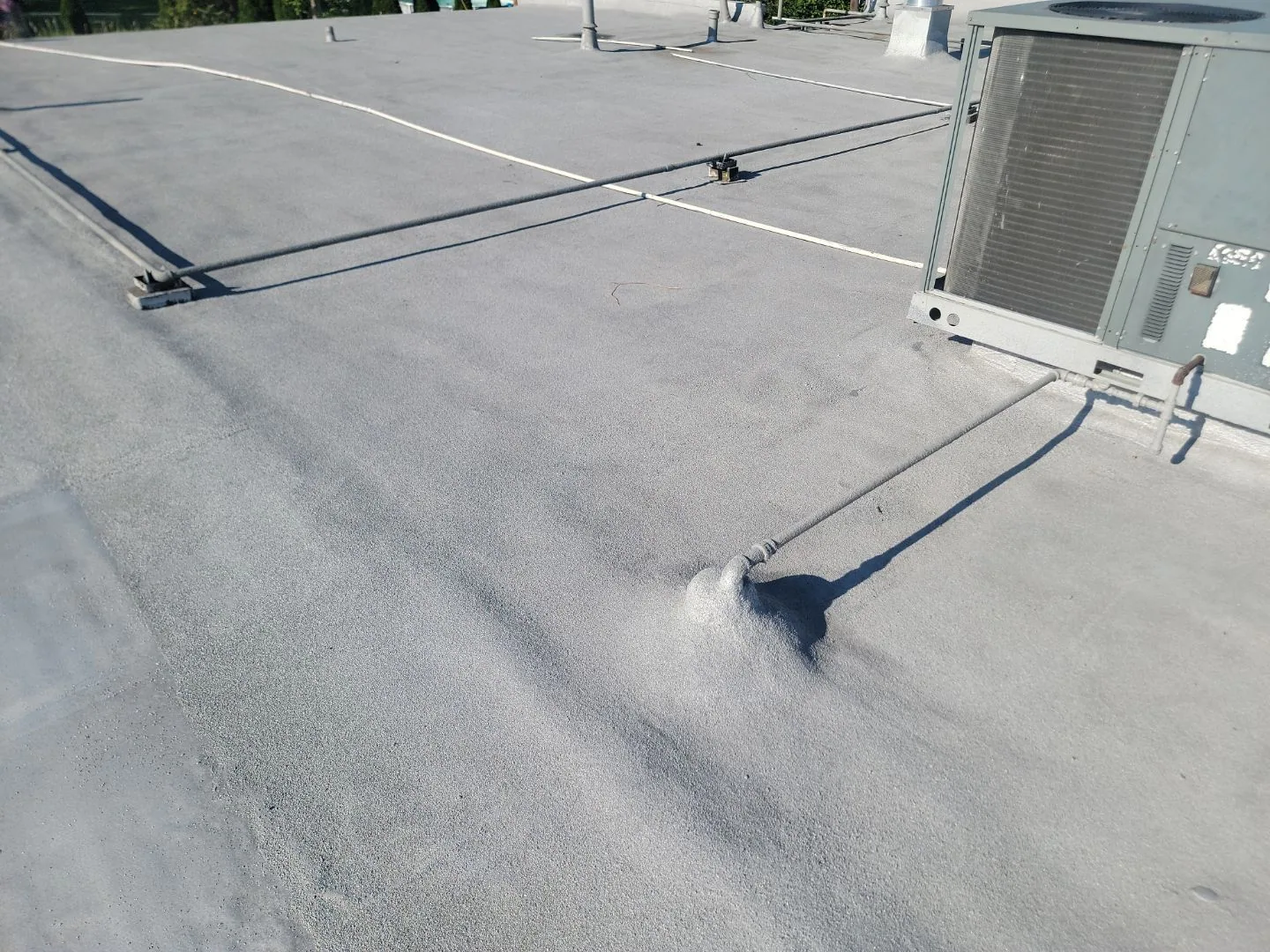
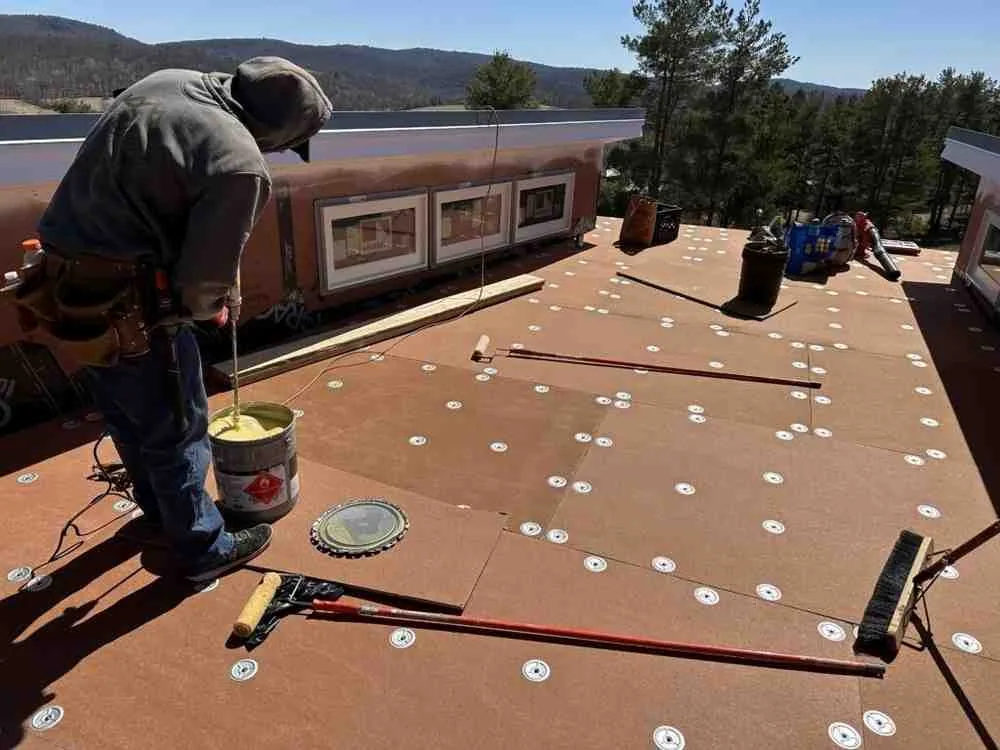
The permanent scope names the failed detail and how it will be rebuilt. A seam may need cleaning and re-welding or replacement of a section; a puncture needs compatible patch material and sound surrounding membrane; a curb may need new flashing and counterflashing. Drain issues require attention to the bowl, clamping ring and adjacent field, not only a bead of sealant at the visible edge. We photograph the condition before work and explain which connected surfaces are included.
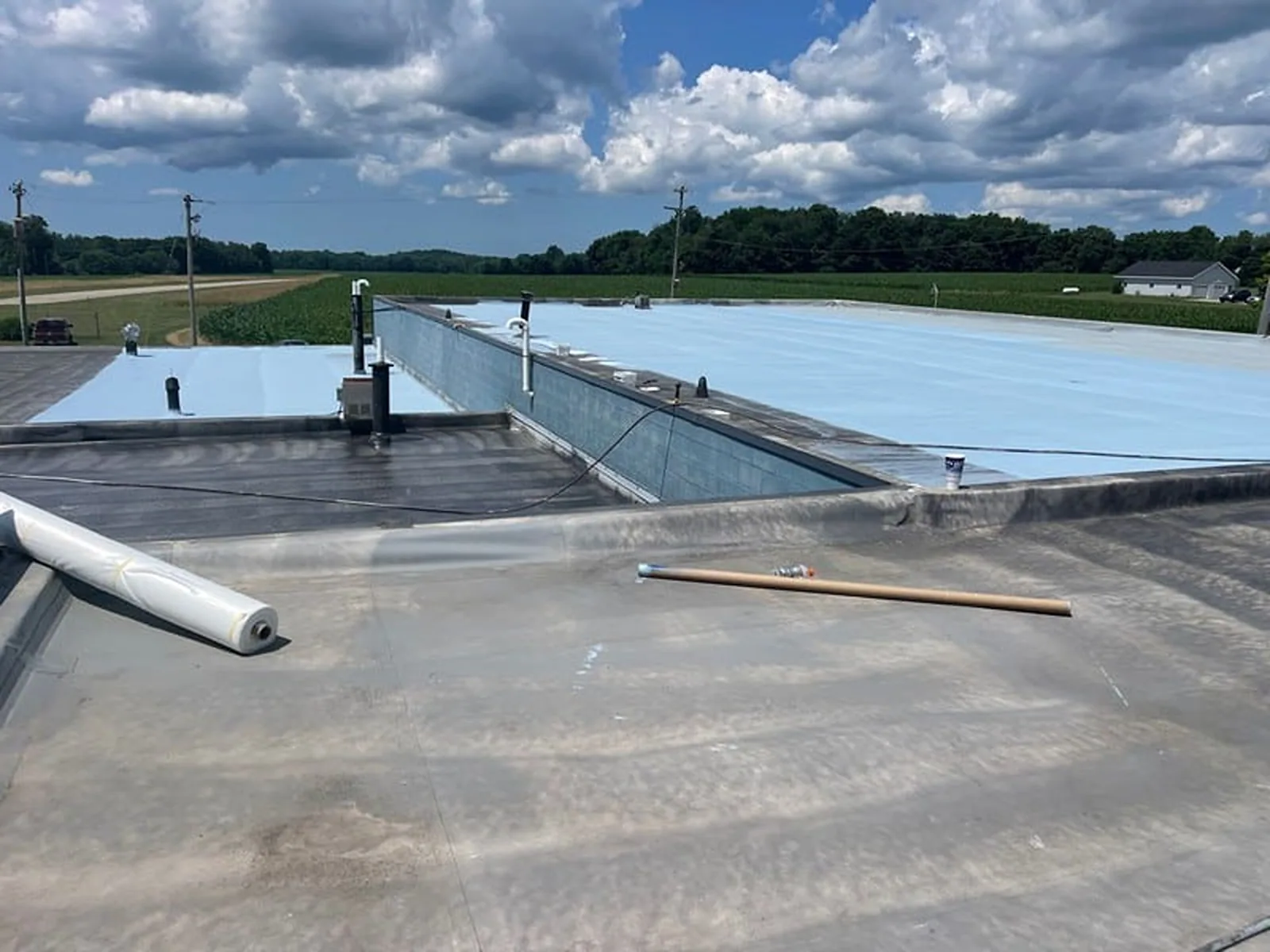
Material compatibility matters on mixed or older assemblies. TPO, PVC, EPDM, KEE, modified bitumen, built-up and metal roofs use different repair methods, so we identify the roof before selecting materials. If the membrane type cannot be confirmed from records or field evidence, the proposal says so and includes a verification step. When a repair uncovers broad wet insulation or a deteriorated deck, we pause and document the change rather than covering the newly exposed condition. For repeated entry, we may recommend a broader roof condition inspection or compare a recover with replacement.
Leave a record the next shift can use
At completion, we review the repaired detail, adjacent transitions and temporary protection if any remains. The closeout record includes roof and interior photographs where practical, the materials and method used, and conditions that were outside the approved scope. We remove debris, check drainage paths and tell the property contact whether a return visit is needed. If weather or access prevented a full repair, the record names that limitation and the next planned action.
The property manager can use the record to track whether the same area becomes wet again or whether another detail needs attention. A repeat report should be compared with the prior photos rather than treated as the same failure by assumption. We can set a maintenance visit for the rest of the roof and coordinate the schedule around building hours. For buildings near East Athens and Barnett Shoals Road, delivery and occupied entrances can be included in the next access plan.
Call with the details
When water is entering, provide the property address, affected rooms, whether the leak is active, roof-access instructions and a decision-maker’s contact information. record any electrical, healthcare, animal-care or tenant restrictions before the crew arrives. If the leak stops before access is possible, keep the photos and timing; intermittent conditions can still leave moisture in the assembly.
Commercial Roofing Athens can coordinate temporary protection, trace the roof condition and prepare a permanent repair scope. We confirm the access window, staging and weather-sensitive work with the property contact. The next step is a roof walk that links the interior report to the roof detail and records what must happen before the area is closed.
Frequently Asked Questions
What should staff do while water is coming in?
Keep people clear of wet floors and any ceiling material that looks unstable, protect movable equipment and contain drips where it is safe. Tell the building contact which rooms and systems are affected. We coordinate roof access and temporary protection, while the facility team handles electrical or room-safety concerns inside.
Can you respond outside normal business hours?
Share the address, active-water status, roof-access procedure and on-site contact when calling so the response can be planned around the building’s access rules and occupied areas.
Why does the roof leak away from the ceiling stain?
Water can travel through insulation or along the deck before it becomes visible indoors. We inspect nearby seams, penetrations, curbs, drains and wall transitions, then compare those details with the reported room. The repair point comes from roof evidence rather than the stain location alone.
Does a temporary tarp solve the leak?
A secured temporary cover can limit entry until permanent work is safe, but it does not rebuild a failed seam or flashing. We identify the temporary protection’s location and limits, then return to inspect the roof and scope a compatible repair once conditions permit.
Will the repair require a moisture survey?
Not always. We may recommend infrared imaging or test cuts when water has traveled beyond the visible area or the assembly’s moisture extent is unclear. The purpose is to target confirmation work and determine whether the repair stays local or needs broader removal.