Commercial KEE Roofing in Athens, GA
Home / Roof Systems / Commercial KEE Roofing
Commercial KEE Roofing
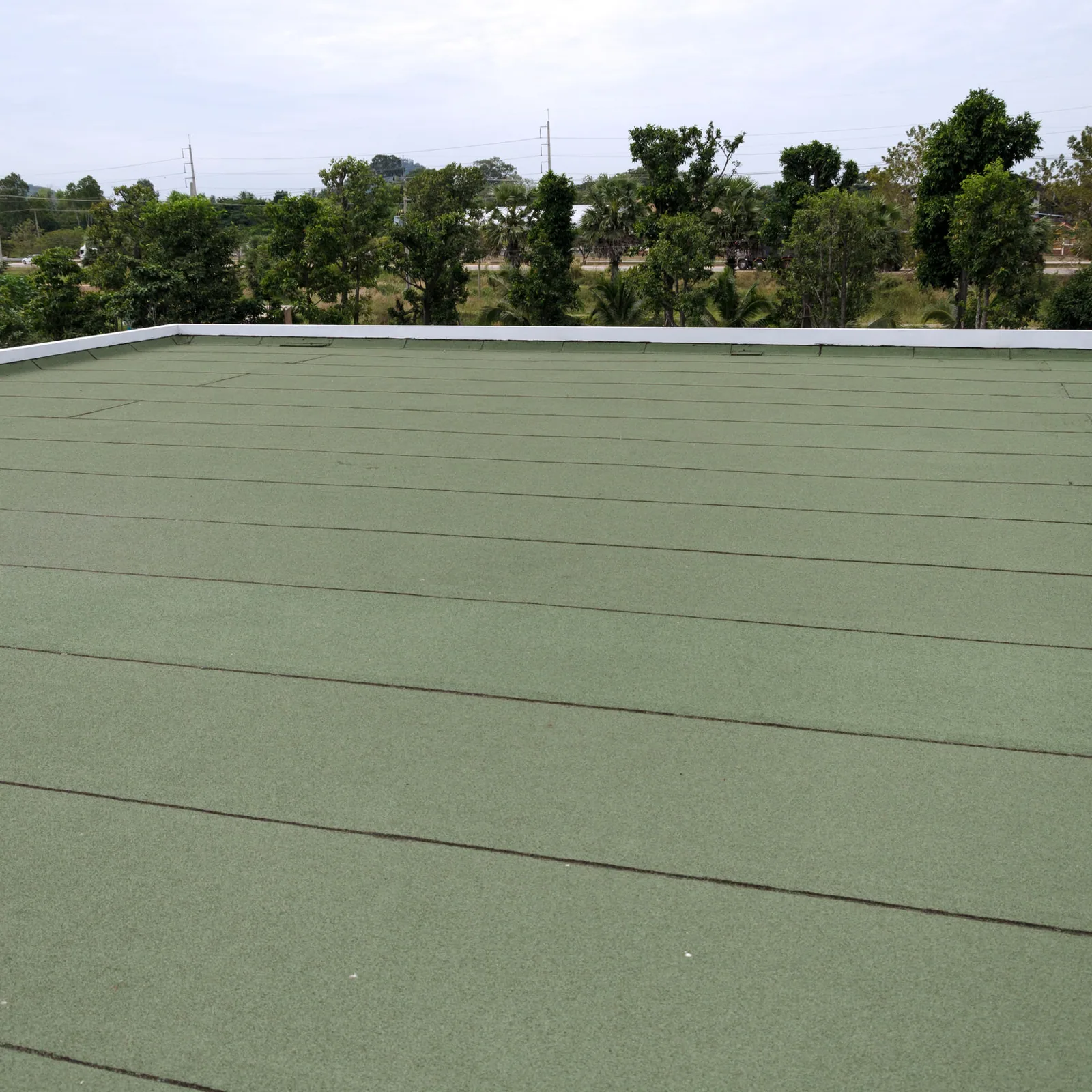
KEE membrane is a PVC-alloy single-ply roof system, and the exact product formulation and installation requirements depend on the manufacturer’s specification. We start by confirming the existing assembly, checking the deck and insulation, and reviewing drainage, equipment curbs and perimeter details. That review is important for Athens facilities ranging from a UGA building to the manufacturing corridor near ABB and Carrier Transicold. We tie the membrane choice to the building’s use and actual substrate rather than assuming one product fits the whole market. A roof condition inspection identifies repairs or moisture testing needed before installation.
Identify the specified KEE membrane
KEE is commonly described as a ketone ethylene ester modifier used in PVC membrane formulations. The project specification should identify the manufacturer, membrane product, thickness, reinforcement, color and approved accessories. We review the product data and installation instructions before ordering because formulation, welding conditions and flashing pieces can vary. If the existing membrane is not labeled or records are missing, we inspect samples and document what can be confirmed before selecting a compatible repair material.
Do not compare KEE solely by the three letters on a bid. The assembly includes insulation, cover board, attachment, seams, penetrations, edge metal and drains. We identify each layer and show how it fits the roof. A PVC membrane or TPO system may be a relevant comparison, but the project team should review manufacturer data, site exposures and the owner’s requirements before choosing between them.
Prepare the base and elevations
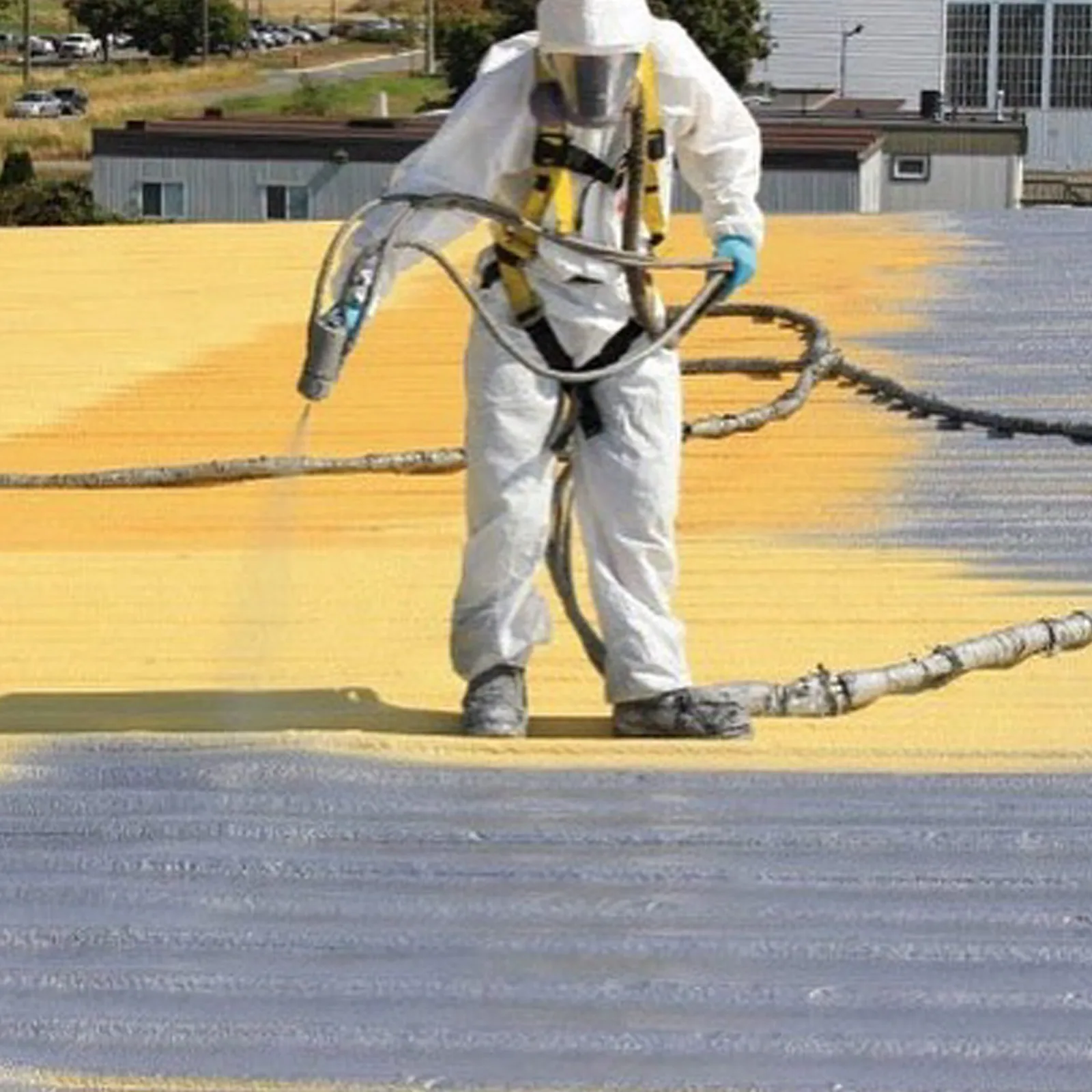
Before a new KEE sheet is installed, we check the deck, existing roof layers and insulation for moisture, damage or loose attachment. Test cuts can confirm concealed conditions where records or visible edges are not enough. Wet insulation and deteriorated substrate should be addressed rather than hidden under a new membrane. If the roof can be recovered, the plan must account for code, existing layer count and finished height at drains, curbs and edges.
Cover board can provide a consistent surface for the roof system, while attachment is selected for the deck and project design. We identify fastening patterns, adhesive requirements, perimeter reinforcement and wind criteria in the scope. If tapered insulation is proposed, the plan shows slope to outlets and transitions around rooftop equipment. A board and insulation package helps coordinate these conditions before material is delivered.
Inspect welded connections
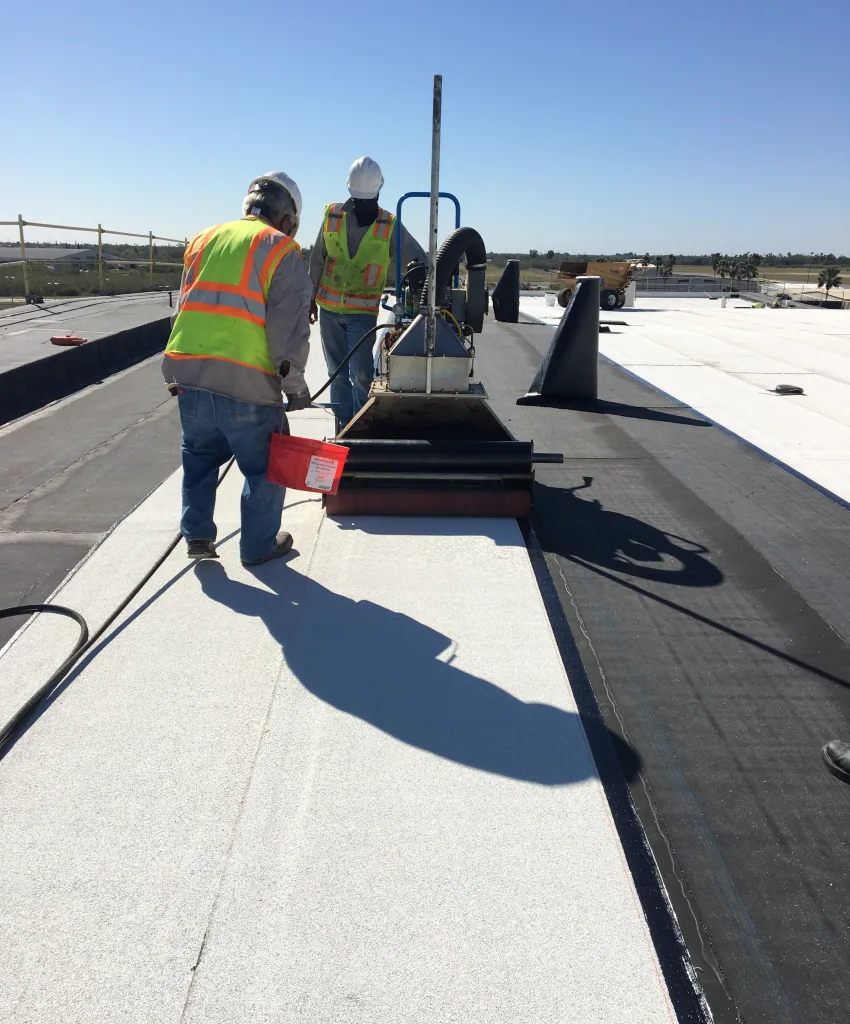
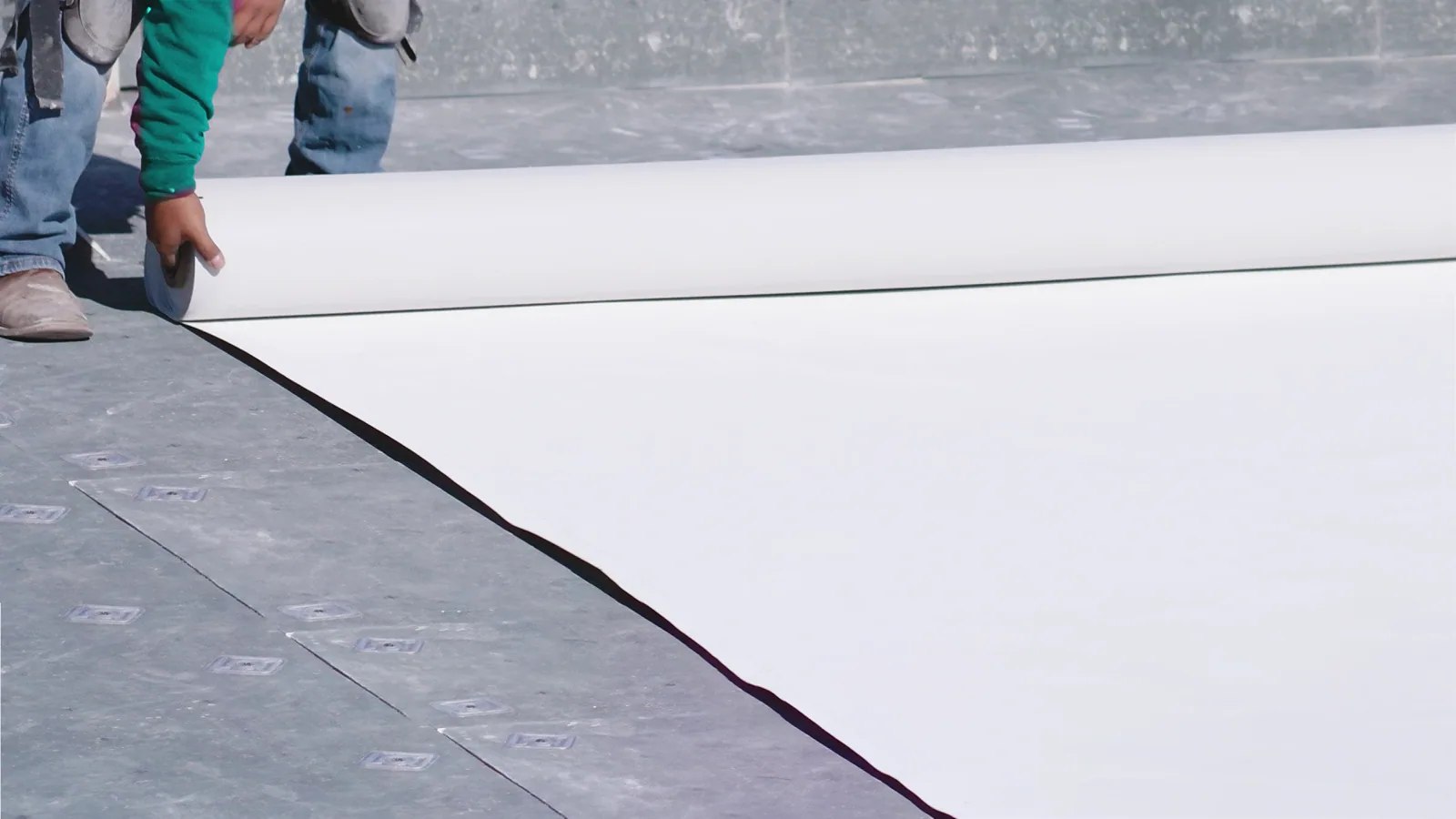
KEE seams are heat-welded, and weld quality depends on clean surfaces, proper temperature, travel speed and the system’s specified conditions. The crew prepares the lap, verifies a test weld when required, and checks the finished seam as work proceeds. Corners, patches, T-joints, drain connections and curb flashings need their own inspection because multiple membrane layers meet there. The record identifies completed roof zones and details checked before another layer or rooftop component limits access.
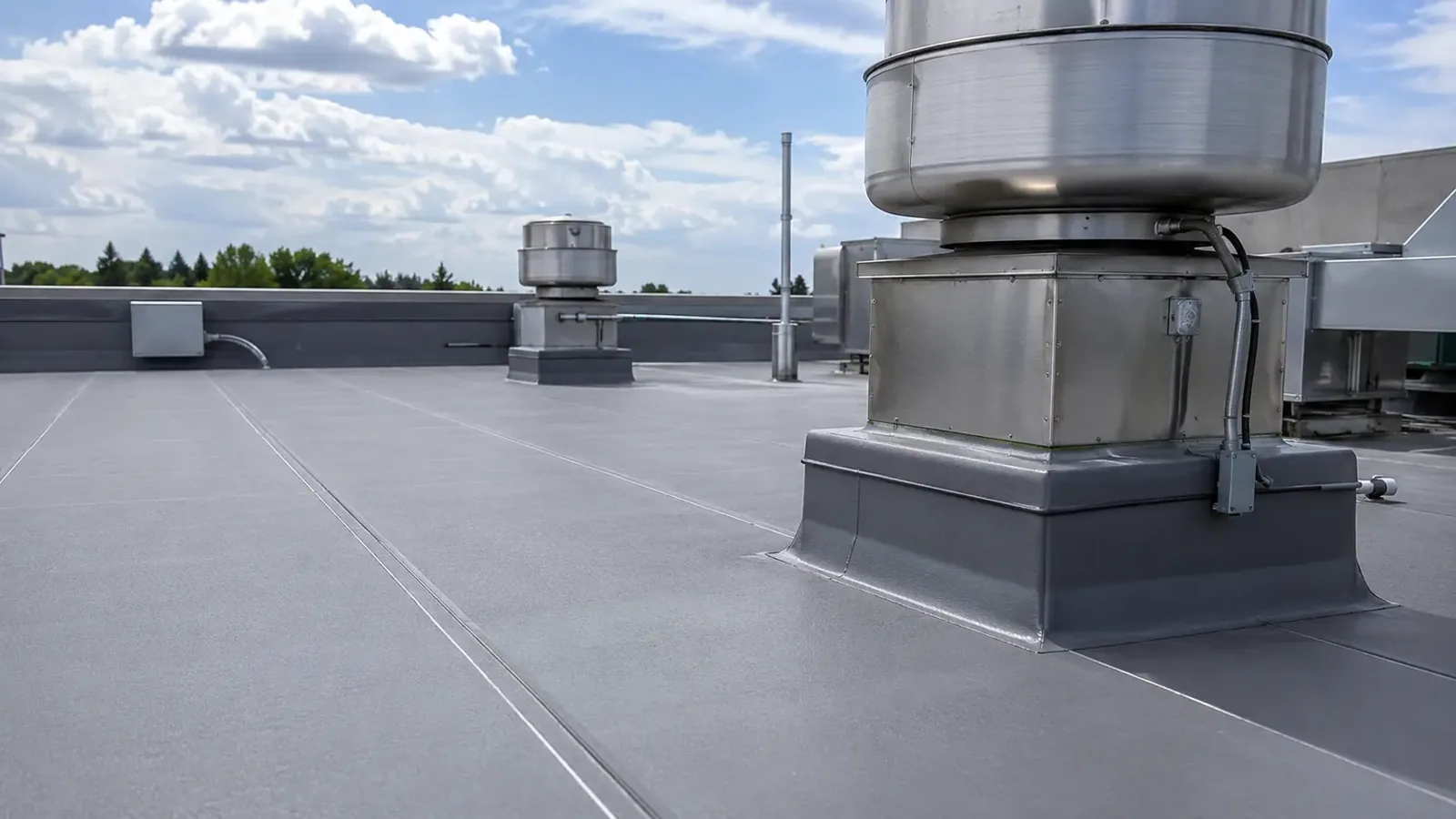
At a curb or pipe, we form flashing that connects the field sheet to the opening and secure its termination as required. Edge metal and coping are coordinated with the membrane termination, not treated as unrelated trim. We inspect how water drains and confirm that seals and corners remain intact. If a unit is lifted or changed, we plan temporary protection and restoration with the mechanical contractor. A curb and support scope can clarify that interface before equipment work begins.
On a KEE installation, seam acceptance is based on the welded joint rather than the color or appearance of the sheet. Crews make and test trial welds when conditions or equipment change, then probe cooled seams and mark any repair for reinspection. Detail work deserves separate attention because inside and outside corners, drains and curb transitions interrupt the long field weld. The closeout record should identify membrane thickness, approved accessories, attachment and repair locations. Those details help an owner distinguish a product-system issue from damage caused later by service traffic or another trade.
Fit installation to Athens weather
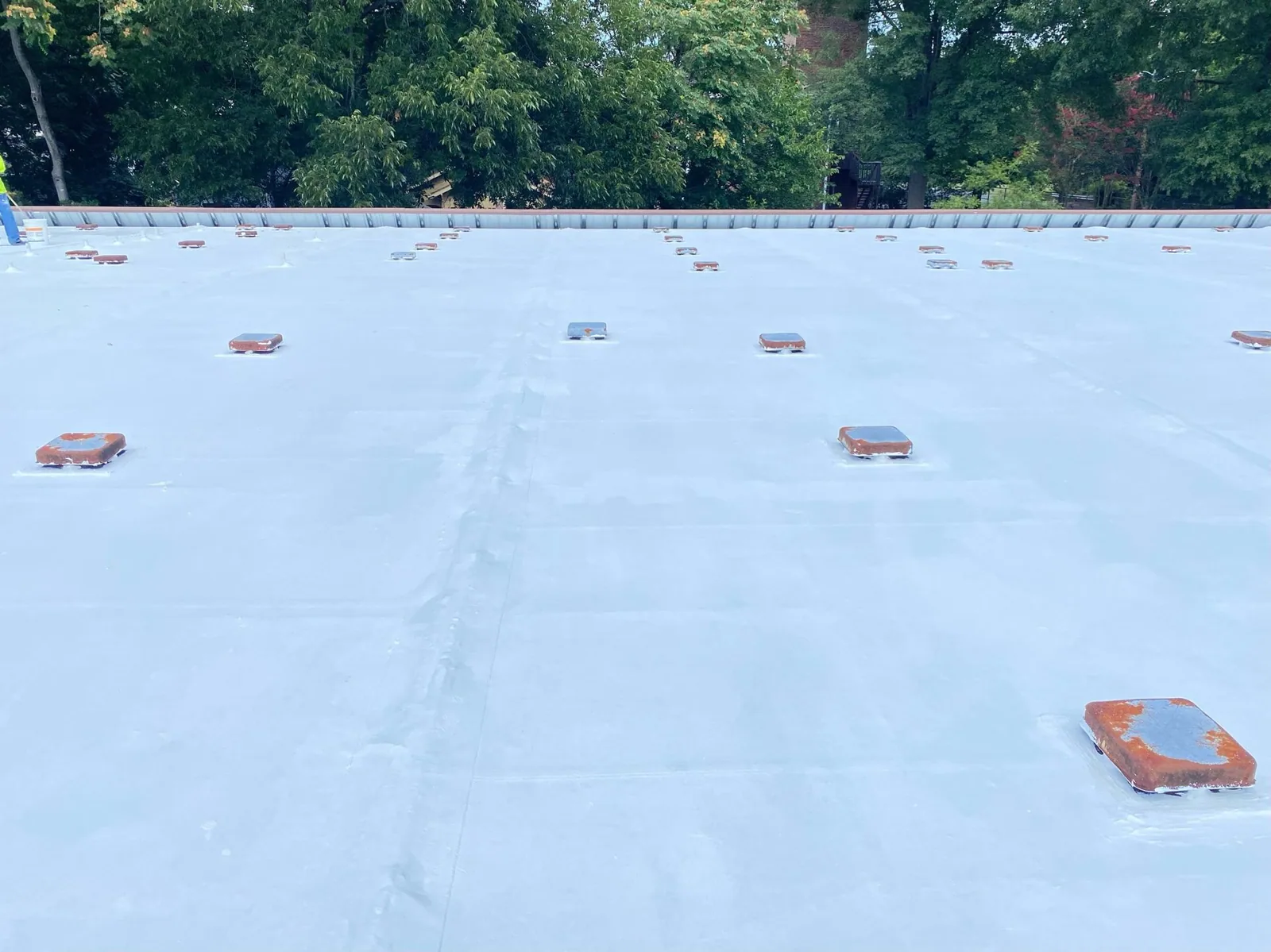
Athens’ humid summers, frequent thunderstorms and seasonal tornado risk make the work sequence weather-sensitive. We review the forecast, substrate moisture and product conditions before opening a roof section. If rain approaches, crews stop at a tie-in that can be secured and confirm no materials remain exposed. Heat may also affect safe access and welding conditions, so the field plan keeps the work area sized to the available crew and acceptable installation window.
At a building in Downtown Athens, staging can be limited by nearby streets and pedestrian use; at Coggins Park, an industrial property may have vehicle and equipment routes to preserve. We confirm the lift path, material drop, roof hatch and occupied access with the property contact. A storm event does not show that a specific membrane was damaged; after weather, we inspect seams and flashings at the site before changing the scope.
Review lifecycle and repair options
For an existing KEE roof, repair requires identification of the membrane and compatible accessories. A local seam or puncture may be repaired if surrounding material is sound; extensive wet insulation or repeated deterioration can require broader work. We document what is confirmed and what needs test cuts. If the roof is nearing a major decision, compare a recover with a tear-off and replacement based on layers, moisture, drains and edge details.
Maintenance includes checking seams, perimeter attachment, drains, curbs and previous patches. Dirt, debris or later equipment work can affect the roof even when the initial installation was properly completed. We can arrange planned maintenance that records each roof section and follows access rules. A coating should be considered only if the existing surface is sound and compatible with the selected product; it is not a substitute for repairing saturated or unstable layers.
Confirm the KEE system scope
Provide product records, roof plans, leak history, equipment changes and access restrictions. If KEE is only a proposed option, share project requirements and any exposure information that affects the comparison. We will inspect the assembly, mark transitions and verify which details need repair, moisture testing or additional design review.
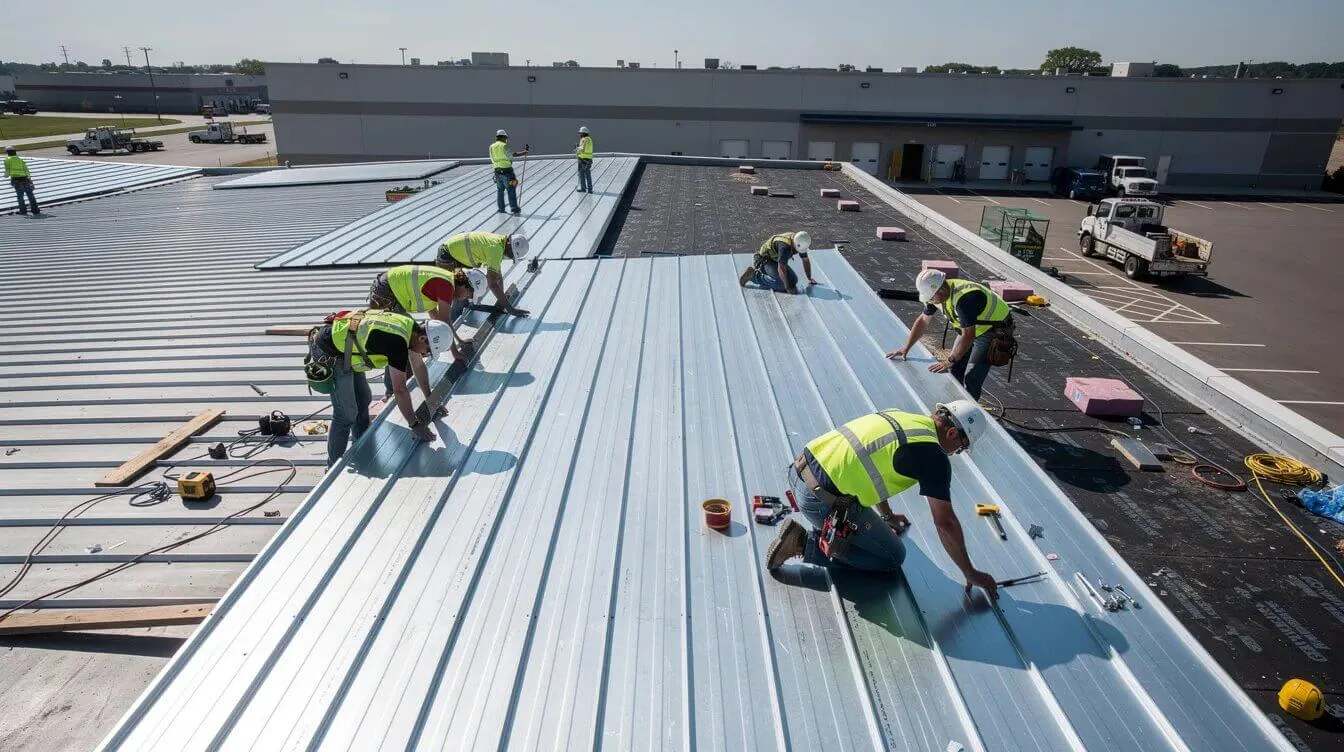
Commercial Roofing Athens can prepare a KEE scope with product identification, substrate, attachment, weld details, edge work and phasing stated clearly. Schedule a roof walk to coordinate material staging, operating hours and weather holds before installation begins.
Frequently Asked Questions
What does KEE mean in a roof specification?
KEE refers to a ketone ethylene ester modifier used in some PVC membrane formulations. The specification should name the manufacturer and product because accessories, installation conditions and product properties are specific to that system.
Can KEE be welded like PVC?
KEE membranes use heat-welded seams, but the crew must follow the selected manufacturer’s instructions for surface preparation, settings and inspection. We verify material identification before repairing an existing roof or welding new flashing.
How do you know whether the old membrane is KEE?
We check roof records, labels, samples and visible assembly details. If the material cannot be confirmed, the proposal identifies that uncertainty and may include a test or manufacturer review before choosing repair materials.
Can KEE roofing be recovered over an existing roof?
A recover depends on moisture, existing layers, deck condition, roof height and applicable project requirements. We inspect the assembly and may use test cuts. If wet or unstable material is found, it should be addressed before a new sheet is installed.
What should the KEE installation scope show?
It should identify the membrane product, insulation, cover board, attachment, weld and flashing details, drains, perimeter and work phases. The scope should also state access restrictions and how concealed moisture or deck conditions will be handled if discovered.