Commercial Rooftop Equipment Curbs and Supports in Athens, GA
Home / Commercial Roofing Services / Commercial Rooftop Equipment Curbs and Supports
Commercial Rooftop Equipment Curbs and Supports
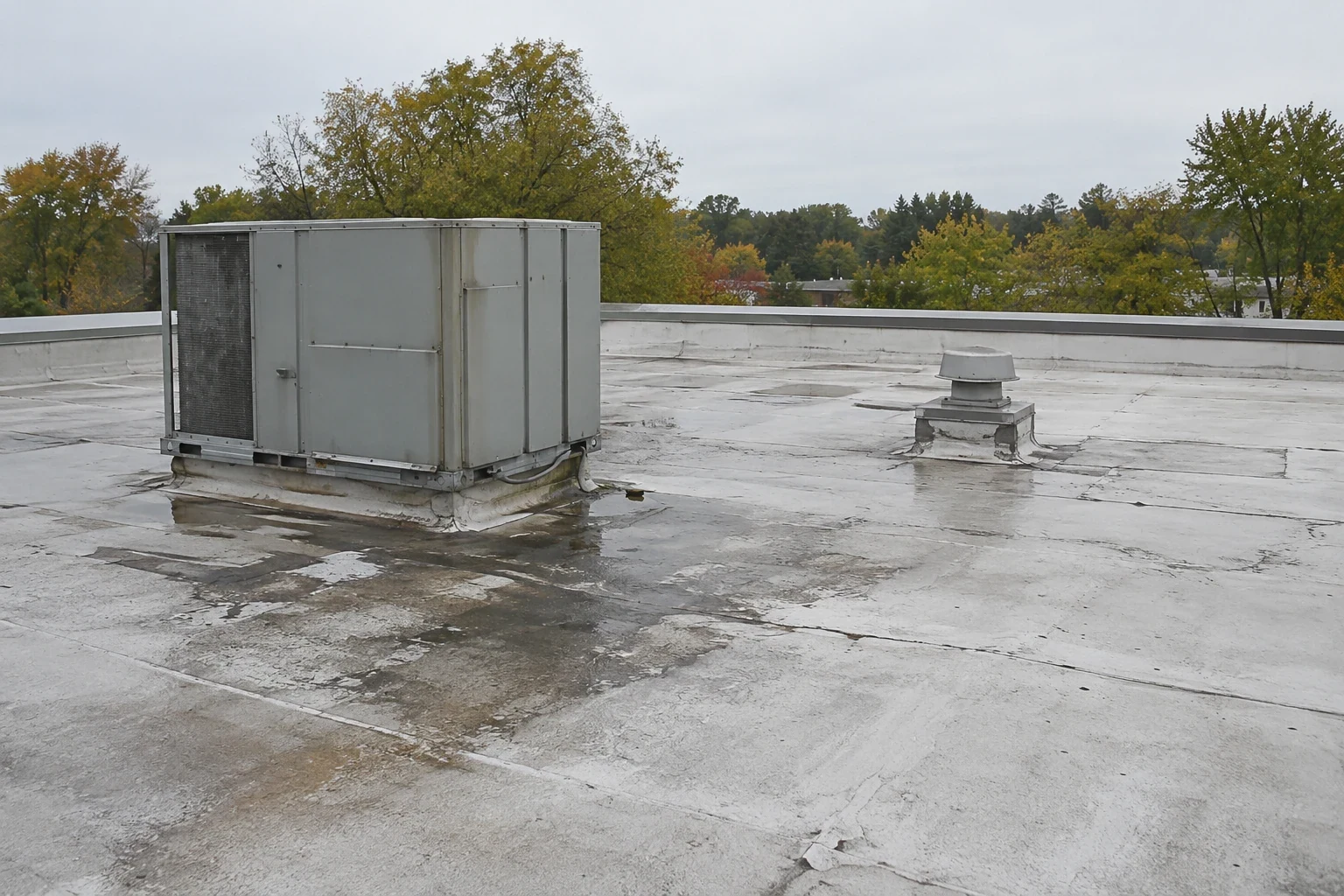
A rooftop unit can stay in service only if the curb, supports, flashing and roof membrane remain coordinated. We inspect the equipment base, attachment, clearances and adjacent seams before proposing a repair or replacement detail. On the University of Georgia campus, service routes and building schedules affect equipment access; at an industrial facility in Commerce 85 Business Park, deliveries and operating machinery may shape the work window. The property contact confirms the unit that needs attention and any shutdown restriction. We then map the roof route and document the curb condition with a roof inspection before setting the scope.
Check the base and flashing
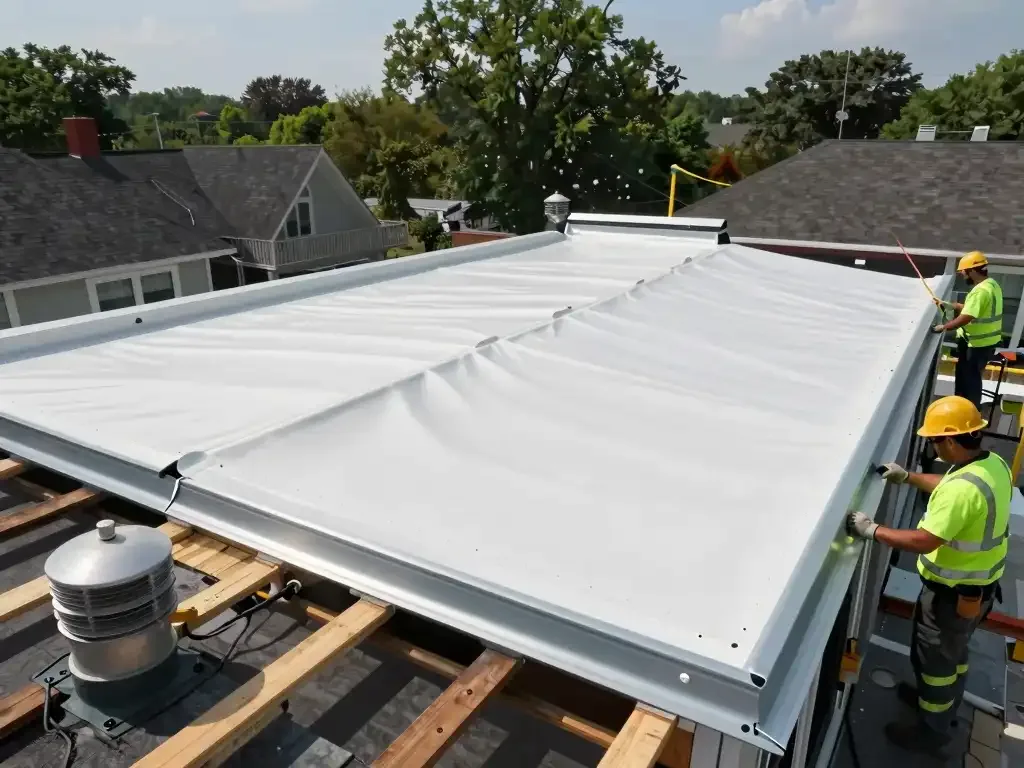
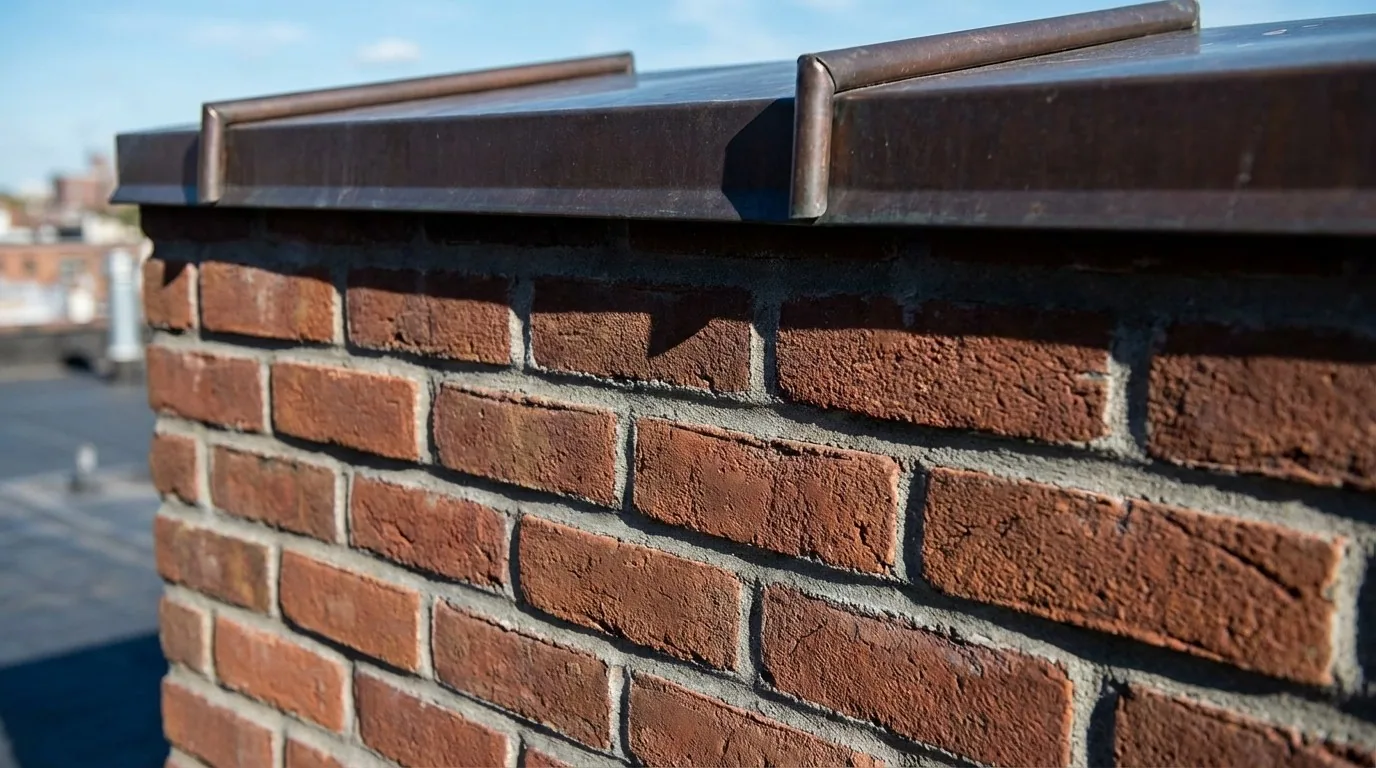
The inspection starts at the curb corners and follows the flashing around all four sides. We look for split seams, loose counterflashing, low curb height, displaced fasteners, deteriorated sealant and gaps where the membrane turns up. If water enters near a unit, water may be entering at the curb, an adjacent seam or an opening above it. We compare the roof detail with interior reports and record what is visible, then identify whether a test opening is needed to confirm concealed damage.
Equipment movement and vibration can stress a curb connection over time. We check the attachment and support structure where accessible, and ask the facility contact whether service work or equipment changes have occurred. A replacement unit with a different footprint can leave unused penetrations or require a curb adapter. Those changes must be coordinated with the roof assembly so the new flashing closes the opening and the unit remains serviceable. A penetration-flashing scope can cover related transitions when multiple openings need attention.
Keep service access in the plan
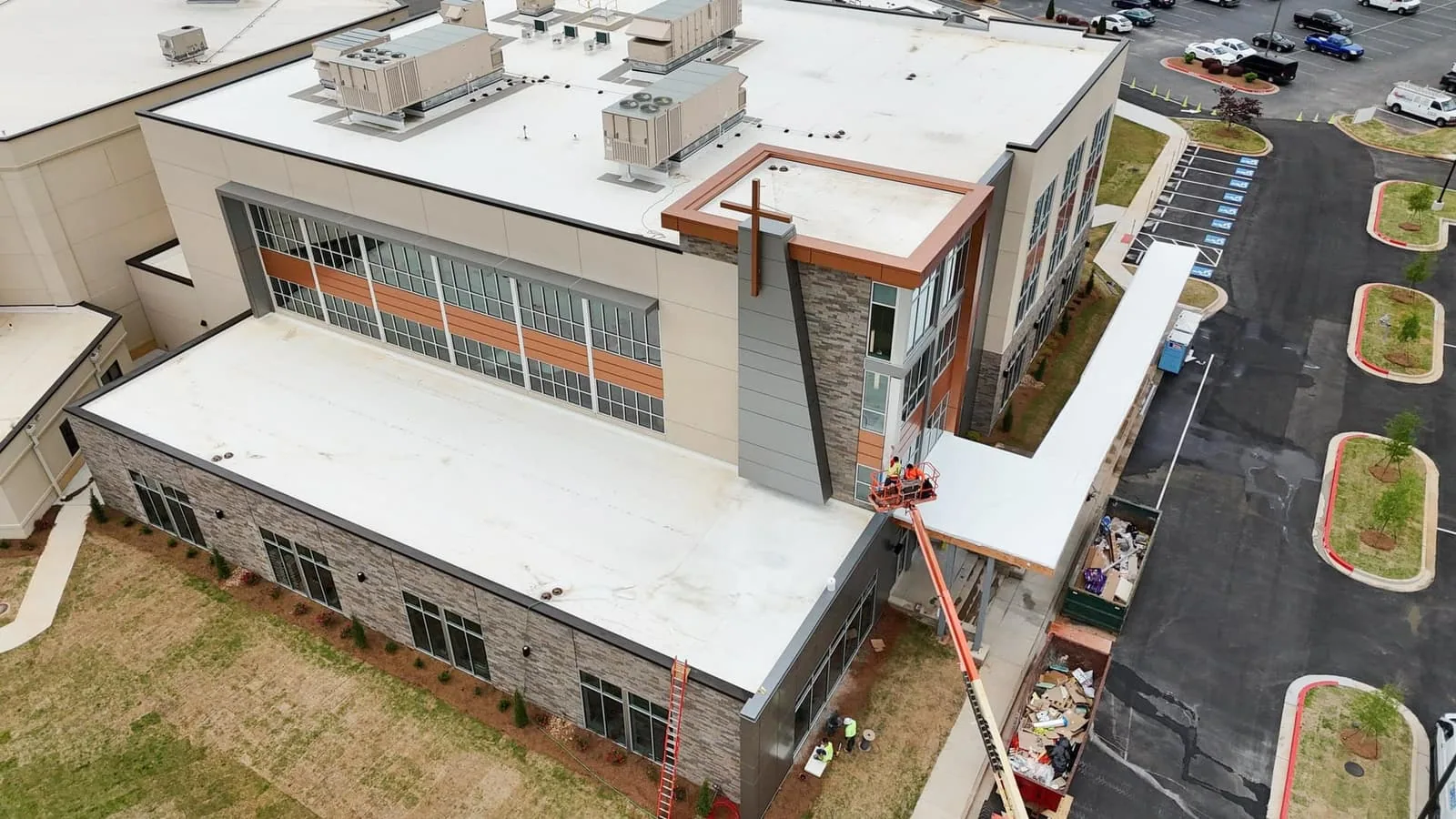
Roof work around HVAC and process equipment needs clear service paths. We identify the route technicians use, electrical disconnects, condensate lines, gas or refrigerant piping, and any area that cannot be blocked. The crew should not set materials in front of a panel or cover an access point simply because it is close to the repair. The manager confirms whether the unit must continue operating, when a shutdown is permitted, and who can authorize a service call if a connection needs to be moved.
Athens has a large institutional and industrial building stock, with university, healthcare, food-processing and manufacturing facilities. That mix means an equipment curb may serve a room with strict temperature controls or an active production area. At Prince Avenue, facility staff determine access near clinical operations; at Athena Industrial Park, managers may need to protect vehicle movement and equipment schedules. We coordinate the work window and confirm the boundaries for the specific building rather than assuming one procedure fits the entire site.
Review support and roof loading
Supports for piping, conduit, cable trays and small equipment should transfer loads through a suitable base without cutting or abrading the roof membrane. We inspect the support feet, protective pads, attachment, corrosion and contact with adjacent flashing. If the support has shifted or bears directly on a vulnerable surface, we document the condition and determine whether a compatible support or isolation detail is needed. We do not infer structural capacity from a visual roof walk; design questions go to the project team for review.
Adding or replacing equipment may change loads, curb height, access clearances and drainage paths. The owner should coordinate mechanical plans, structural review and roofing details before a unit is moved. We can document the roof-side scope and work with the site contact on sequencing, but equipment lifting, mechanical connections and roof restoration need defined responsibilities. If a crane pick is planned, the laydown area and rigging route are coordinated before the day of the lift, with protection for completed roof areas.
Close the roof around the work
When equipment is disconnected or lifted, the curb opening can be exposed to weather. We agree on a temporary cover, dry-in point and return sequence before the lift begins. Athens experiences frequent warm-season thunderstorms and damaging wind, so an exposed opening cannot remain without a protection plan. We monitor conditions and pause work if a safe tie-in cannot be completed within the approved window. The temporary cover and any limitations are recorded for the property contact.
Permanent work follows the selected roof system. A TPO or PVC curb detail may use welded membrane flashing; EPDM and modified bitumen require their own compatible methods. We specify the membrane, flashing height, corner treatment and interface with the curb or adapter. The repair is inspected before mechanical equipment is set back in place. If moisture or deck damage appears at the opening, the owner reviews the added scope while the condition is visible rather than closing it under the unit.
Label each unit and connection
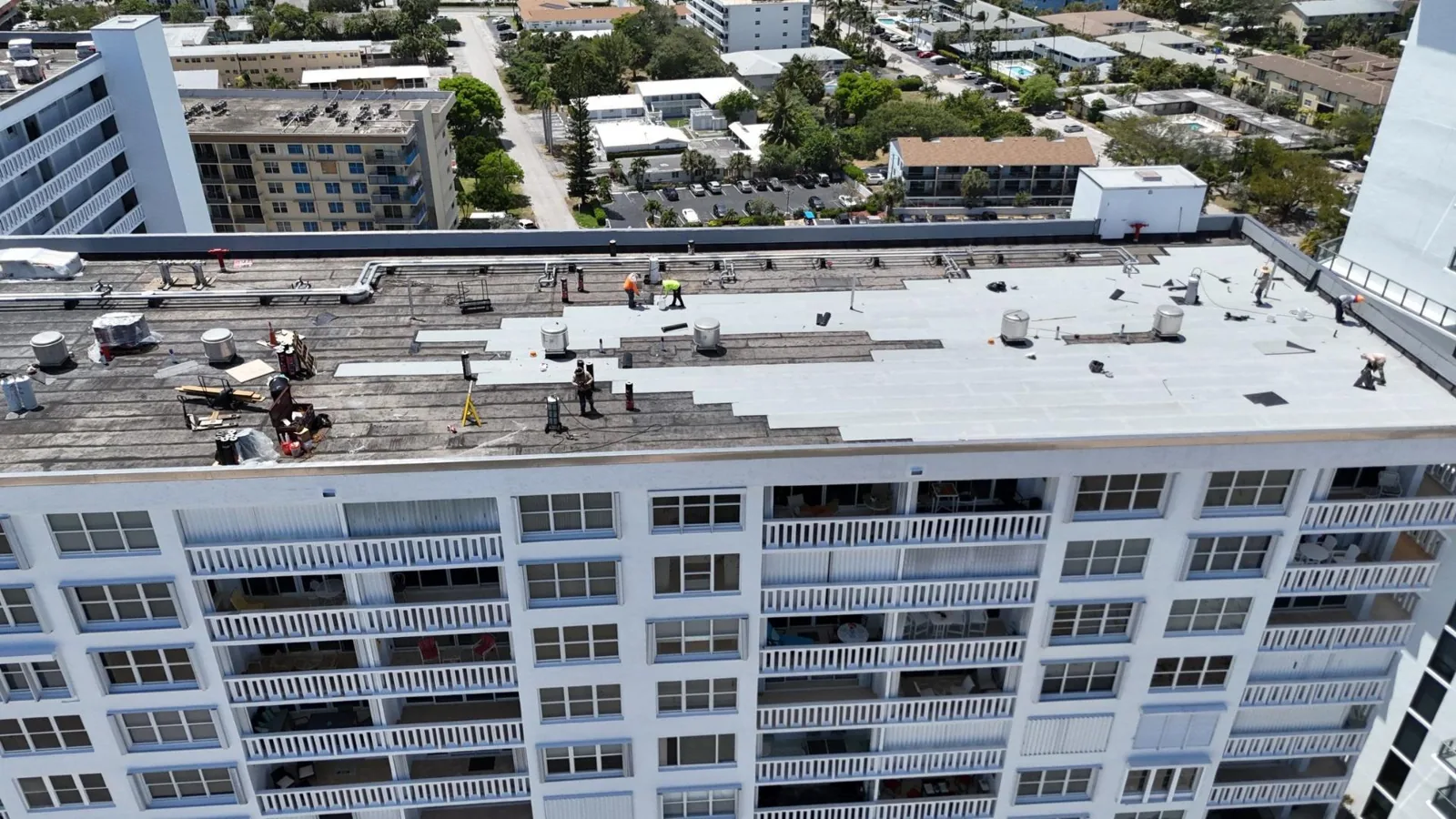
For buildings with several rooftop units, we label the equipment by roof zone or plan reference and record the curb, supports, piping and nearby membrane details. This avoids an ambiguous work order that refers only to “the unit by the hatch.” Before-and-after photos show the flashing and support condition, while the closeout records any service clearance or connection that remains outside roofing scope.
We can pair the work with scheduled roof maintenance to revisit curbs, seams and drains during a planned walk. If an active leak was reported, we can trace it through leak investigation and keep temporary water protection separate from permanent curb work. Records are useful to the building manager and mechanical service team, who can reference the same roof zone during future work.
Coordinate the unit work
Send the property address, roof plan or unit identifier, equipment service requirements, leak history and access restrictions. Identify who controls shutdowns and who will handle lifting or mechanical reconnection. We will inspect the roof-side details, record what can be seen and define whether flashing repair, curb modification or a wider assembly review is needed.
Commercial Roofing Athens can prepare a curb and support scope with the access route, staging, equipment coordination and weather hold point stated before mobilization. Schedule a roof walk with the property and mechanical contacts so the work can be sequenced without leaving an opening exposed or blocking required service access.
Frequently Asked Questions
Can a roofer replace a curb while the HVAC unit stays connected?
That depends on the curb design, unit support and whether the flashing can be rebuilt without disturbing mechanical connections. We inspect the base and coordinate with the facility’s mechanical contact before setting the work sequence. A lift or temporary support may require shutdown and a separately planned crane window.
How can equipment work create a roof leak?
A moved unit, pipe support or curb adapter can disturb flashing, leave unused openings or place stress on the membrane. We inspect the equipment base and nearby transitions, then compare with the leak location. The repair scope addresses the roof detail while assigning mechanical disconnection and reconnection to the appropriate party.
Do pipe supports need roof protection?
Yes. Support feet should avoid abrasion and distribute contact appropriately for the roof system. We check pads, attachment and nearby membrane and identify a compatible support detail if the existing base is damaged or shifting. Structural capacity is reviewed by the project’s design team when required.
Can a unit be lifted during a storm season?
It can be scheduled when equipment, crane and roofing work can be coordinated with a safe weather window. Athens thunderstorms make temporary dry-in and an exposed-opening plan important. We agree on the stopping point and cover method before the unit is disconnected or lifted.
What information should a facility manager provide?
Provide a unit number or roof plan, service route, shutdown limits, mechanical contact, lift schedule and any area that must remain operational. We use those details to plan staging, roof access and the sequence for rebuilding the curb flashing around the equipment work.