Commercial Roof Recover in Athens, GA
Home / Commercial Roofing Services / Commercial Roof Recover
Commercial Roof Recover
Keeping the existing roof in place can shorten demolition, but only when the layers below the new membrane are dry, stable and suitable to remain. At an industrial building in Athens Commerce Park or a retail property near Beechwood-Alps, the first decision is not which overlay product to order. It is whether the existing assembly can support another system without trapping moisture or concealing a failing substrate. We inspect the roof, identify the layer build-up and drainage path, and compare recover with full commercial replacement before setting the work boundary. The result is a scope that says what stays, what is removed and how the transition will close each day.
Read the existing layers
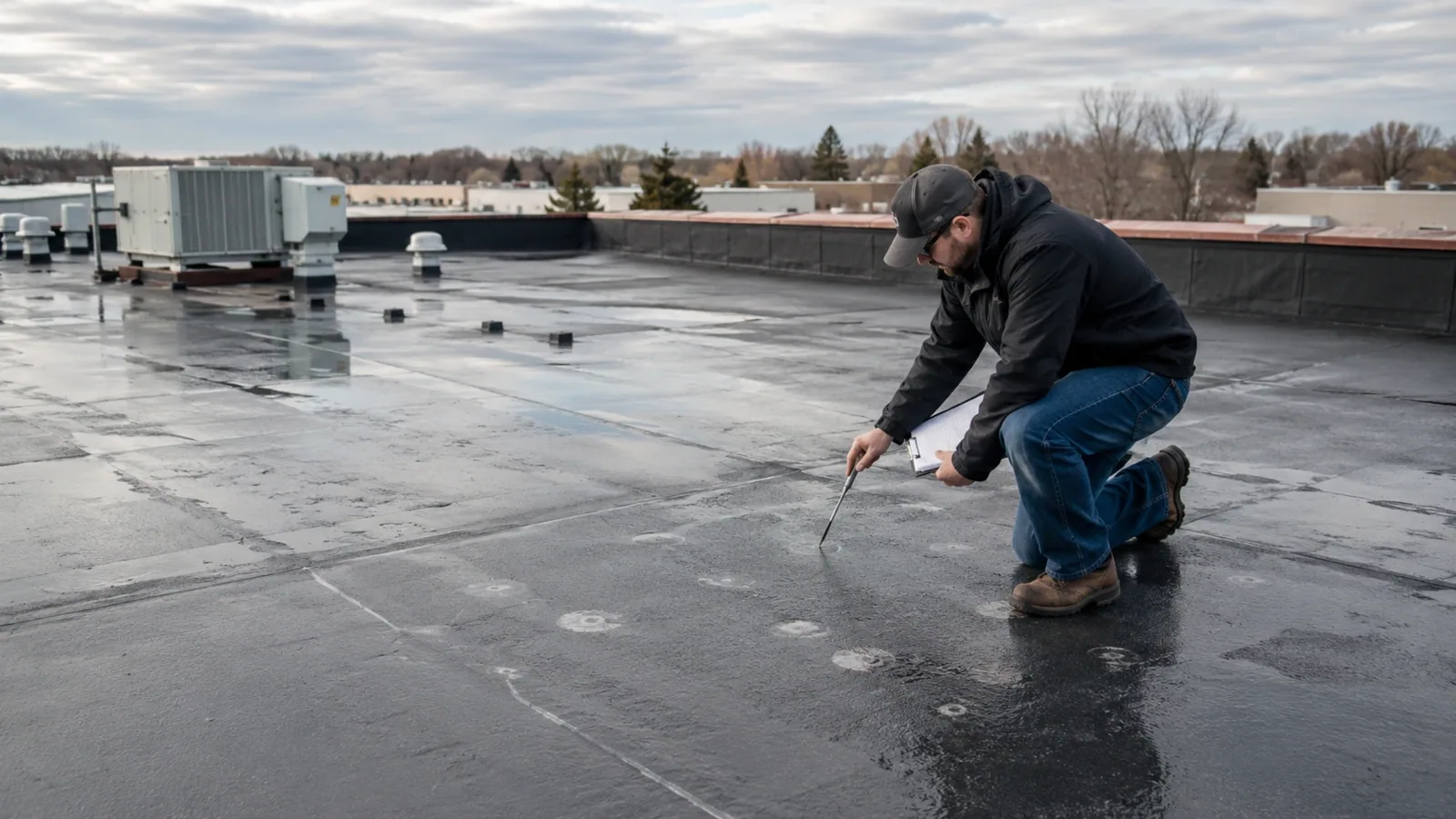
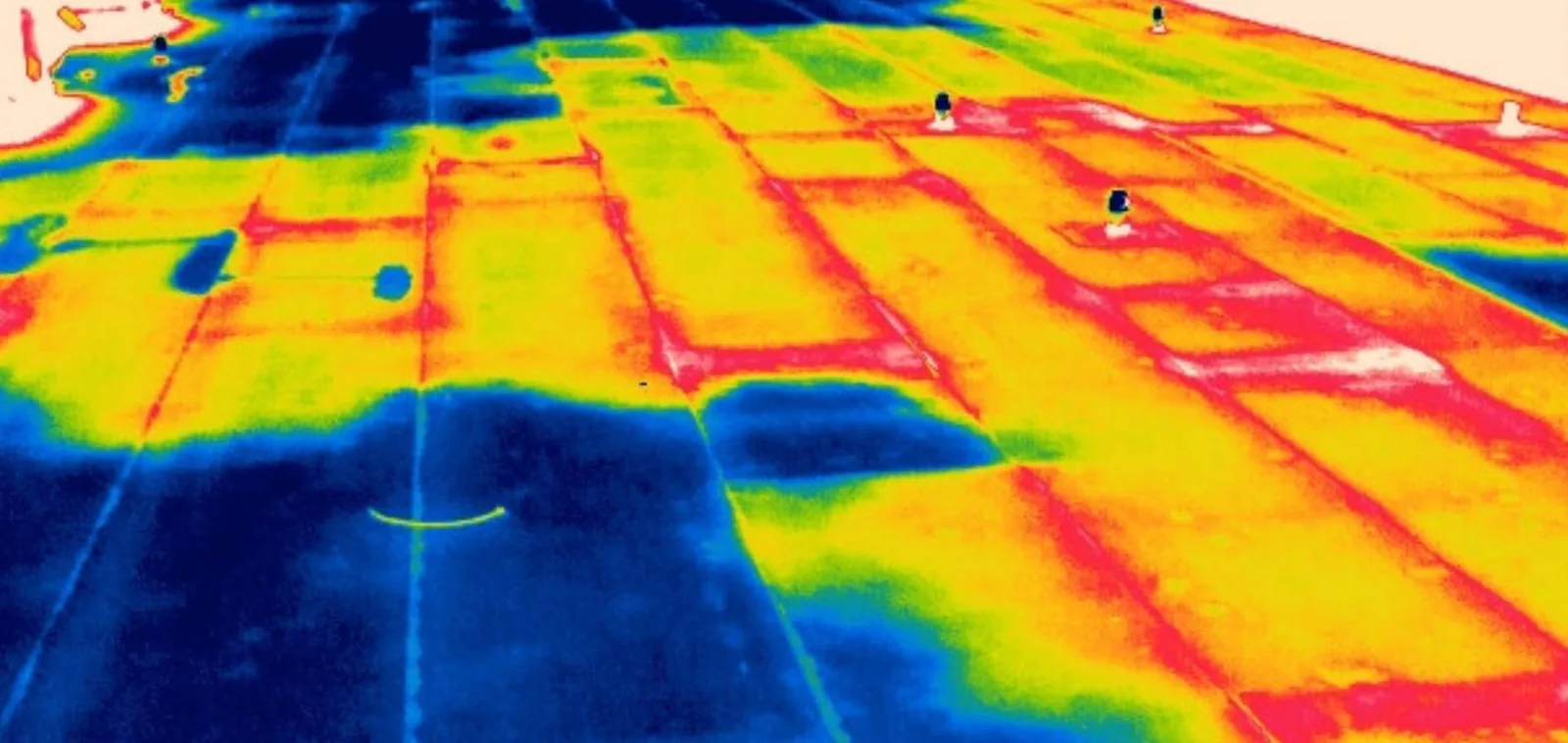
A recover starts with records and field checks. We review available drawings, previous repair records and visible roof edges, then make test cuts where needed to identify membrane, insulation and moisture conditions. Infrared imaging can help locate areas for investigation, but a moisture survey does not replace confirmation at the roof assembly. The inspection records where materials are sound, where moisture is present, and whether the deck or attachment surface needs repair before a new layer can be considered.
Moisture changes the decision because a new membrane cannot dry wet insulation that remains below it. Soft spots, open seams, failed flashings and repeated patches also deserve attention before they disappear under a recover. We separate isolated repairs from broad deterioration and document the extent of each condition. If conditions vary across the roof, the recommendation may divide the building into recoverable sections and areas that need tear-off, rather than forcing one treatment across the full footprint.
Check support and drainage
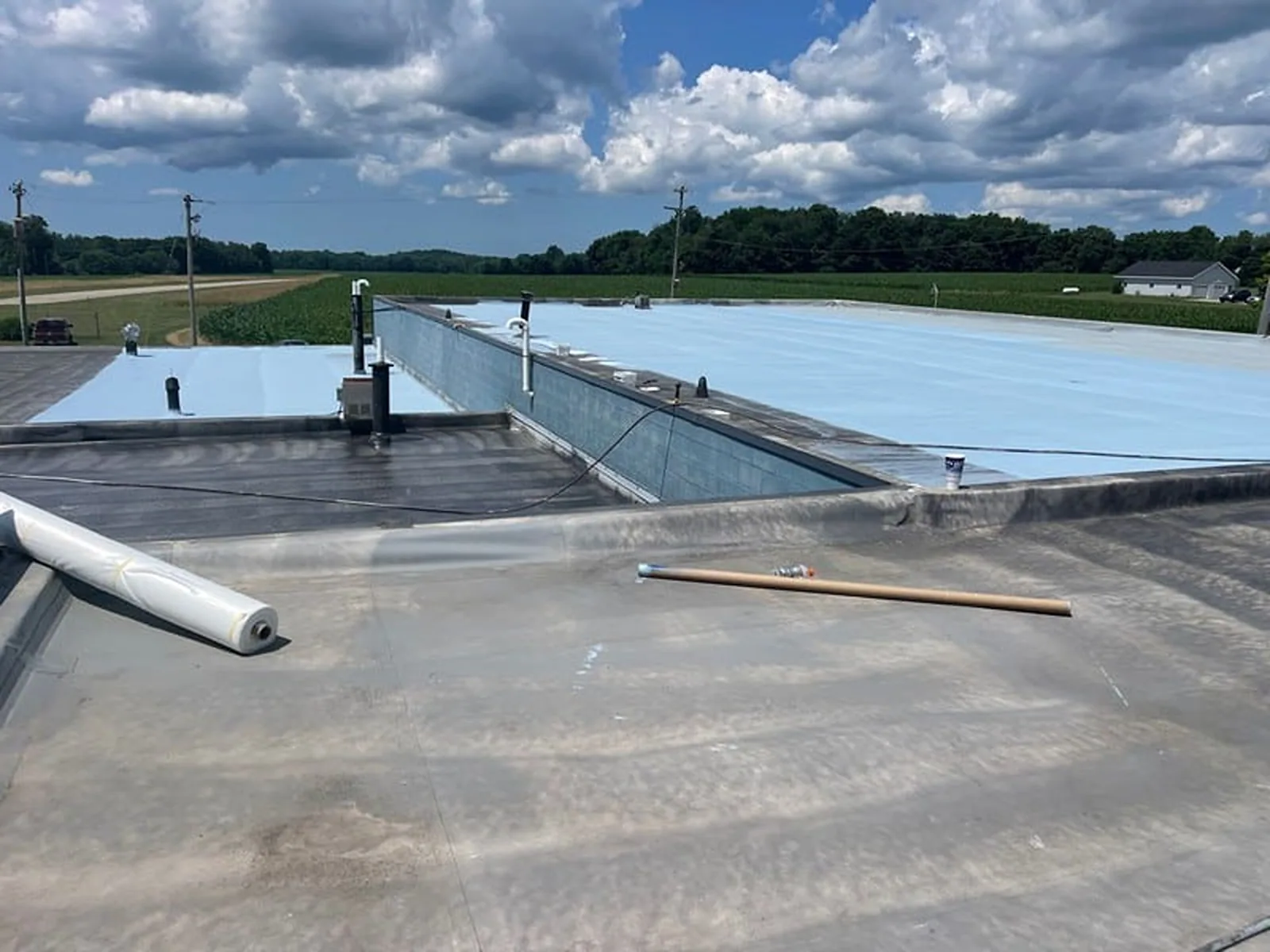
The structure must carry the existing assembly and proposed addition, while drainage must still function after the new layers go down. We review structural information, measure how added thickness affects curbs, and inspect drains, scuppers and perimeter terminations. If the new field sits above a drain bowl, water may collect. The scope identifies drain adjustments, edge transitions and equipment flashing so the overlay connects to the building.
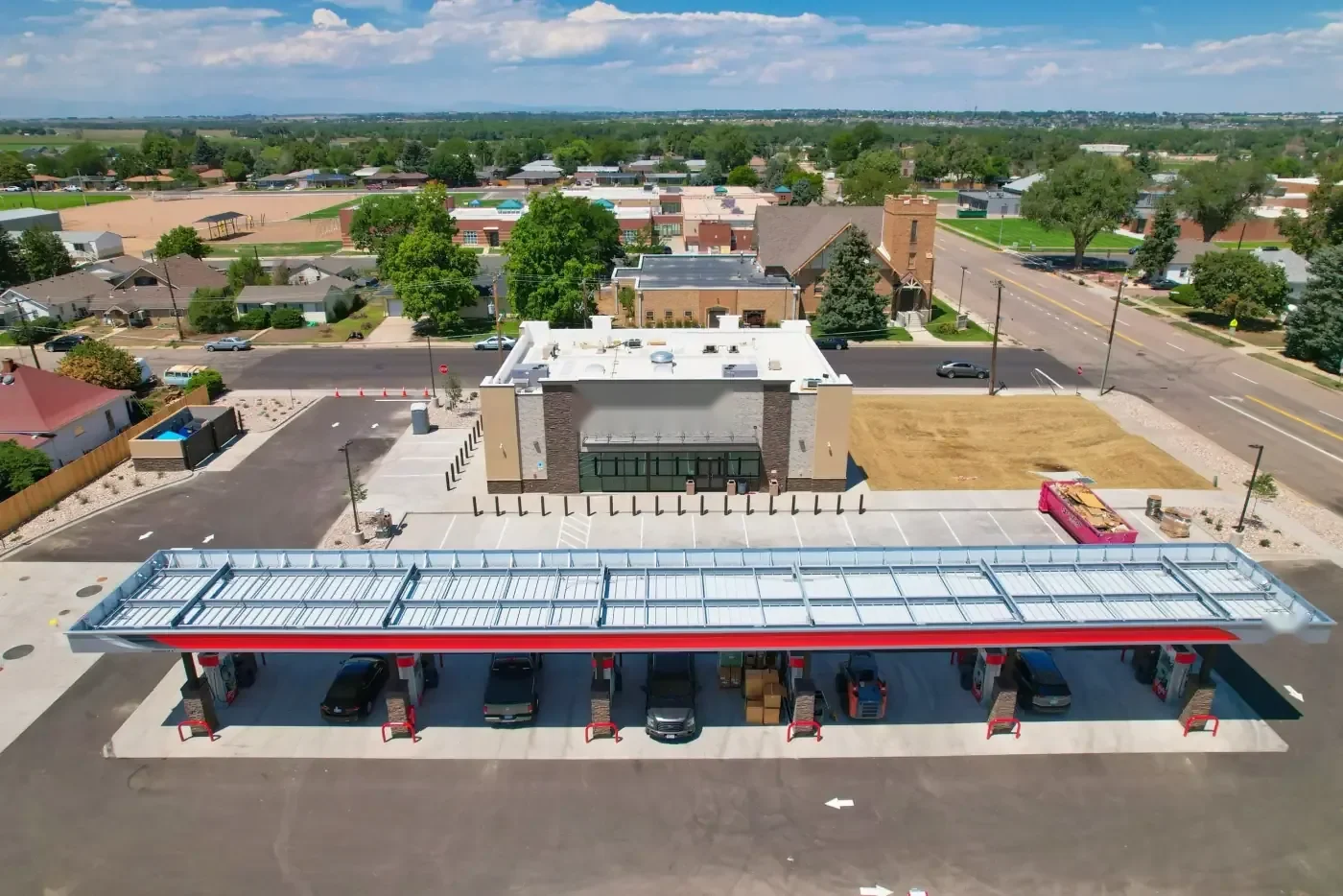
At the Normaltown commercial area, medical and academic uses create access and service-route constraints; along Lexington Road, business hours and deliveries may matter more. A recover may reduce tear-off, yet crane picks, material delivery and temporary closures still need an agreed occupied-building sequence. The contact confirms what must stay available during each phase.
Confirm the permitted assembly
Athens-Clarke County applies the 2024 International Building Code with Georgia Amendments, effective January 1, 2026. Whether an overlay is allowed depends on the existing layers, the proposed assembly and the applicable project requirements. We document what the roof contains and coordinate code questions through the project’s permitting process before installation. A label such as recover or overlay is not enough to establish that a particular building qualifies.
We compare the proposed attachment method, insulation, cover board, membrane and perimeter details with the observed substrate. Existing fasteners may not suit a new assembly, and a smooth or damaged surface may need preparation. Where penetrations or curbs are too low after added thickness, we include modifications in the scope. The aim is to know the tie-in and drainage consequences before a material order or schedule makes the decision harder to change.
Protect each transition
After approval, the crew prepares the surface, repairs details that will remain, and installs the selected assembly in sequenced areas. We plan the laydown area and delivery path so material does not block loading or an occupied entrance. Athens’ humid summers bring frequent thunderstorms, with regional risk from damaging wind, hail and tornadoes. The daily stopping point needs a secure tie-in and clear weather hold rule; any exposed edge must be closed to the system’s requirements.
The field lead checks seams, perimeter attachment, drains, curbs and penetrations before releasing the next section. Rooftop equipment stays protected, and access is coordinated when a unit needs service. If preparation reveals unexpected moisture, work pauses while the condition is documented and the owner decides whether the recover still makes sense.
When removal makes more sense
Full removal is clearer when wet insulation is widespread, the deck needs broad repair, several roof layers already exist, or transitions cannot be raised reliably. A condition inspection can record those findings and distinguish localized defects from assembly-wide issues. We consider the condition of drains, edge metal and penetrations. If a recover requires many exceptions, tear-off may provide a better-defined starting surface.
The proposal should state what demolition is avoided, which repairs remain, how added height affects details and what condition would trigger a change. Cost and schedule depend on removal volume, disposal, access, substrate work, material selection and weather-sensitive phases. We explain those drivers rather than presenting recover as automatically cheaper or replacement as automatically more durable. TPO and EPDM are options; building conditions determine their suitability.
Make the decision before ordering
A roof walk gives the owner a chance to see the evidence behind the recommendation. We mark test areas, review drainage and perimeter details, explain what the inspection can and cannot establish, and identify the information still needed from the building record. For an Athens property near Downtown Watkinsville or the East Jackson Industrial Park, confirm the parcel jurisdiction and site access before the schedule is set. The city or county permitting authority follows the actual address, not the nearest town name.
Commercial Roofing Athens can then prepare a scope for recover, selective tear-off or full replacement with the same assumptions stated for each option. If active leakage needs attention while the capital decision is pending, we can define a separate leak response and preserve the evidence. Schedule a roof walk to map access, staging, operating hours and weather-sensitive work before pricing the overlay.
Frequently Asked Questions
How do you know whether the existing roof can stay?
Test cuts, visible edges, moisture checks, deck information and the condition of drains and transitions provide the decision basis. We record the layers and identify wet or unstable areas before recommending a recover. A single dry test location does not prove that the whole roof is dry, so the inspection plan must sample conditions that represent the roof sections under consideration.
Will adding a layer change the height at drains and curbs?
Yes, added thickness can affect drain bowls, door thresholds, equipment curbs and perimeter flashing. We check those dimensions before approval and include needed extensions or modifications in the scope. Drainage should be reviewed with the finished height in mind, since keeping an existing low point can undermine the overlay even when the field membrane is sound.
Does a recover eliminate disruption from tear-off?
It can reduce demolition and debris handling, but deliveries, staging, roof access and equipment coordination still have to be planned. We map occupied routes and daily work zones with the property contact. Buildings near Beechwood-Alps or the UGA Health Sciences Campus may have different circulation and service windows, and the manager confirms what applies to the specific address.
What happens if wet insulation is found after work starts?
We stop at the affected area, document the condition and bring the finding to the owner before covering it. The repair may require selective removal or a revised replacement boundary. The proposal should state how concealed moisture is handled so the cost, sequence and schedule change can be reviewed while the assembly is visible.
Does the current Athens code allow every roof overlay?
No. Athens-Clarke County adopted the 2024 International Building Code with Georgia Amendments effective January 1, 2026, but a specific recover depends on the building, existing layers and proposed assembly. We document the roof and confirm the project requirements through the applicable permit review before treating an overlay as approved.