Commercial Roof Drain and Scupper Repair in Athens, GA
Home / Commercial Roofing Services / Commercial Roof Drain and Scupper Repair
Commercial Roof Drain and Scupper Repair
Water that remains on a roof after rain needs a path traced back to its outlet. We follow the drainage route from high points and crickets to drains, scuppers and downspouts, then look for a blockage, settled area or detail interrupting flow. A commercial property near Oak Street or a manufacturing building at Coggins Park may have different roof geometry, but each needs a clear outlet and service route before corrective work begins. The inspection records ponding, nearby seams and penetrations, and the discharge point; a roof inspection can also identify adjacent membrane issues.
Map water to an outlet
We begin by observing the roof’s intended path and locating every drain, scupper, gutter and overflow point. The field review checks strainers, bowls, clamping rings, leaders, downspout connections and any visible obstruction. We record whether water is held by debris, a low spot, a raised seam or a cricket that sends flow in the wrong direction. If the building has several roof levels, each outlet is tied to the section it serves so the repair scope does not confuse one drainage area with another.
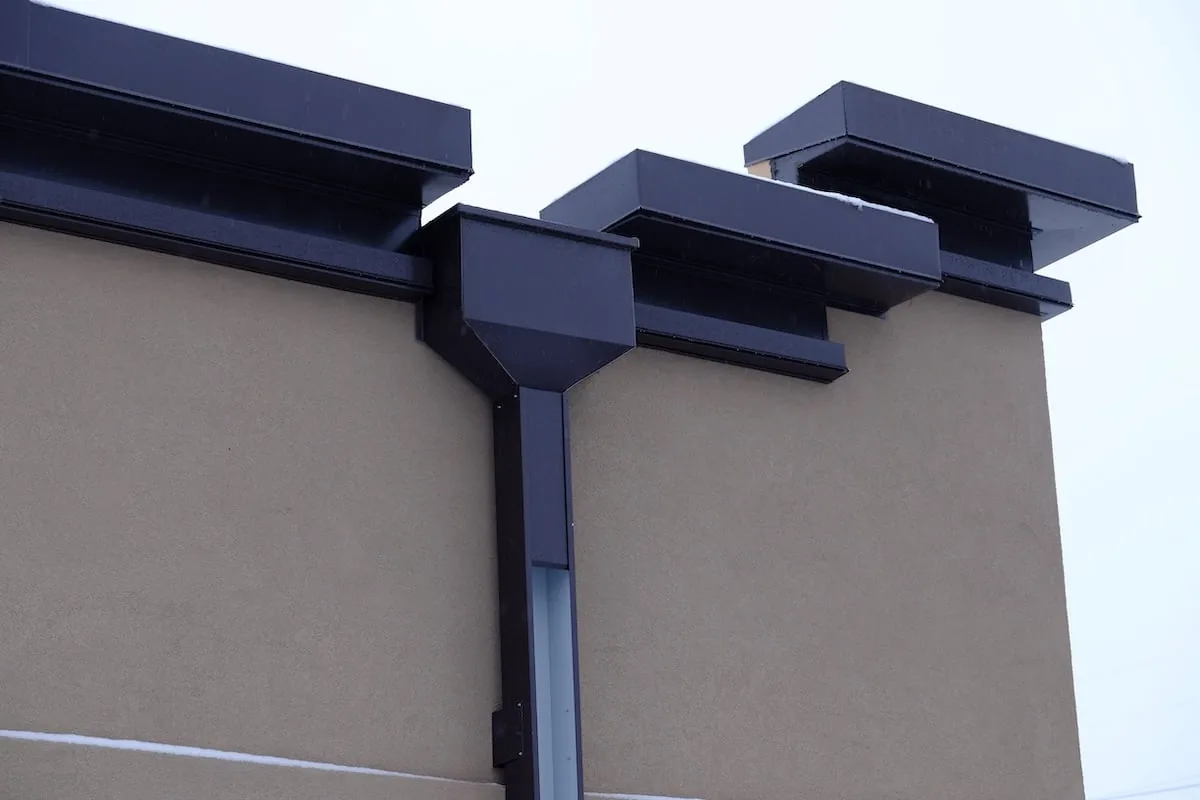
At the perimeter, we examine whether water can pass through a scupper and discharge clear of the wall, or whether gutter and downspout connections are directing flow where intended. We check the surrounding flashing and membrane because an outlet can be open while its connection is failing. A blocked strainer may call for cleaning; a damaged bowl or separated flashing needs a different repair. We record what is visible and recommend further investigation when the outlet is concealed or inaccessible.
Separate ponding from a leak
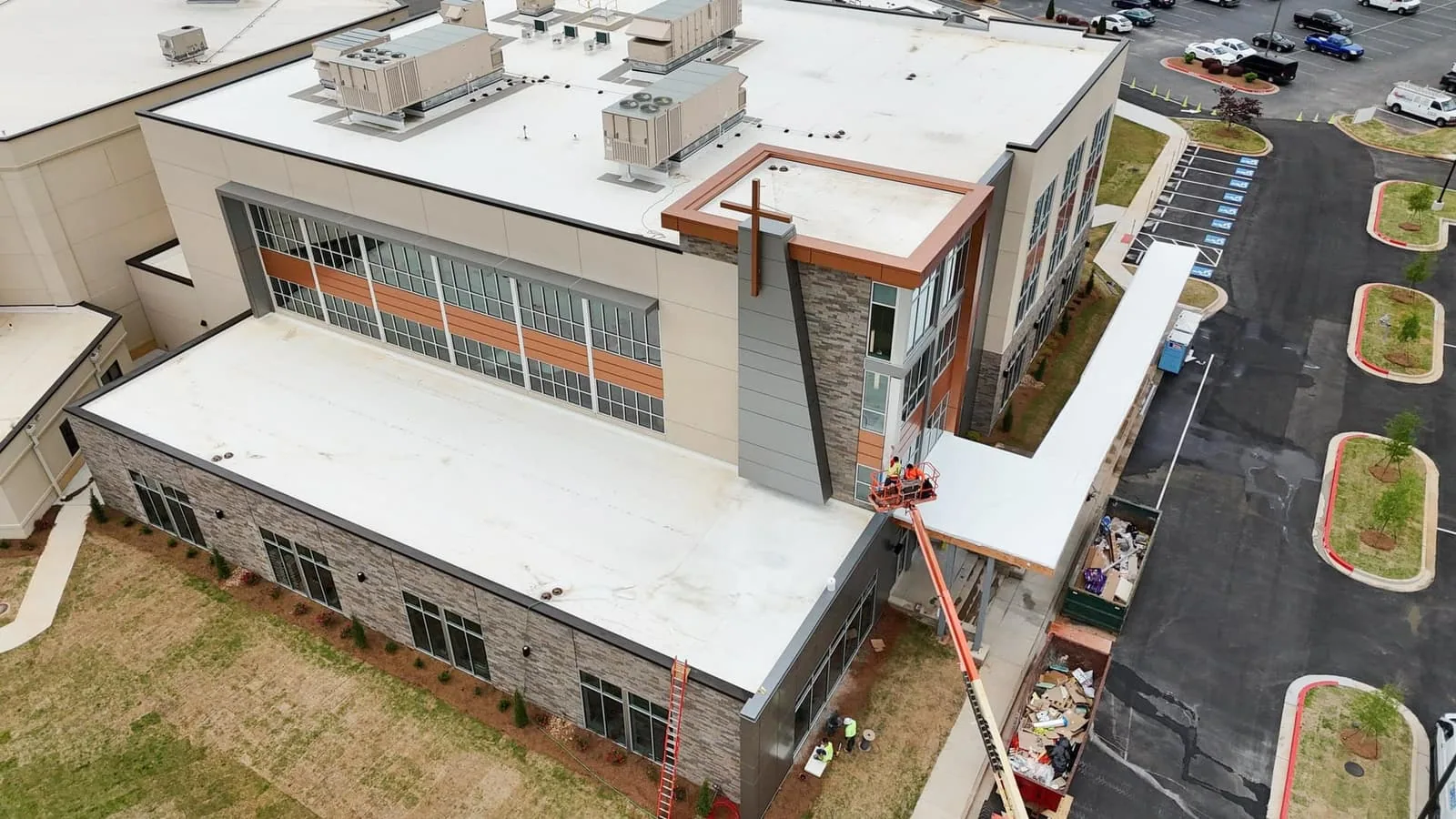
Standing water can indicate a clogged outlet, a deflected deck, an insulation low spot or a roof slope that does not carry water to the drain. The observation alone does not identify which condition exists. We record where water remains and compare it with the drainage layout, roof slope, seams and interior reports. If water is near an open detail, we inspect that connection for entry; if the outlet is blocked, clearing it may restore the path but will not correct a structural depression.
Persistent moisture can affect seams, coating condition and repair materials, so the report should state the size and location of the affected area and what remains uncertain. A cricket or tapered insulation may redirect water around an obstruction, but changes need to fit the existing assembly and available drain capacity. For broad wet areas, an infrared survey or test cuts may help determine whether moisture has entered below the membrane. We do not treat ponding as proof of hidden damage without inspection.
Choose the right correction
A drainage repair may involve removing debris, adjusting a strainer, rebuilding flashing, replacing a drain component, adding a cricket or correcting a downspout connection. We identify the cause before selecting a fix. A new scupper cannot solve a low roof section that directs water away from it, and a bead of sealant around a drain does not restore a failed clamping connection. The proposed scope lists the materials, affected roof areas and access needed to complete the correction.
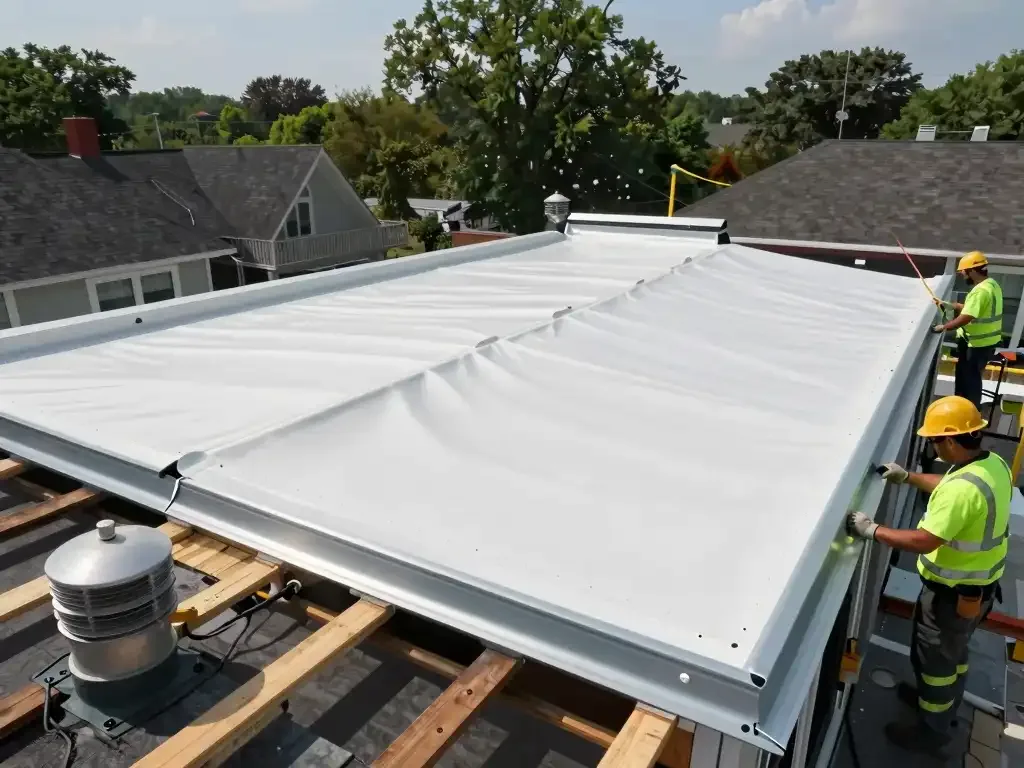
If the roof membrane around the drain is damaged, a compatible patch or field repair may be needed with the plumbing detail. At a metal roof, panel movement and gutter attachment affect the repair approach; at a membrane roof, the drain ring and membrane termination control the detail. We coordinate any interior or plumbing access with the property contact. A related gutter or edge repair can be scoped separately, and the owner may compare a larger roof recover if drainage changes are part of broader restoration.
Plan for Athens rainfall windows
Athens receives frequent warm-season thunderstorms, so outlets need to stay clear and repairs need a reliable stopping point before rain returns. We review forecasts before opening a drain area or removing membrane and establish how each detail will be secured at shift end. A storm may carry leaves or debris onto a roof, but the actual condition should be checked at the property rather than assumed from the event. During service, we remove collected material from the immediate work path and confirm that debris is not left at another outlet.
On a property in Lexington Road corridor, delivery traffic and business hours may determine the access window; at Downtown Athens, pedestrian paths and staging can be more restrictive. The site contact confirms roof hatch access, discharge locations, loading routes and any area that must remain open. For larger buildings, each drain is marked by roof section so maintenance staff can report a future blockage by a location the contractor can find.
Record the water path
Before-and-after photos can show debris removal, a repaired flashing or a changed outlet connection. The closeout identifies any drainage issue not included in the approved work, such as a low spot that needs design review or a downspout that discharges beyond the roof contractor’s scope. We list the roof areas inspected and whether water flow was observed during the visit. When conditions are dry, a visual check may confirm an open outlet but cannot demonstrate performance in a later rain event.
Recurring service can revisit drains, scuppers and gutters at a schedule set with the property manager. A maintenance visit can document debris, strainers and details on the same route each time. If interior water entry continues, we trace it separately through a leak investigation, since a clear drain does not prove the roof has no other opening.
Schedule a drainage walk
Share the address, roof plan, known ponding locations, recent leak reports and any restricted access or discharge areas. If staff have photos after rainfall, include the date and roof section. We can then identify which outlets and paths need inspection and whether a cleaning, repair or slope correction should be priced.
Commercial Roofing Athens can walk the roof, document drainage conditions and coordinate work around the building’s operation. Schedule the visit to map access, staging and weather-sensitive work before the correction is scoped. The report will connect each outlet to its roof area and identify what still needs confirmation.
Frequently Asked Questions
Does standing water mean the roof is leaking?
Not by itself. Ponding may result from a blocked outlet, a low area, a drainage design or a detail that has failed. We inspect the water path and adjacent membrane, then distinguish visible ponding from a confirmed entry point or concealed moisture.
Can you clear drains during a maintenance visit?
Yes, when access is safe and the approved work includes clearing. We remove debris from the service area, inspect the visible bowl and strainer, and record any damaged component or flashing. The record identifies outlets not reached or conditions that require a separate repair scope.
What is a roof cricket used for?
A cricket is a sloped feature that helps divert water around an obstruction or toward a drain. We check its slope, surface and tie-in with the surrounding roof. A new cricket must fit the building’s drainage layout and connect to a functioning outlet.
Will drain repair stop water at a wall or curb?
Only if the drain or related flow path is causing that condition. We inspect the wall, curb, membrane and nearby seams before attributing a leak to the outlet. When the entry point is elsewhere, we identify the necessary repair rather than treating the drain as a substitute fix.
Can you verify drainage when it is not raining?
We can inspect the outlet, slope cues and visible condition in dry weather, but flow under rainfall cannot be observed then. We record that limitation in the report and can review the area after a rain event if the owner needs confirmation of discharge behavior.