Storm Damage Roof Repair in Athens, GA
Home / Commercial Roofing Services / Storm Damage Roof Repair
Storm Damage Roof Repair
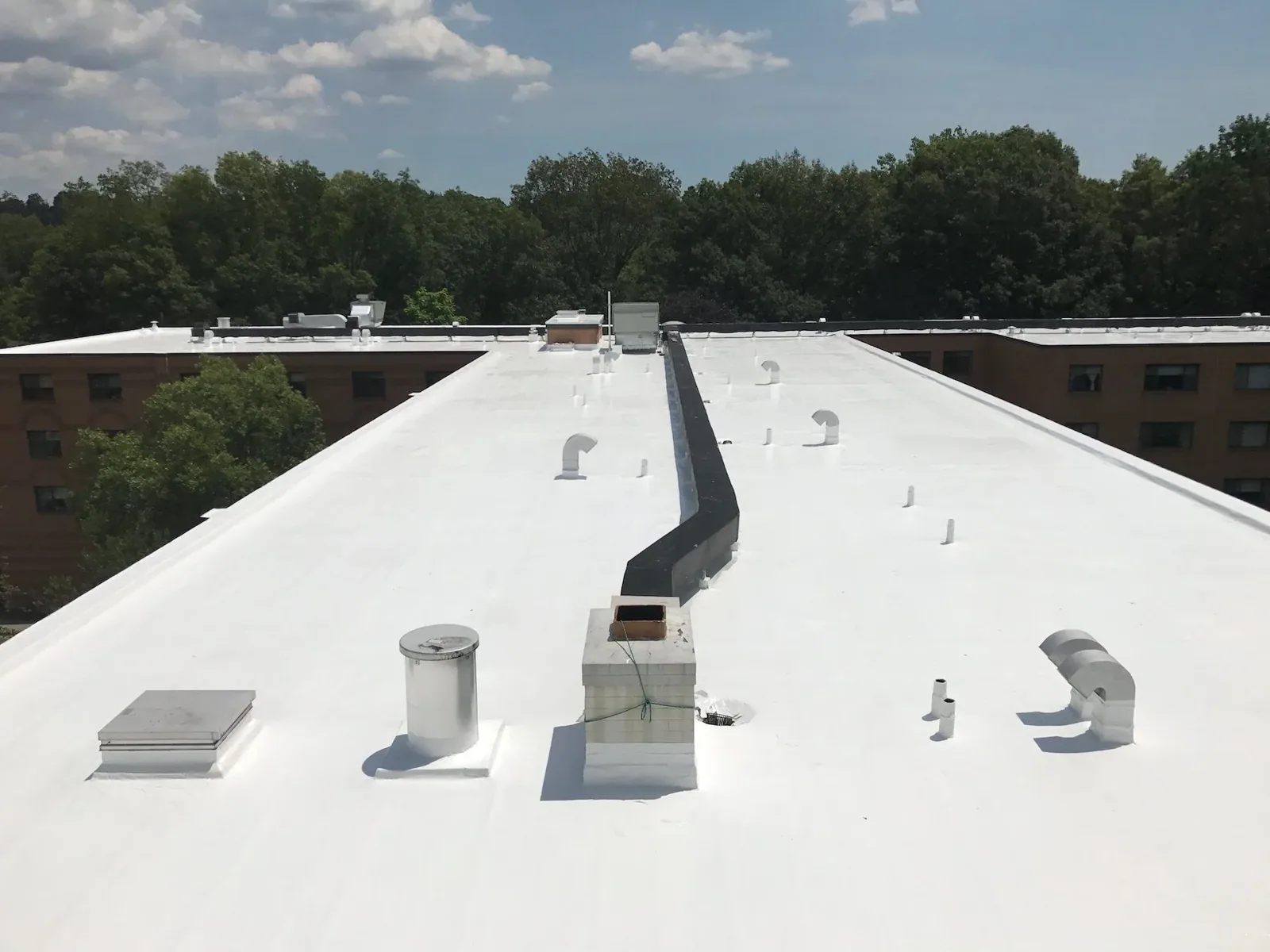
After a storm, the first job is to separate what the building experienced from what the roof actually shows. We confirm the address, interior reports and safe access conditions, then inspect edges, seams, penetrations, rooftop equipment and drainage for visible displacement or impact. Emergency response is available around the clock, including weekends and holidays, so we can coordinate the next safe assessment and stabilization step. North-central Georgia experiences damaging thunderstorm winds, large hail and tornadoes, with the most active tornado period in spring. For a facility near East Athens commercial area or a retail building on Atlanta Highway, we plan the access route with the site contact before roof work begins.
Wait for a safe roof window
Lightning, high winds, slick surfaces, downed lines and unstable building materials can make immediate roof access unsafe. The property contact identifies any restricted area, active utility response, blocked gate or interior hazard before a crew is dispatched. If conditions do not allow entry, we help the building team protect affected rooms and set a return window.
Inside, staff can move portable equipment, contain drips where safe and keep people clear of wet ceilings or floor hazards. Photographs and timing records help preserve the initial report. Do not enter a damaged area solely to obtain a better picture. We record what the property contact reports separately from what is visible from the roof, which keeps the later repair scope tied to actual inspection findings.
Inspect the connected details
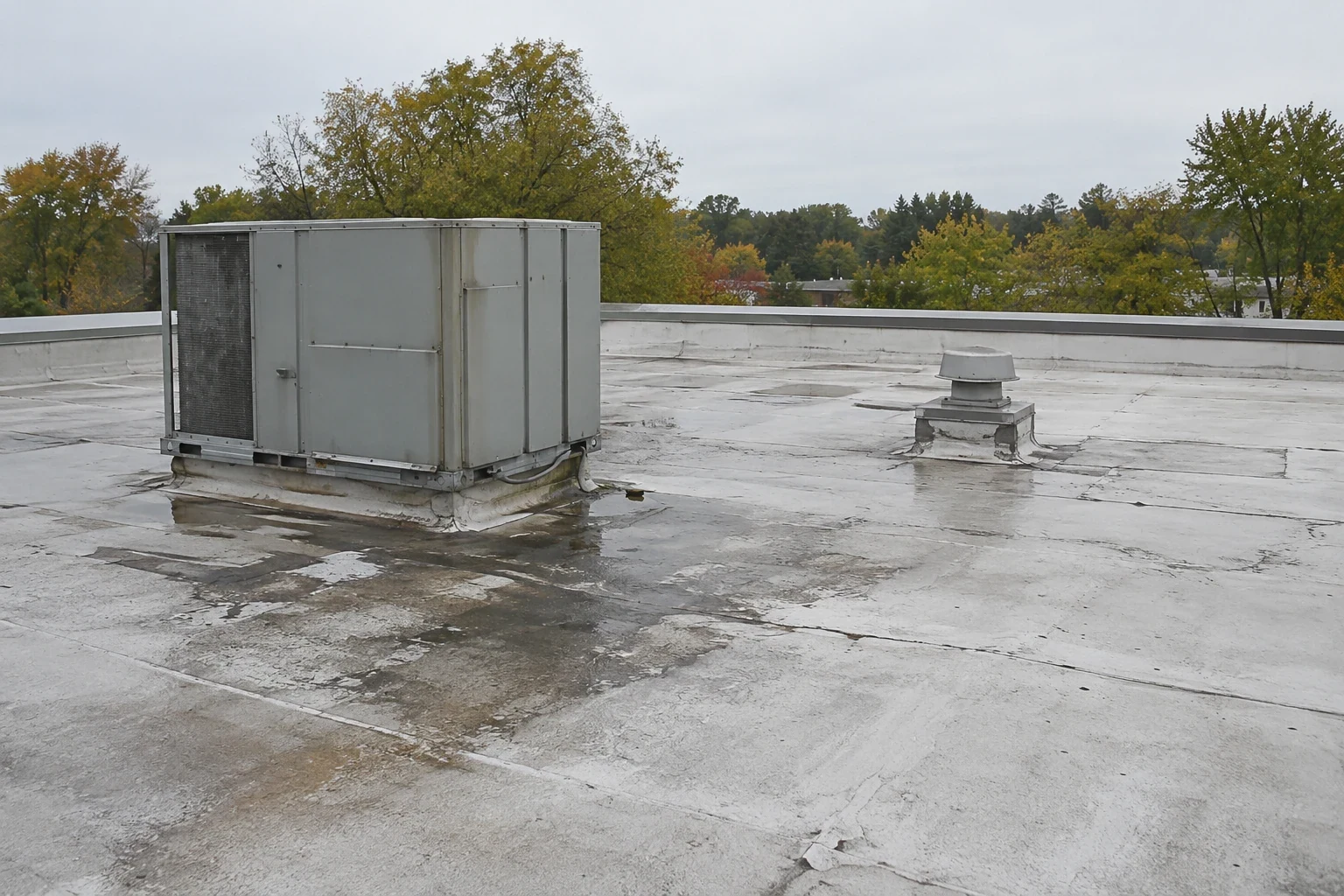
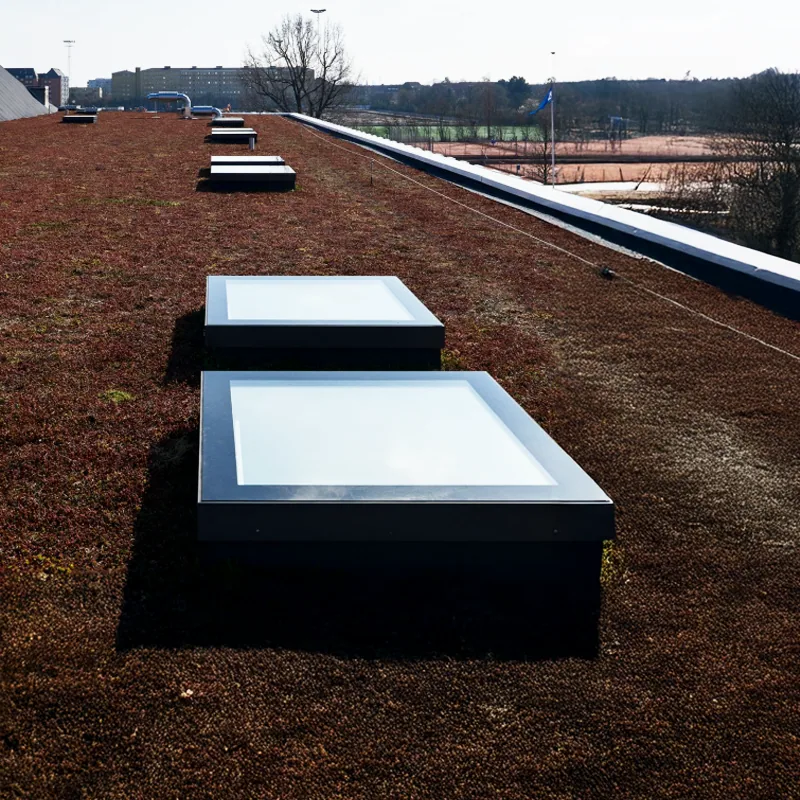
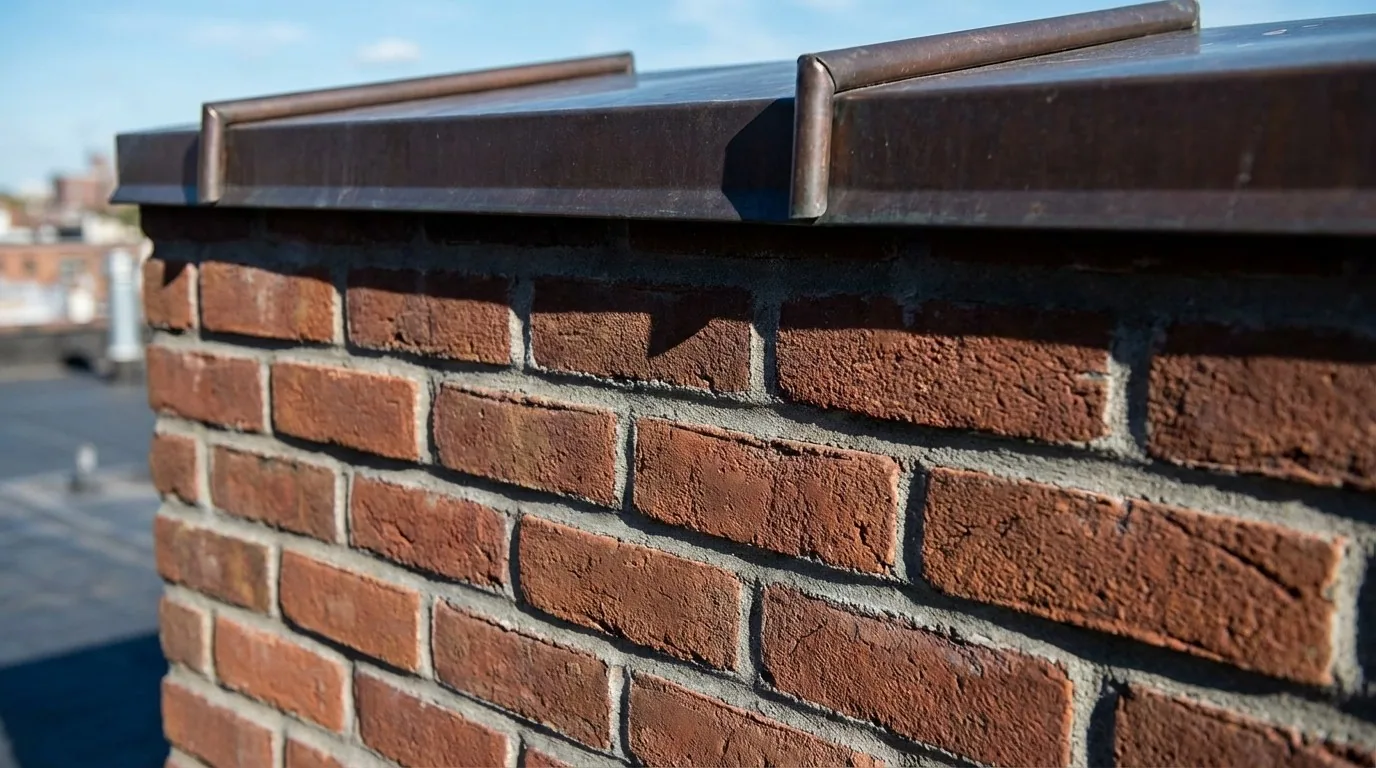
Wind can lift edge metal, loosen flashing, disturb fasteners or separate a seam. Hail can mark a surface or damage a component in a way that needs system-specific review. A fallen limb may puncture membrane, while driven rain can find an opening at a curb or wall transition. We inspect the reported area and connected details, then photograph each observed condition with enough surrounding context to locate it. The report distinguishes visible damage from age, earlier repairs or an unrelated defect.
Drainage deserves a separate look after heavy rain because debris or displaced material can slow flow and leave water around a low point. We inspect drains, scuppers, gutters, crickets and adjacent membrane. Where water entered indoors, the location of a stain does not by itself identify the opening above it. We follow likely paths across the assembly and recommend further testing if moisture may extend beyond the visible area. A leak response can protect active interiors while the permanent repair is scoped.
Secure openings before repair
If material is displaced or a puncture is open, we determine whether a temporary cover, patch or other dry-in can be installed safely and secured for the expected weather. The temporary work is documented by location and limitation. It should not be confused with a permanent repair; the roof assembly and surrounding details need closer review once conditions permit. When wind remains high or surfaces are unsafe, the crew does not force a temporary installation that cannot be secured.
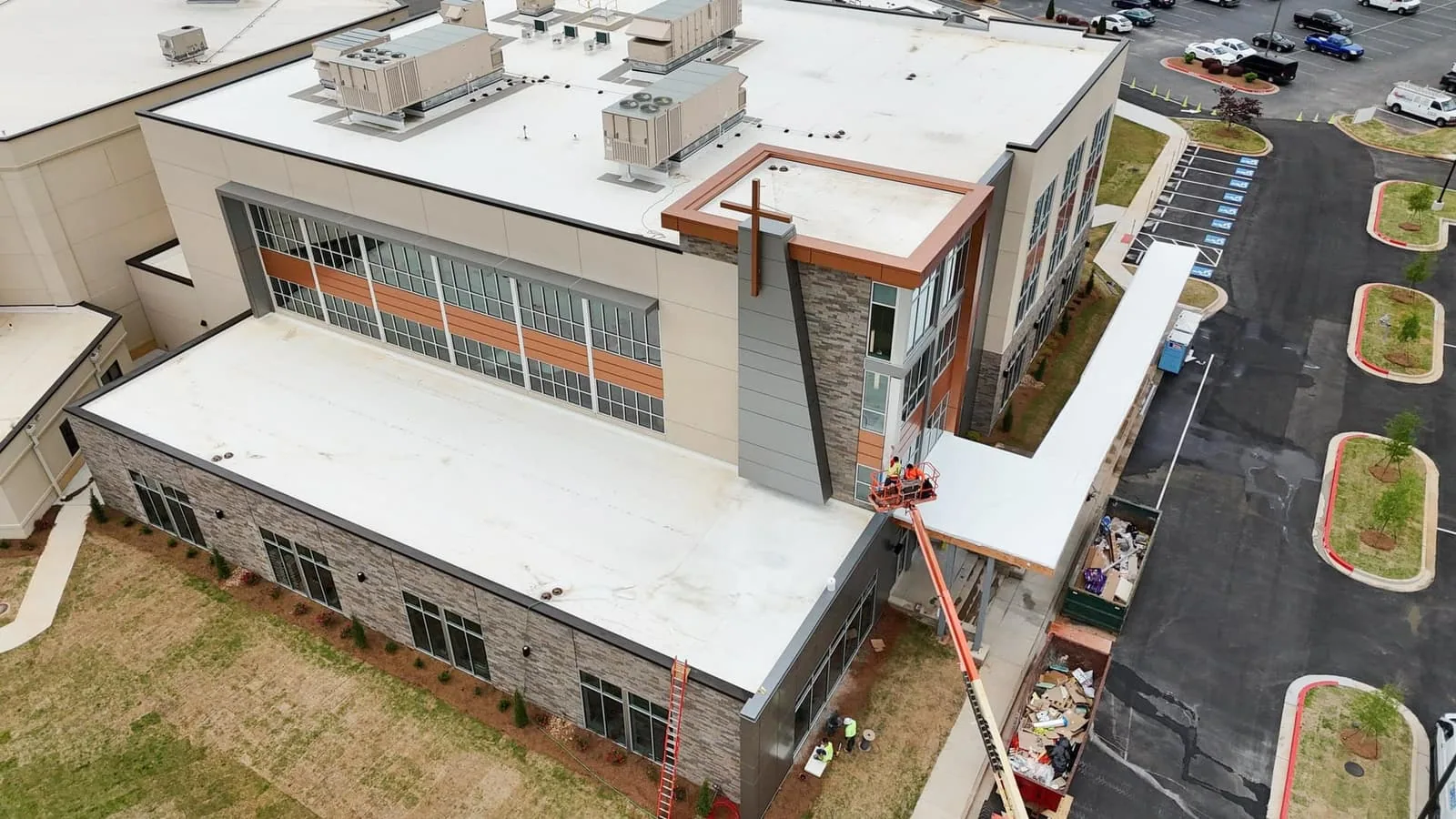
At a school or healthcare property, the contact may need a route kept open while protection work proceeds overhead. At an industrial location such as Athens Commerce Park, deliveries, vehicle paths and equipment zones shape staging. We agree on the laydown area, pedestrian detour, lift needs and timing with the manager. A weather hold point marks where work can pause without leaving an exposed roof section.
Price the permanent work
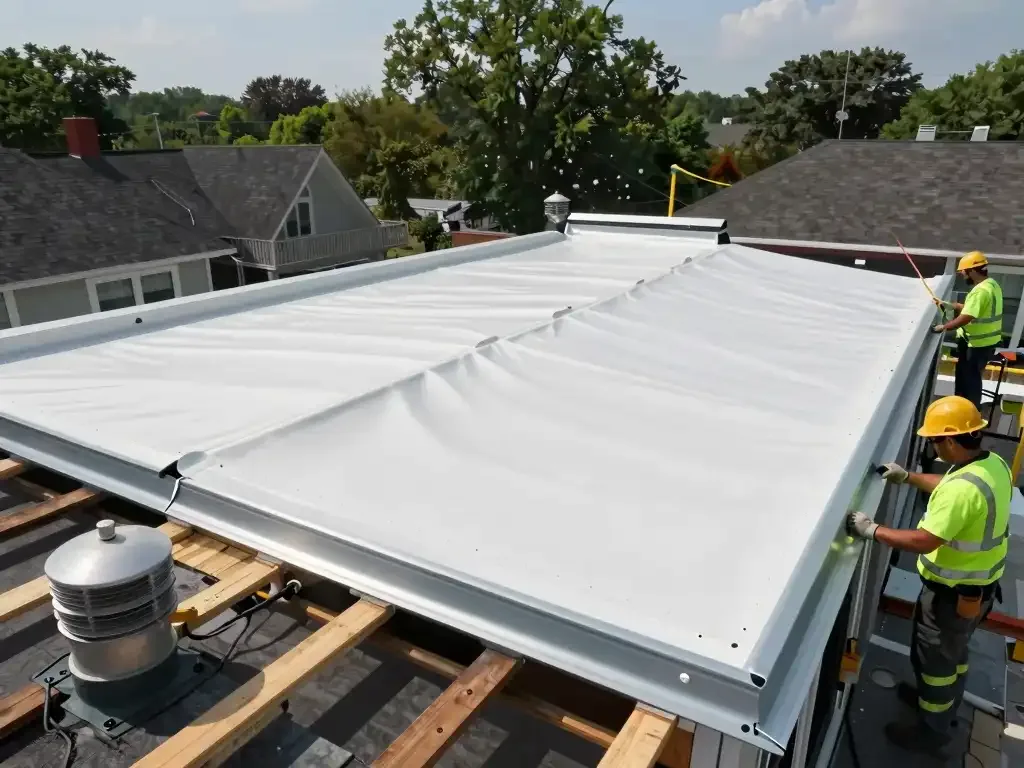
Once a full inspection is possible, the written scope identifies each repair area, assembly, material and access need. A membrane puncture may require removal of wet or damaged material and a compatible patch; a failed seam may need welding or replacement; displaced edge metal may require fastening and a rebuilt transition. If hail is suspected, we document the surface and detail conditions relevant to the roof system rather than assuming every mark affects performance. The owner can compare repair with broader replacement when the findings support that decision.
Cost and schedule reflect roof access, repair extent, material availability, test cuts, disposal and the need to protect occupied spaces. The proposal also lists conditions that could change the work, such as concealed moisture or deck damage. A condition inspection may be appropriate where damage appears across several roof areas. When a storm claim is involved, we can provide photos and scope documentation while keeping our field findings separate from the insurer’s coverage decision.
Keep the building route clear
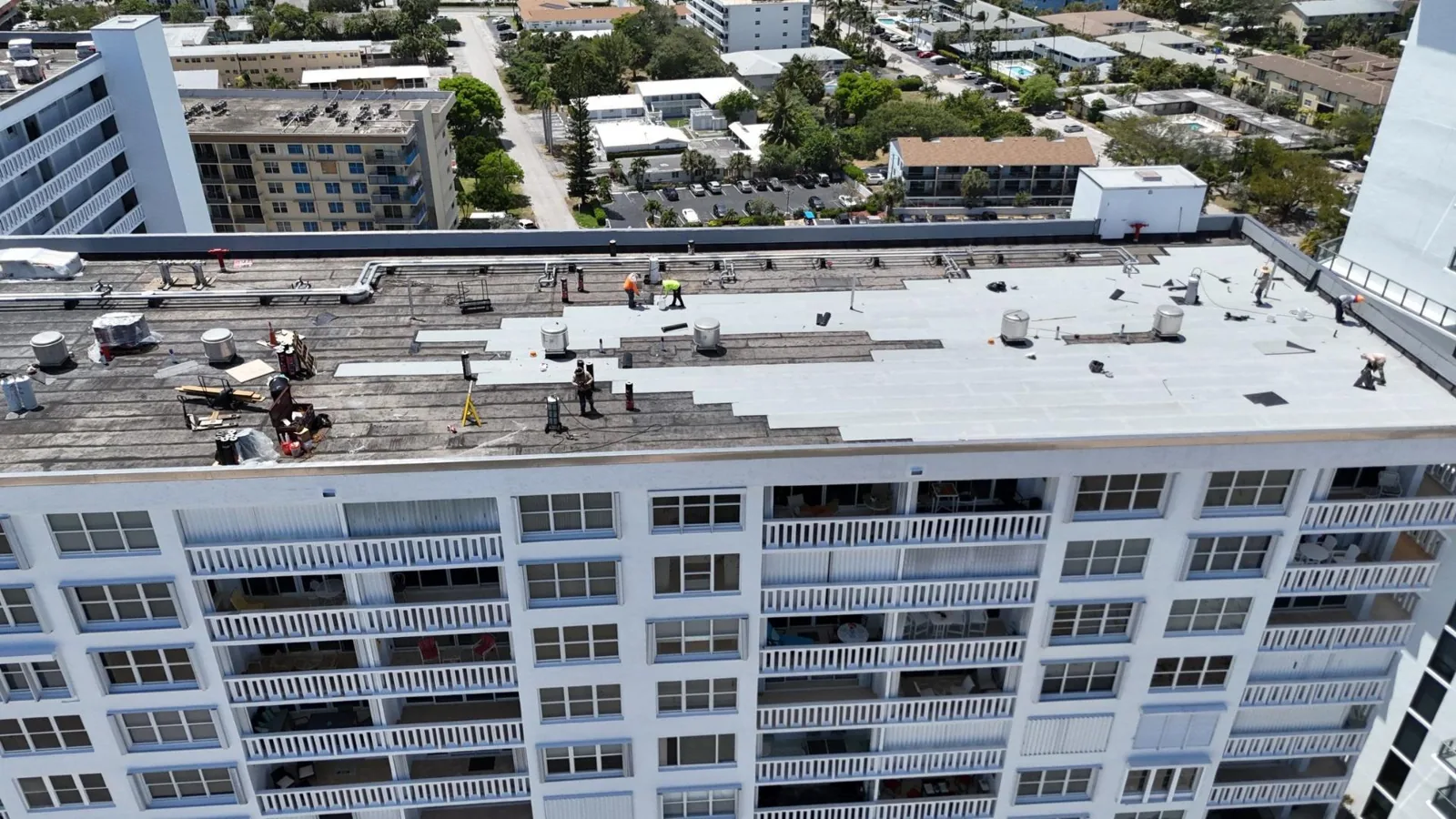
Storm recovery may happen alongside utility work, tenant calls and other repairs. We identify who can authorize roof access, which entrance stays open and what hours are available for noisy work or material delivery. At Piedmont Athens Regional, patient and service movement should be coordinated through facility staff; at the UGA campus, the building contact confirms campus-specific routes and restrictions. Those procedures differ by address and must be confirmed before mobilization.
Daily records track what was secured, which areas remain open and what the next visit requires. The closeout includes photos, repaired locations, materials used and limitations. If more water appears after the repair, the manager can compare the new report with the record and arrange another inspection without assuming it is the same entry point. A maintenance route can revisit seams, drains and perimeter details after immediate storm work is complete.
Report the building and conditions
When requesting a storm inspection, provide the address, time of the event, interior areas affected, current leak status and any access restriction. Include information about utility response, blocked routes or unsafe roof conditions. Photographs from a safe location can help with initial coordination, but roof-level findings determine the repair plan.
Commercial Roofing Athens can inspect visible conditions, install temporary protection when feasible and prepare a permanent scope. We coordinate staging and a return window with the building contact, then leave a record of findings and work completed. Call to map the next safe access window and identify what must be protected first.
The written record separates conditions described by staff from damage visible during inspection and identifies any area that must wait for safe access.
Frequently Asked Questions
Does a storm in Athens mean our roof was damaged?
No. Regional weather explains the conditions to check, but an inspection must establish what happened at the property. We document visible displacement, impact or openings and distinguish it from earlier wear or unrelated defects. A severe-weather report alone is not a repair finding.
Can you tarp a roof while wind is still strong?
Only if the crew can install and secure the temporary protection safely. High wind, lightning or unstable surfaces may require waiting while the building team limits interior exposure. We record the temporary measure and its limits, then return for permanent work when conditions allow.
What evidence should we keep for a storm claim?
Preserve event timing, interior photographs, roof access records and any temporary work record. We can provide roof photos and a written repair scope based on observed conditions. The carrier decides coverage, and our documentation should not describe a cause or damage extent that was not confirmed.
How do you separate hail marks from roof damage?
We inspect the particular assembly and look at whether visible marks affect its material or connected details. Some marks may be cosmetic, while other damage can require repair. If the condition cannot be resolved visually, we identify what testing or closer review would help before defining the scope.
Will the first visit finish the permanent repair?
Sometimes, when access is safe, the defect is clear and materials are available. Other calls need temporary protection first, followed by a closer inspection and a scheduled repair. The work record states what was completed, what remains and why another visit is needed.