Commercial Roof Insurance Claim Assistance in Athens, GA
Home / Commercial Roofing Services / Commercial Roof Insurance Claim Assistance
Commercial Roof Insurance Claim Assistance
An insurance file is easier to review when the reported event, roof observations and proposed work are kept distinct. We inspect the building, photograph visible conditions, record the affected areas and prepare a repair scope tied to what was found. North-central Georgia sees damaging thunderstorm winds, large hail and tornadoes during the year. A storm date helps organize the inspection file; we photograph roof conditions and describe findings for the property record, while the insurer determines coverage. For an owner with a facility near Prince Avenue or a commercial property in Athena Industrial Park, we coordinate roof access and document address-specific findings for the property’s file.
Build a clear event timeline
We begin with the property address, reported event date, interior observations, current leak status and any emergency work already completed. The manager can share safe photographs, maintenance history, previous repairs and roof plans. We distinguish those records from new inspection findings and record when an area was not accessible. This creates a useful timeline without presenting a reported condition as a confirmed roof defect.
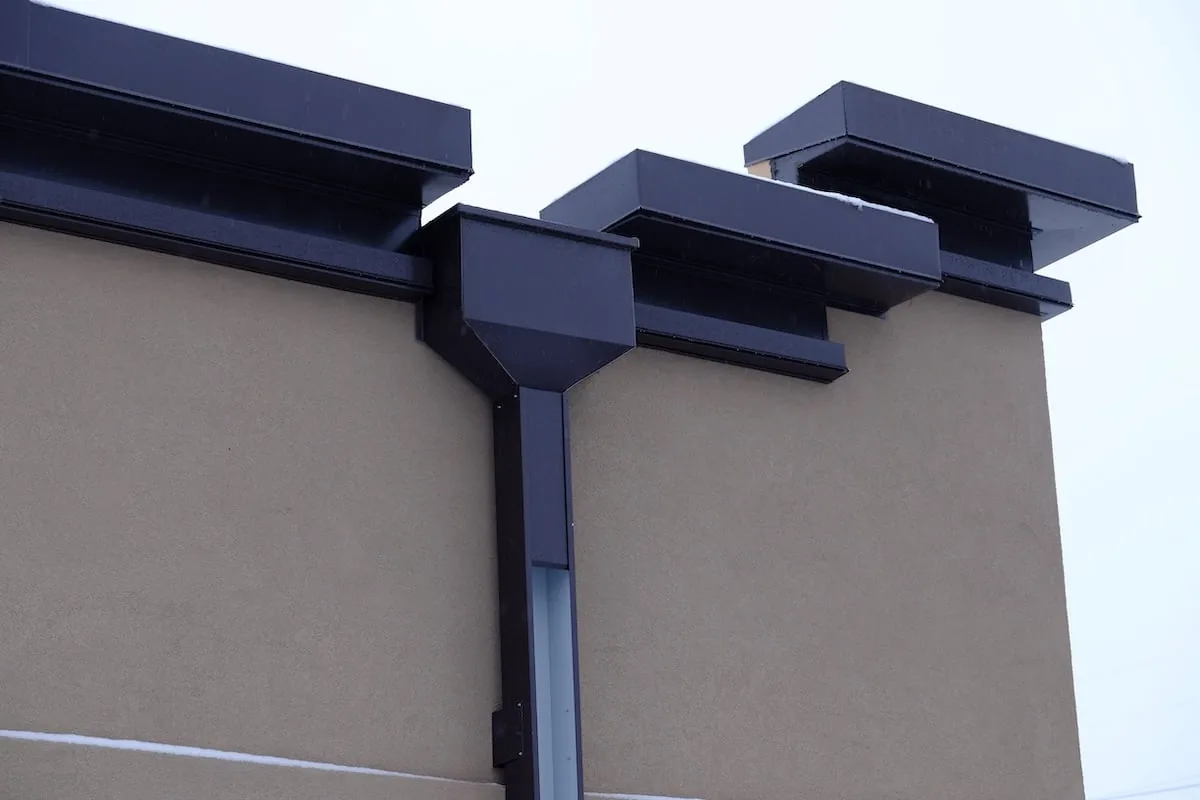
North-central Georgia’s severe-weather period is active in spring and summer for damaging wind and hail, while most tornadoes occur March through May. Those patterns can help establish the context for an inspection, but the building’s condition still has to be observed. We document roof-specific evidence such as displaced edge metal, open seams, punctures, impact marks, lifted flashing or drainage changes. If no damage is visible in a requested area, the report says what was inspected and does not infer a loss from weather alone.
Photograph the roof conditions
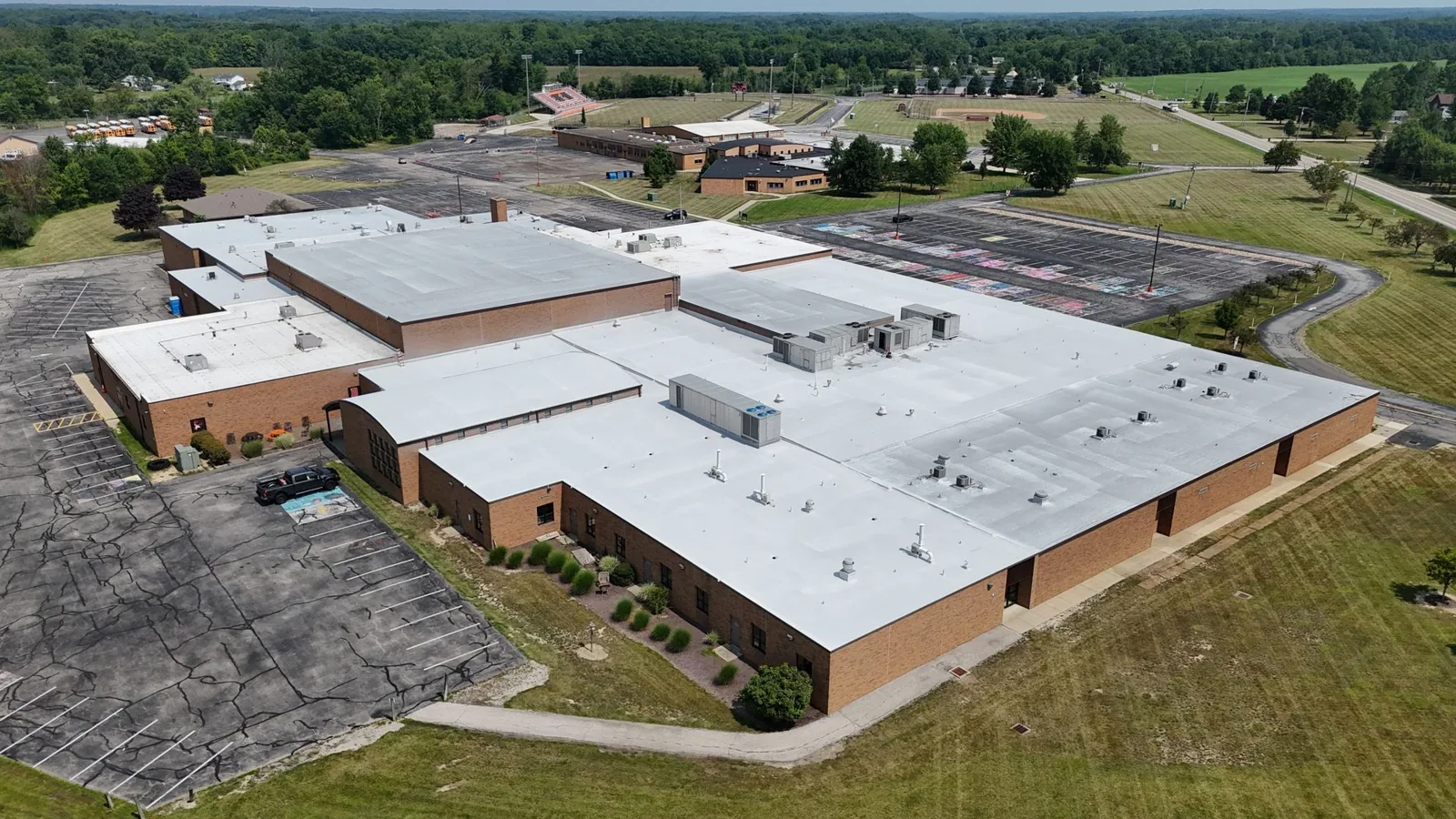
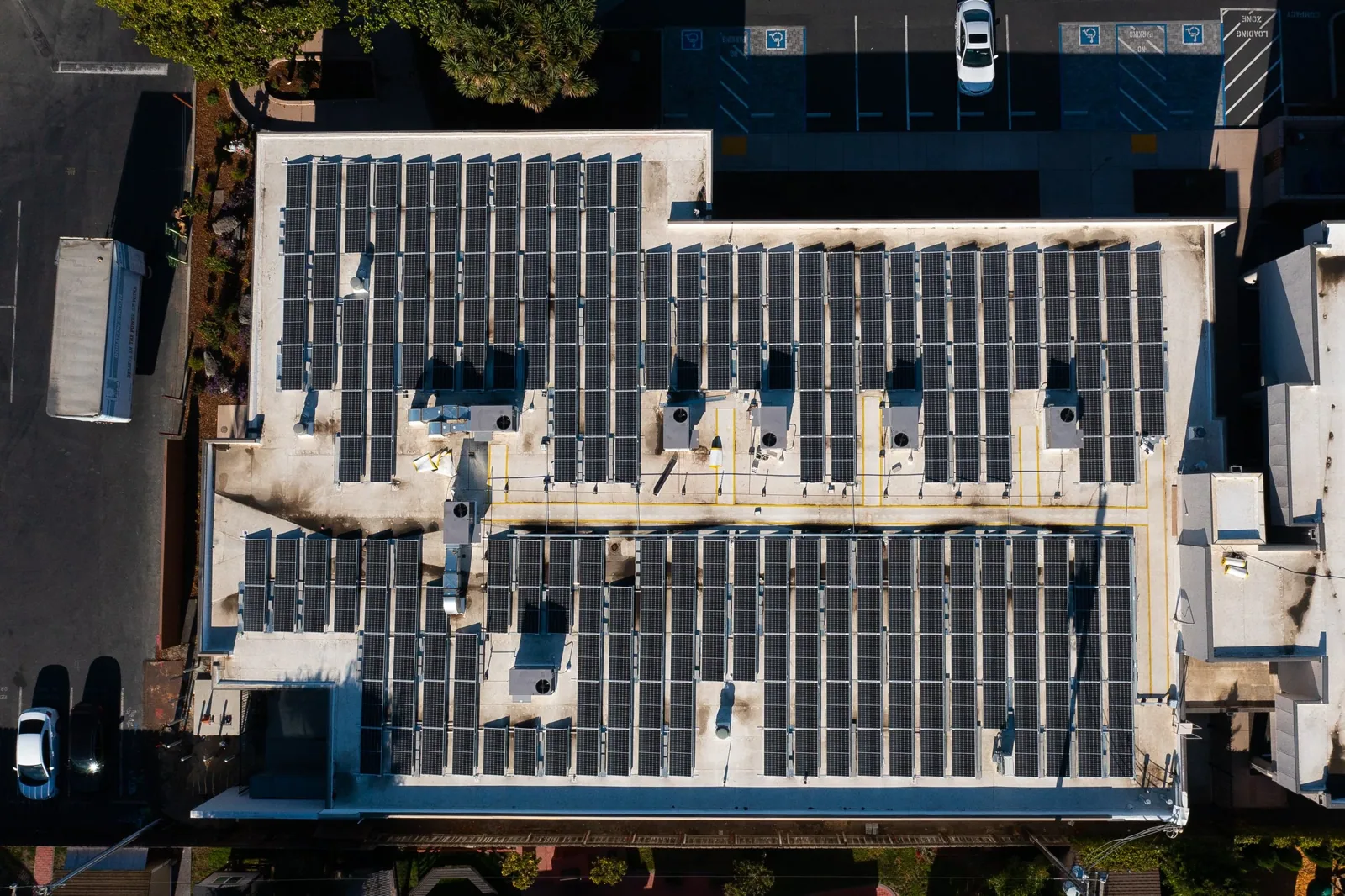
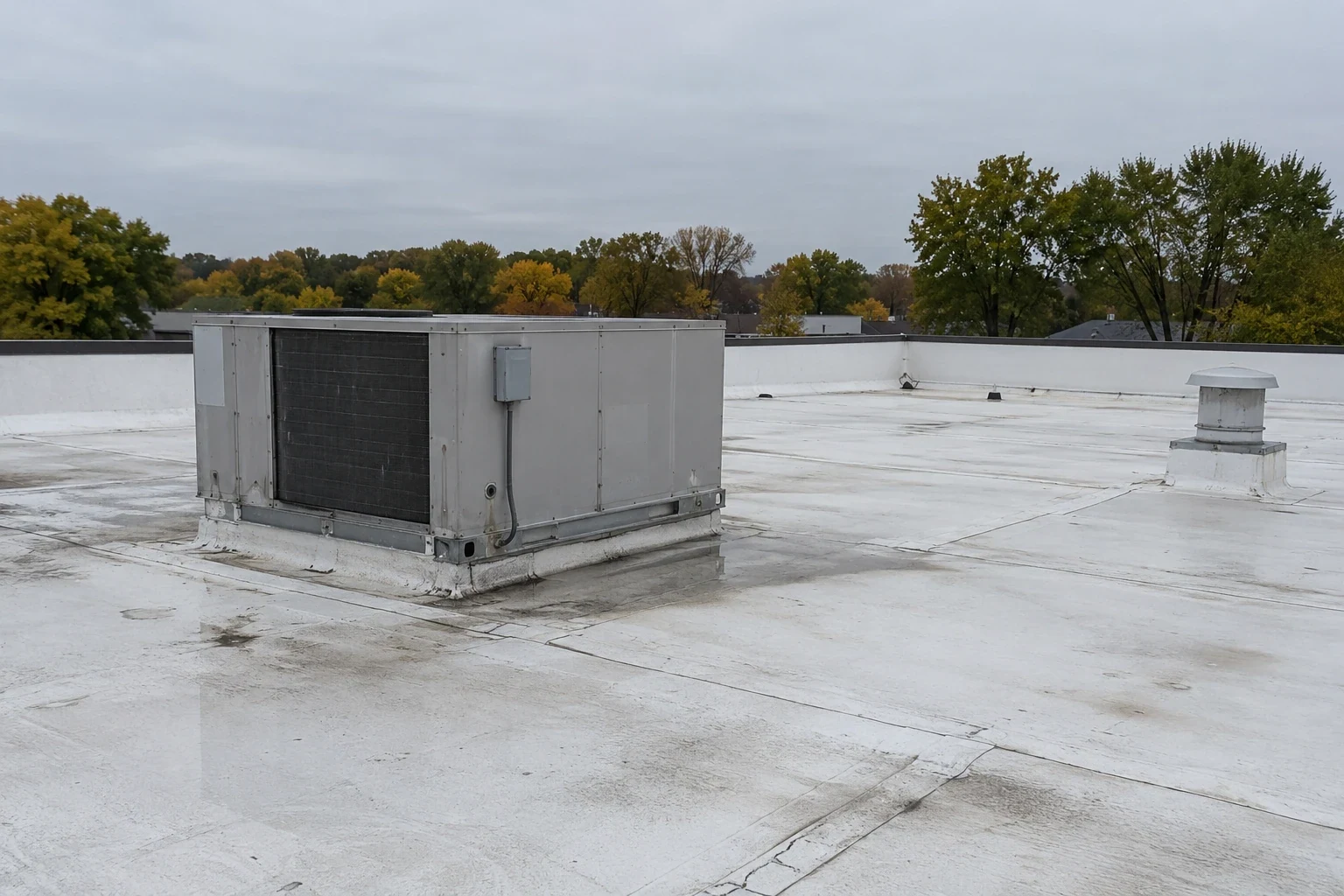
Images are most useful when they show both the defect and its place in the roof system. We capture a context view, a closer detail and a location reference when access and conditions allow. records identify the roof section, material where it can be confirmed, nearby transitions and whether temporary protection was installed. We also record damage that needs another method to evaluate, such as suspected moisture beneath the membrane or a concealed deck condition.
A report can include the inspection date, access limits, observed conditions, recommended repair and the materials proposed. If a leak report points to a stain inside, we trace the likely roof path and avoid assuming the opening is directly above. An active leak response may be needed before documentation is complete. A moisture survey or test cuts can be added when hidden material conditions affect the scope.
Separate temporary and permanent work
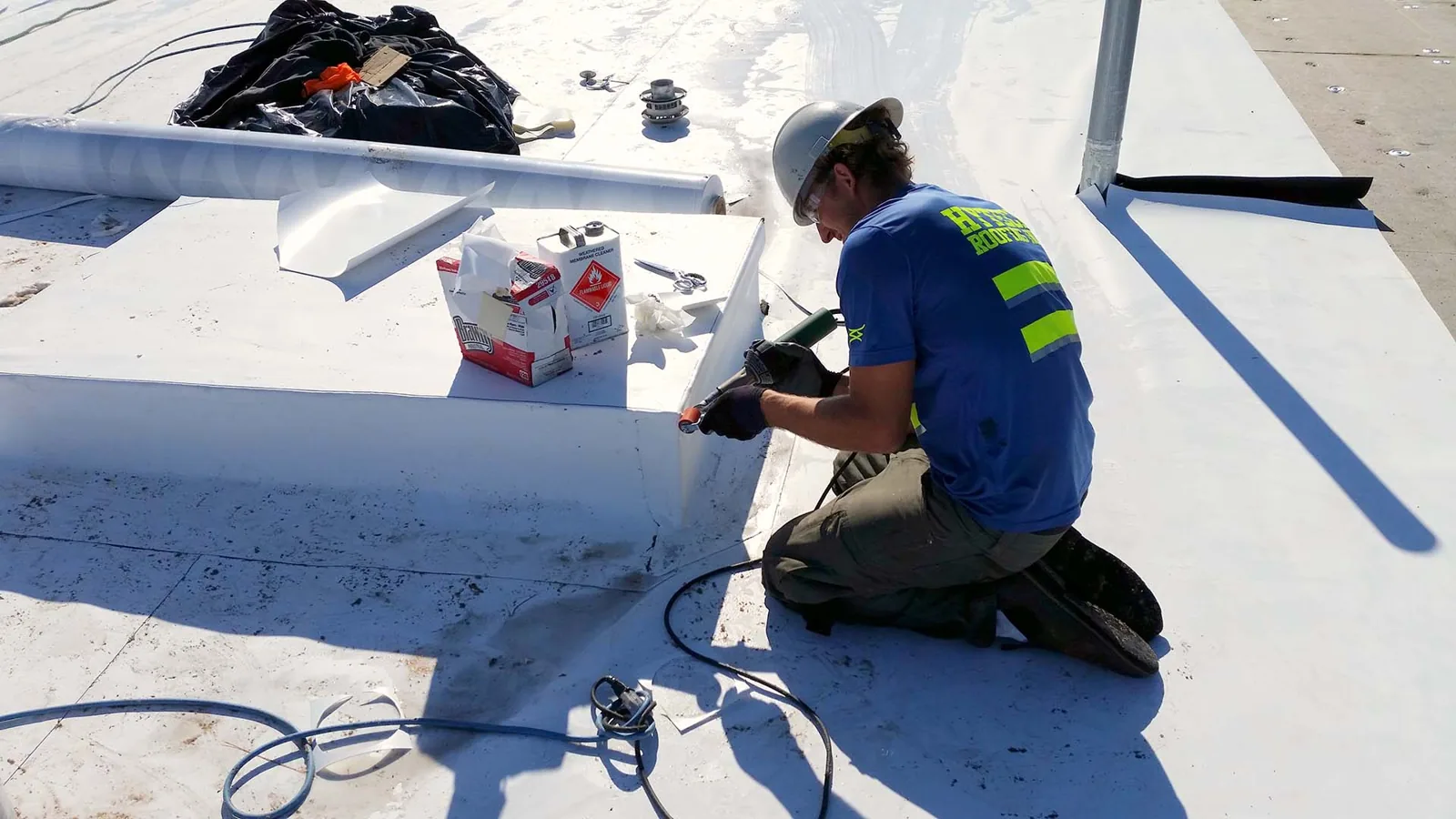
Emergency protection and permanent repair should appear as separate activities when they occur at different times. The record identifies the opening, the temporary material installed, its limitations and the next inspection needed. The permanent scope then names the defect, repair method, compatible materials, access requirements and any condition that would change the work after opening the assembly. This makes it clear what has already been done and what remains proposed.
For example, an open membrane seam may require a system-compatible repair, while displaced perimeter metal may need reattachment and rebuilt flashing. Hail marks need review in relation to the membrane and connected details. If the inspection finds broad moisture or multiple failing sections, the owner may need to compare repair with replacement or a recover. We can prepare the contractor’s estimate and supporting photos, but the carrier determines policy interpretation, coverage and payment.
Keep site access documented
Claim-related inspection can involve the property manager, maintenance staff, adjuster and contractor, each with a different access role. We confirm who can open the roof hatch, escort the inspection and authorize work. If an adjuster visit is scheduled, the manager can share the roof route and available records so the inspection does not conflict with patient, student or tenant movement. At North Athens commercial area, for example, campus contacts may need to coordinate the building and time; a downtown address may have separate loading and pedestrian limits.
We record the area inspected, what was visible and any section excluded by access or weather. If the roof cannot be entered safely, the limitation is listed and a return window is arranged. After approved work, we can provide completion photographs and record the repaired details. This closeout helps the owner maintain a consistent file but does not substitute for the insurer’s requested forms, deadlines or claim procedures.
Respond to questions with evidence
When an insurer asks for additional support, we can clarify the roof detail, provide a location reference or explain the proposed work method. If the question depends on a hidden layer, we identify what opening or testing would be needed to answer it. We do not alter the field record to match an anticipated claim outcome. The owner should keep submitted documents, carrier correspondence and contractor scopes together so later decisions use the same address and roof-area labels.
Repair timing depends on safety, access, material and weather. Athens’ frequent warm-season thunderstorms can affect temporary protection and installation windows, so the report should distinguish the date of inspection from the date work was completed. If a roof remains exposed or leaks continue, contact us for a separate storm repair assessment. A full condition inspection can document wear unrelated to the reported event, keeping maintenance needs separate from potential storm damage.

Prepare the claim file
Share the claim contact if assigned, event date, site address, interior reports, prior roof records, emergency work details and roof access procedure. Tell us what the insurer needs and when the information is due. We can identify the inspection scope, photo record and estimate deliverables, then coordinate the visit with the person responsible for the property.
Commercial Roofing Athens can document observed roof conditions and prepare a repair scope for the owner’s insurance file. Schedule a roof walk to map the affected areas, access route, staging and any weather-sensitive work. The resulting record will show what was inspected, what was found and what work is proposed, leaving coverage decisions with the carrier.
Frequently Asked Questions
Can you tell us whether the insurer will cover the roof repair?
No. We can inspect the roof, document visible conditions and prepare a contractor scope, but the carrier interprets the policy and decides coverage. We keep observed conditions separate from reported damage and avoid describing an outcome that belongs to the insurer.
What should be included in the roof documentation?
The file can include the inspection date, roof areas accessed, photographs, observed conditions, access limits, temporary protection and a repair scope. We label images by building and roof zone so the owner can connect a detail to the property. Any concealed condition or recommended test is identified separately.
Should emergency tarping be listed separately from repair?
A temporary cover and permanent correction are separate activities when they happen at different times. The record should state where the cover was installed, what it protects and what work remains. We can inspect after conditions improve and prepare the permanent scope from the exposed roof details.
Can you meet with an adjuster on the roof?
We can coordinate an inspection window with the property contact and attend when scheduled. The manager confirms roof access, escort requirements, building operations and the insurer’s appointment. We explain the observed roof condition and proposed contractor work without representing the carrier’s decision.
Do you document wear that is not storm-related?
Yes, when it is visible during the inspection. We identify maintenance or age-related conditions separately from damage associated with the reported event. A broader condition report can help the owner plan those repairs without blending them into the storm scope.