
Commercial Wind Damage Roof Repair in Athens, GA
Home / Roof Damage Repair / Commercial Wind Damage Roof Repair
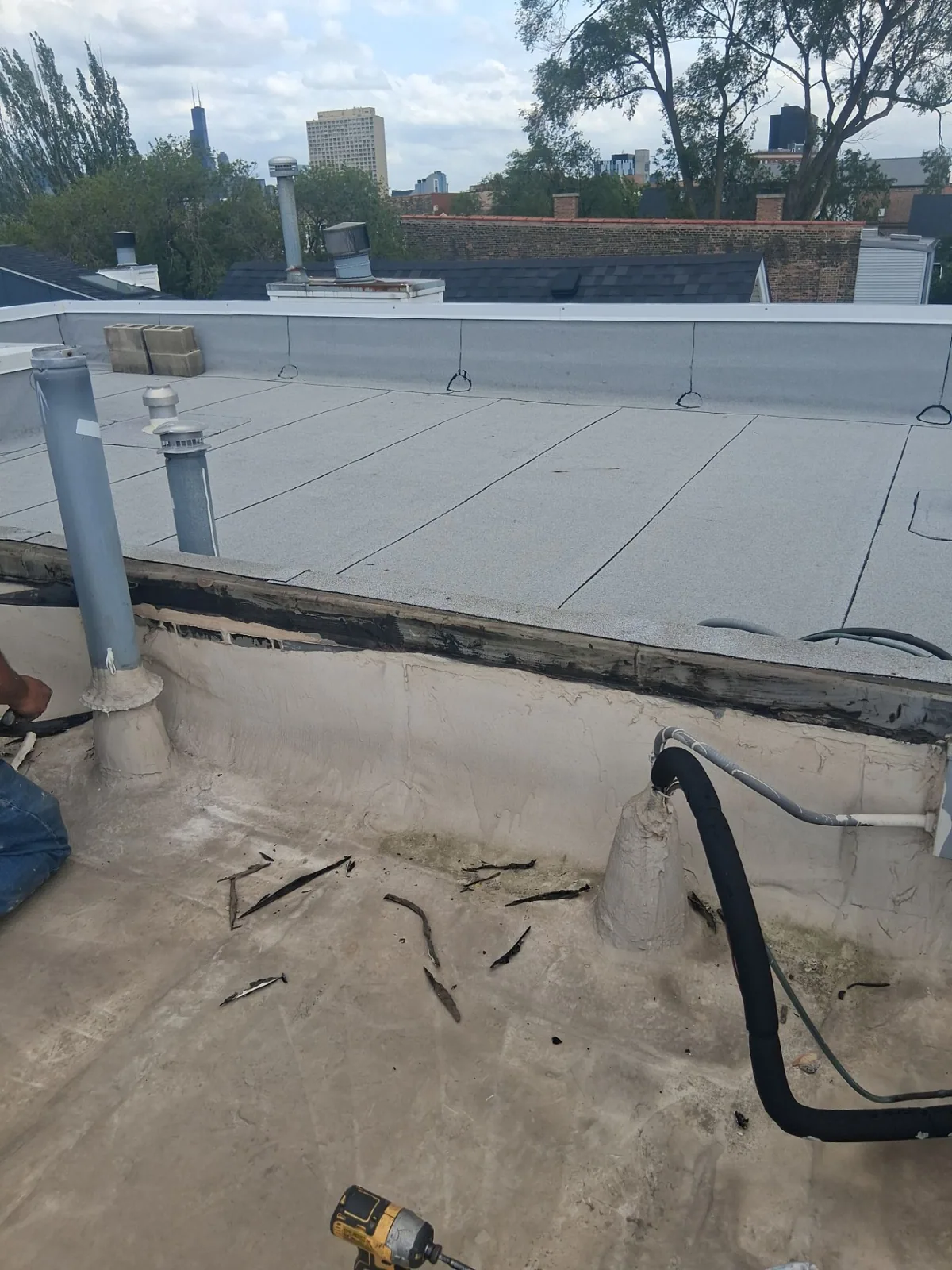
Commercial Wind Damage Roof Repair
After a wind event, we start by confirming which building and roof area can be reached safely, then compare the report with what the surface shows. Athens lies in north-central Georgia, where severe thunderstorms can bring damaging winds, and the most active period for local wind and hail is spring and summer. North-central Georgia’s damaging-wind season makes prompt inspection useful; we photograph edge metal, membrane seams and penetrations at the reported property. At a facility near Athens Commerce Park or along the Lexington Road corridor, we coordinate roof access with the site contact and document the affected area before proposing repair.
Wait for a safe roof window
High winds can leave loose metal, displaced rooftop equipment, downed lines, wet surfaces or debris across an access route. The building contact tells us whether utilities, fire response or other crews are still working nearby. We confirm the hatch, ladder, gate and roof condition before sending personnel onto the assembly. If entry is not yet possible, we can help the owner document interior reports, visible ground-level conditions and any temporary steps already taken. We do not infer a roof defect from a ceiling mark or a nearby fallen branch. Once the site is cleared for access, the inspection follows a planned path that keeps personnel away from unstable edges and records any area that could not be reached. A storm response assessment separates safe stabilization from permanent repair quantities.
Do not schedule permanent work until the building owner confirms safe access and the inspection route is clear of unstable material.
Trace the wind effect across the assembly
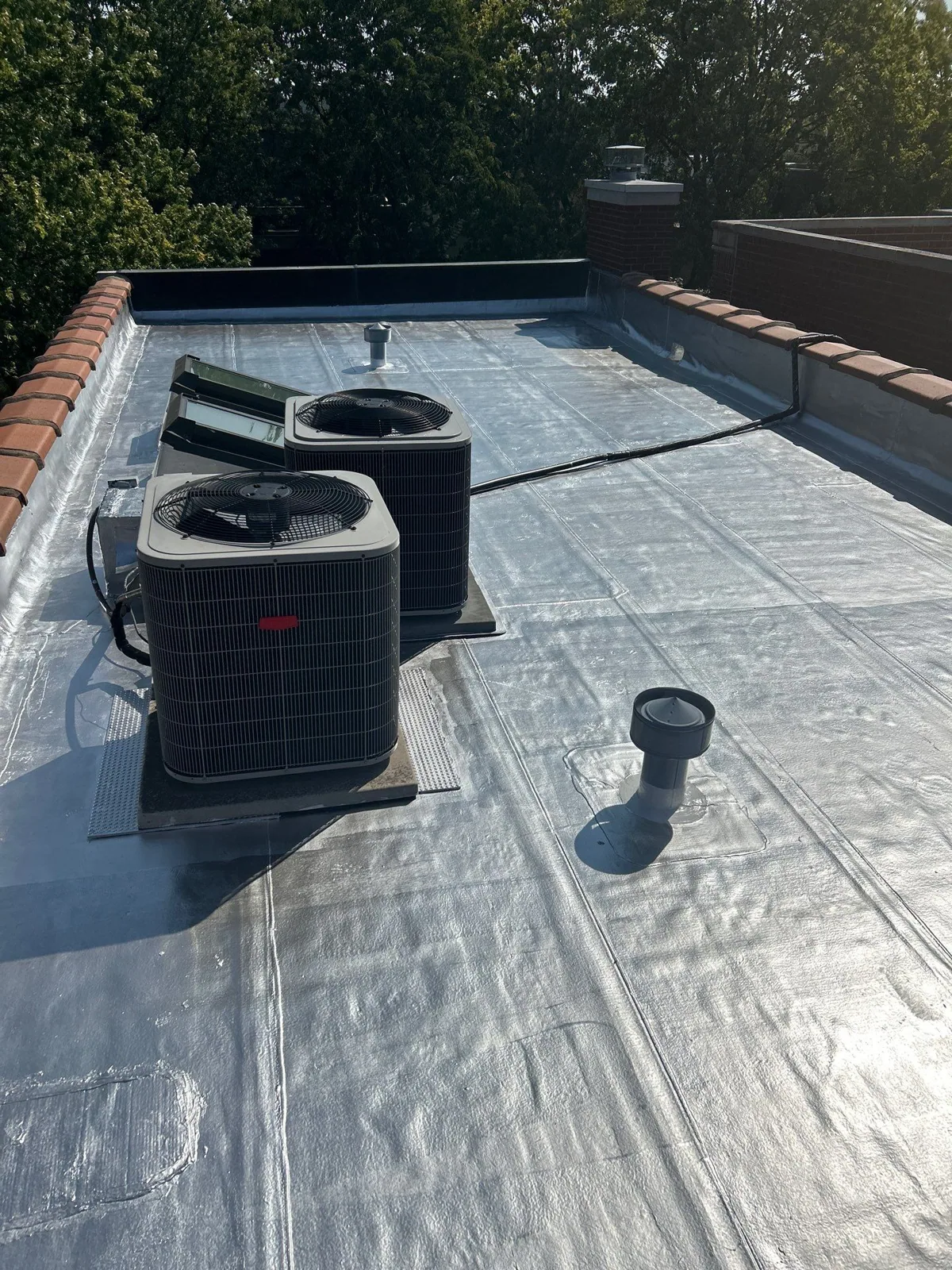
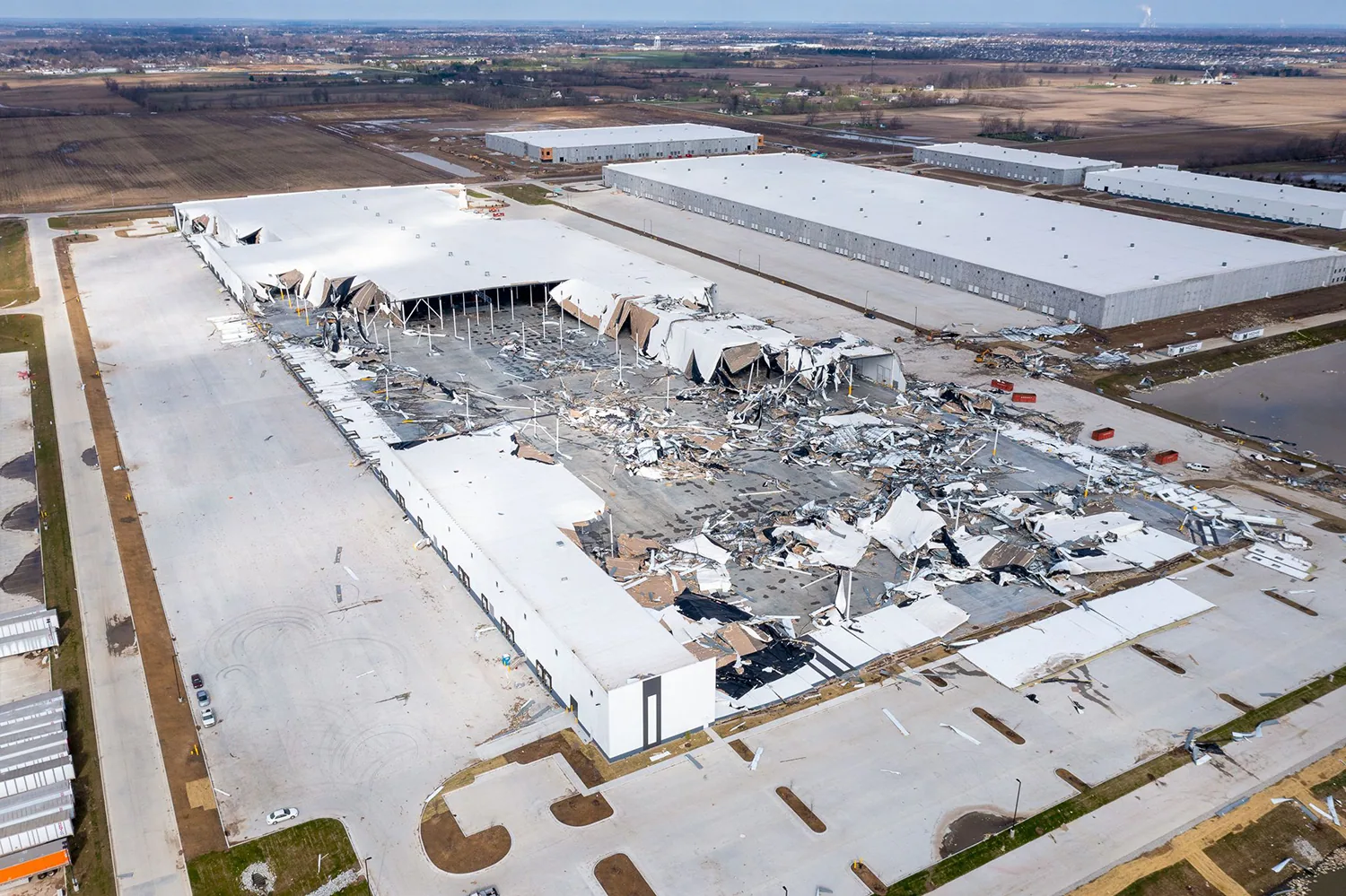
The inspection checks perimeter metal, coping, edge attachment, membrane seams, flashing, curbs and rooftop equipment for displacement or separation. We record whether a component is loose, distorted, missing or visibly damaged, then photograph its position and nearby transitions. Wind pressure can affect a roof differently at corners and edges than in the field, so the record identifies where the condition appears rather than describing the entire roof as damaged. The site map ties each observation to a roof zone.
We compare the reported event date with maintenance records, previous patches and any interior water entry. If damage is concealed below the membrane or at an attachment point, we identify a test location and explain what the finding would change. The inspection report distinguishes a confirmed repair from further investigation. For an occupied facility near Prince Avenue, the manager can also coordinate patient-facing routes and roof access while the condition is reviewed.
We also inspect the condition of fasteners, seams and cover strips around the perimeter when visible, because a shifted component can expose the next connection to wind and water. The report records whether the detail can be secured as a localized repair or whether surrounding attachment needs a broader review. If the roof plan or prior system records are available, we compare them with the field observation and identify any discrepancy before ordering replacement material. That reduces the chance of closing a repair around the wrong assembly detail.
Wind review should include the field membrane, perimeter, corners, edge metal and rooftop items that can create a local opening. We compare observed conditions with nearby unaffected areas and record whether the attachment, seams or flashing details appear displaced. A visual survey records evidence but cannot establish concealed damage without further testing. The owner receives labeled photos and a repair boundary that distinguishes urgent temporary stabilization from a permanent assembly repair. That record also helps an adjuster or consultant understand what was visible on the inspection date.
Secure exposed edges before a larger scope
A loose edge, open flashing transition or exposed insulation may need temporary protection before the permanent detail is designed. We identify the opening, photograph it and apply a suitable temporary measure when weather and access allow. The field record states what was protected, the limits of that protection and which areas still need attention. Temporary material is not represented as a finished repair, and the owner receives a clear return path for permanent work.
When the roof is stable enough to assess, we check adjacent membrane, deck, drains and penetrations so a patch does not stop at the visible break while an associated failure remains. A narrow repair may work where attachment and surrounding materials remain sound. If uplift affected broader sections or water entered below the membrane, we document the additional area and compare repair with replacement. A flashing scope or seam repair follows the observed detail, not the name of the weather event alone.
Set a dry-in point for the repair
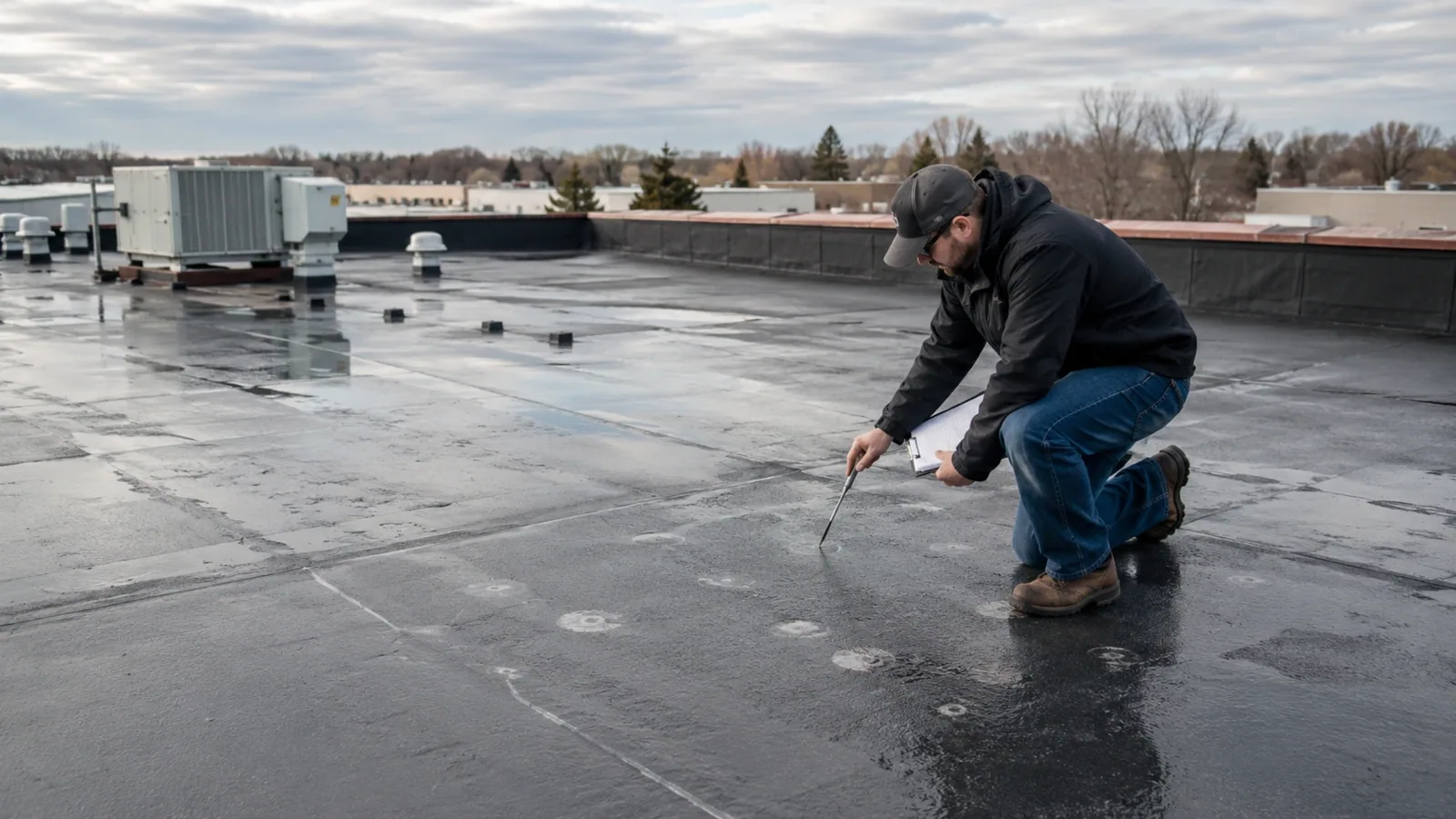
Before work starts, we define the roof area, materials, access route, staging and end-of-shift tie-in. Athens has frequent warm-season thunderstorms and hot, humid summers, so the repair sequence identifies how much surface can be opened and what must be protected before a weather hold. The crew checks forecast conditions, stages dry-in materials and confirms who can stop work if wind or lightning makes the roof unsafe. Material delivery and any crane pick are coordinated with the building’s operating hours.
At each work boundary, the field lead checks the membrane, flashing, edge and drain path, then records what is complete before releasing the next section. If tear-back reveals wet insulation or damaged deck, we stop at the approved limit, photograph the condition and request direction on the added scope. A repair plan can address isolated damage; widespread assembly failure may require a replacement evaluation. The choice depends on the inspection and confirmed layers.
Tie the closeout to the roof map
At completion, we inspect repaired transitions, verify the drainage path and remove debris from the work area. Photos show the finished detail and any nearby condition left for follow-up. The closeout records the event date supplied by the owner, roof zones inspected, repairs completed and areas not accessed. That file helps facilities staff compare a later leak or wind report against the condition documented after this event.
Athens’ commercial stock ranges from institutional buildings to retail and manufacturing sites. A roof near Athens-Ben Epps Airport has the same need for evidence-based inspection as an occupied storefront, but its access and staging rules are different. We confirm those rules at the property and keep each address record separate. Contact Commercial Roofing Athens to arrange a roof walk, document the wind-related conditions and define the next safe work window.
We map displaced edge metal, loose rooftop equipment and debris separately so the owner can prioritize safe stabilization.
Frequently Asked Questions
Does a wind report confirm roof damage?
No. It identifies an event to investigate. We inspect the building, photograph observed conditions and separate confirmed repairs from areas needing additional testing.
Can you respond before the storm season ends?
Roof access still depends on safe conditions. We set permanent work after the inspection establishes the scope.
What roof areas do you check after high winds?
We review perimeter metal, edges, seams, flashing, curbs, equipment and visible attachment concerns, then mark findings by roof zone and photograph nearby transitions.
Can temporary protection be installed the same day?
When roof access and weather permit, we can stabilize an opening and document its limits. The permanent repair is scoped separately after the affected assembly is assessed.
What if insulation is wet below a wind-damaged seam?
We map the affected area and identify testing or removal needed to confirm the extent. The repair recommendation can change if the deck or adjoining layers are also affected.