Auto Dealership Roofing in Athens, GA
Home / Property Types We Roof / Auto Dealership Roofing
Auto Dealership Roofing
Showroom doors, service-bay schedules and vehicle display areas define the safe boundary for dealership roof work. We map customer parking, parts receiving, repair lanes and the roof zones above each use before setting a lift or delivery. The Atlanta Highway corridor is a major Athens retail and commercial route, while Commerce industrial corridor is a regional vehicle-manufacturing location. Each dealership has a separate roof and operating plan; we inspect the actual building and coordinate its service hours before recommending repair or replacement.
Inspect above display and service areas
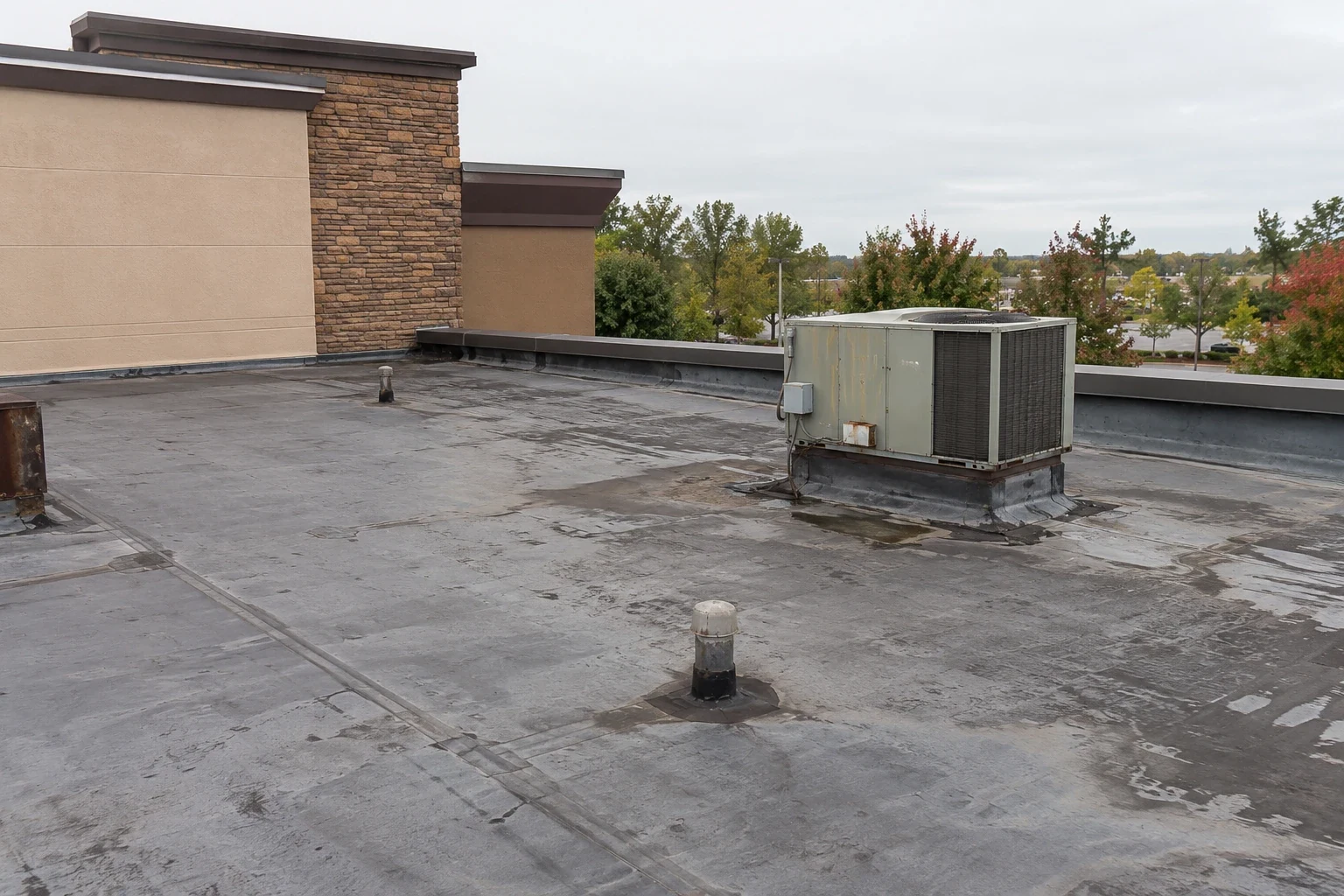
We check seams, membrane, drains, curbs, skylights, metal edges and previous repairs, then compare those conditions with water reports from the showroom or service department. The manager identifies vehicles, parts, electrical equipment and customer areas that need protection below. A roof inspection creates a photo map of visible findings. If moisture is suspected beneath the membrane, we identify a testing location and agree on protection before opening the assembly. The written report separates confirmed defects from the areas that still need verification.
Dealership roofs can include different sections above display, service, parts and offices. We mark transitions, drains and penetrations for each area, then record where an exhaust or rooftop unit needs a mechanical contact. If a leak appears over a repair bay, the site can identify whether a lift or vehicle must move before crews inspect the corresponding roof detail. This link between floor use and roof findings helps management plan repairs without relocating more inventory than the condition requires.
Protect customer and vehicle movement
Before mobilization, we plan material staging, dumpster location, crane setup and vehicle circulation with dealership management. A pick may require moving display cars, temporarily closing a service lane or routing customers to another entrance. The plan names who can approve those changes and when the affected area returns to use. Barriers separate the overhead work zone from public access, and daily cleanup checks parking and service routes for loose fasteners or debris. Parts deliveries and tow access are included in the site map.
If the dealership is open during construction, each phase needs a clear start point, stopping boundary and tie-in. A phased reroof plan can limit work above the showroom while service operations continue in another area. Noise, odor, dust and exhaust control are included in the notice schedule. We confirm the hours when vehicle movement is highest, rather than assume that a weekday afternoon is available for a crane pick. Management receives a daily update through a named contact.
Before work starts, sales and service managers identify where customer parking, display inventory, test-drive movement and vehicle deliveries need to remain uninterrupted. The roof plan marks lift locations and delivery routes, then separates the active work zone from areas where finished vehicles are staged. If a service bay must be protected from dust or water during a detail repair, that requirement is documented before the crew opens the roof. A daily manager check confirms that cones, temporary barriers and debris collection have been removed from the customer-facing areas at shift end.
Coordinate lifts, exhausts and rooftop service
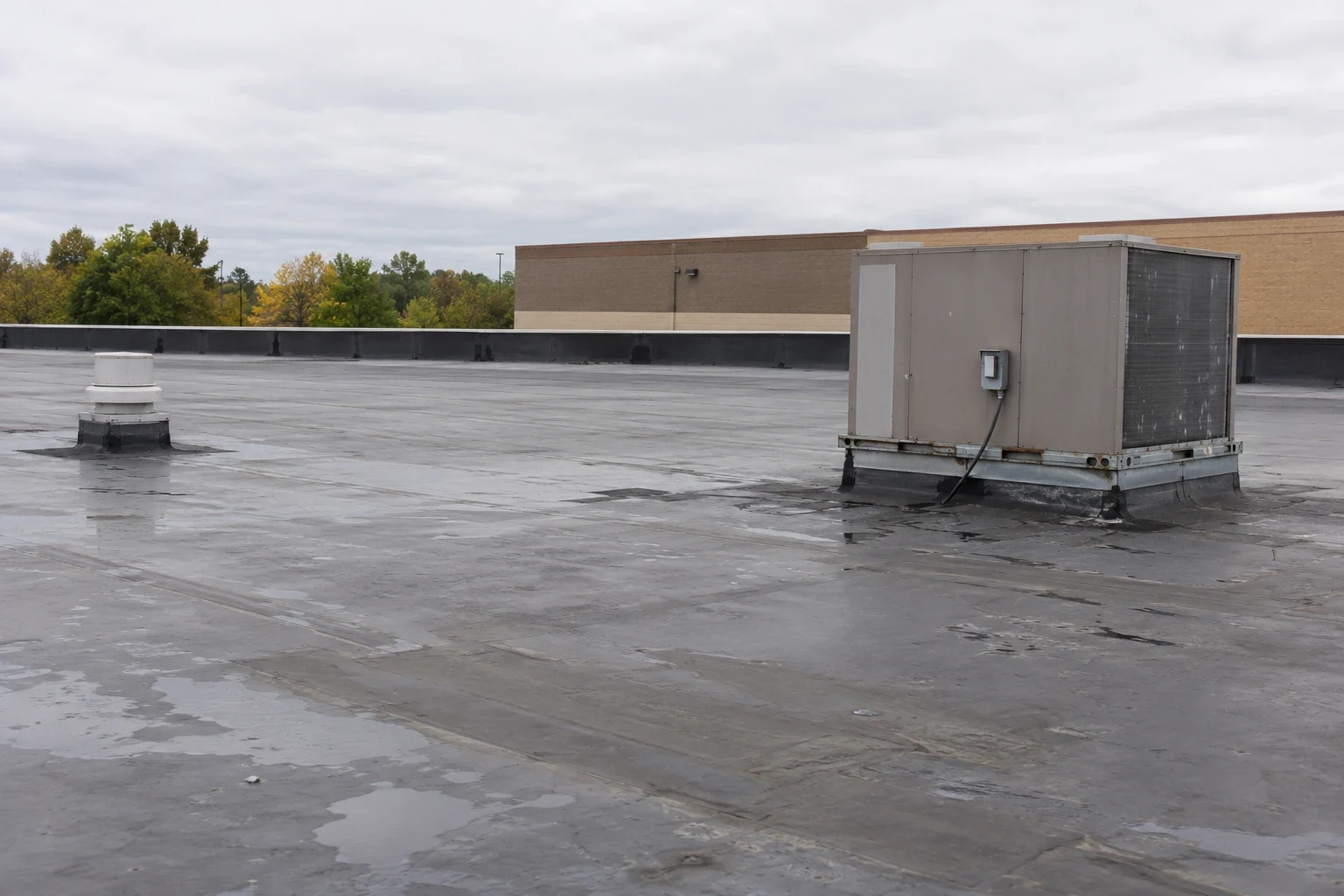
Service departments may have exhaust equipment, compressed-air lines, HVAC units and roof penetrations that need access during roofing. We inspect curb attachment, flashing condition and service clearances, then identify which unit must remain active or be isolated. A curb and equipment review assigns the detail and mechanical coordination before the membrane is installed. If the project requires lifting an HVAC unit, management and the mechanical vendor approve the sequence and operating window.
Water outlets and edges should be checked while the roof is open. Drains, scuppers and gutters must remain clear, and a new roof height cannot bury an outlet or direct runoff toward a showroom entry. We record the discharge route, edge metal and any curb that sits in a low area. The closeout includes a roof map showing finished transitions and any unit access path that needs protection during future maintenance. That record gives the service manager a route back to the equipment without crossing an unfinished detail.
Set a dry-in limit before moving vehicles
Summer heat and humidity, frequent thunderstorms, damaging wind, hail and seasonal tornado risk can compress Athens work windows. We set the roof opening against the forecast and crane plan before removing material. Rain may require an earlier tie-in; wind can affect crane picks or loose roof materials. The dealership contact receives the active zone, customer route and any change to vehicle staging before staff needs to relocate inventory.
After a storm, the field lead inspects exposed edges, temporary cover, drains and completed seams before work resumes. If the showroom or service department reports water, we record the time and area, protect vehicles or equipment as needed and trace the roof path. The local weather pattern informs preparation but does not show that a specific dealership has damage. The roof inspection and any required testing support the repair scope.
Choose repairs by the condition and showroom plan
A localized seam or curb issue can be repaired when surrounding materials are dry and stable. A recover can preserve existing layers when moisture, attachment and drainage permit it. Broader wet insulation, recurring leaks or failing support may require replacement. We compare those paths and explain cost or schedule drivers such as removal, metal work, equipment lifting, vehicle relocation, after-hours access and interior protection. Any concealed-condition allowance identifies the test needed to confirm quantity.
A self-storage roof centers tenant vehicle routes differently, while a flex-industrial roof may have production or warehouse access. The dealership sequence is based on its customer and service calendar. For a metal panel assembly, a metal retrofit review may be considered if panel and support conditions allow; a low-slope area may need a different system.
Schedule with sales and service operations
Provide roof plans, leak reports, service-bay schedule, parts delivery times, equipment list and upcoming sales or inventory events. Identify who can approve a crane pick, vehicle move, temporary lane closure or equipment shutdown. We can inspect the roof, connect findings to the showroom and service areas and identify testing needed before pricing repair or replacement.
We can bring sales and service leads into a field walk, then give management a phase map with staging, customer routes, delivery access and turnover checks before material orders are placed. Contact us to schedule an auto-dealership roof assessment in Athens, GA and coordinate roofing with vehicle and customer movement.
Related Roofing Work
Frequently Asked Questions
Can the dealership stay open during roofing?
It can when customer access, vehicle movement and the roof work zone are coordinated. We identify affected entrances and service lanes, then phase work around the operating schedule.
How do you protect display vehicles?
Management identifies the vehicles and areas beneath each roof phase. We set barriers, agree on any relocation and keep the active work boundary limited to the section that can be secured that day.
Will service bays need to close?
Only if the lift, roof opening or interior protection affects those bays. We inspect the work area and coordinate any temporary closure with service management before the crew mobilizes.
Can rooftop units stay on?
We coordinate each unit with the mechanical vendor and confirm clearances, isolation and flashing details. The access plan identifies when service can continue and when the unit must be released.
What information helps plan a crane pick?
The site layout, vehicle staging, parts deliveries, customer routes and authorized contact determine the pick window. We provide the exclusion area and identify who will release the ground-level zone.