
Commercial Hail Damage Roof Repair in Athens, GA
Home / Roof Damage Repair / Commercial Hail Damage Roof Repair
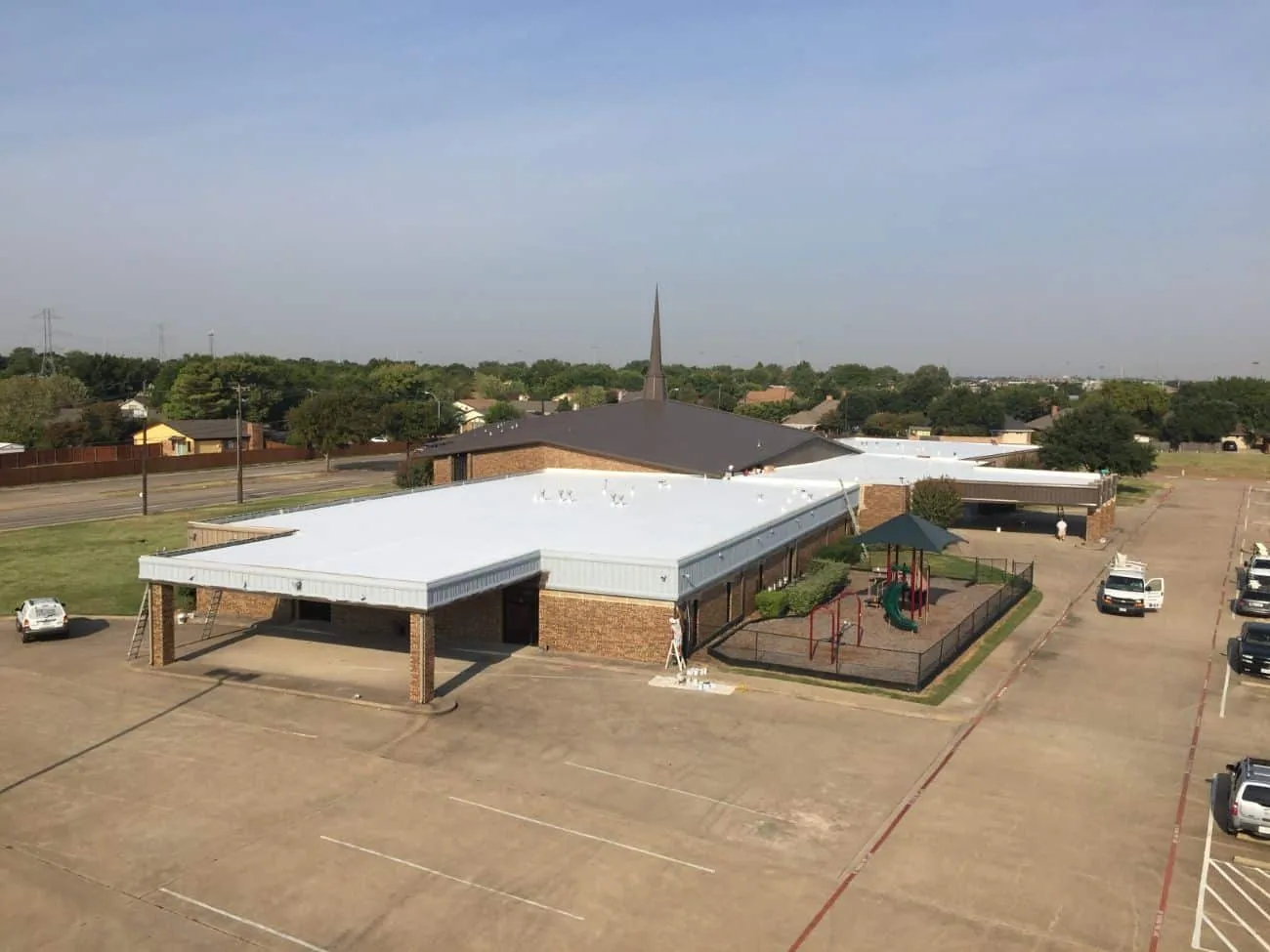
Commercial Hail Damage Roof Repair
After hail passes, scattered marks on rooftop equipment or vehicles do not tell us which roof areas were struck or whether the membrane was compromised. We inspect the building, record the reported date and map observed impact, puncture or displacement by roof zone. The north-central Georgia severe-weather region sees large hail, with spring and summer the more active period for damaging hail and wind. At a property near the West Athens commercial corridor or East Athens commercial area, we coordinate safe access and document conditions specific to that address.
Confirm the site can be entered
We check whether storm response, utilities, or other contractors still restrict the property before a roof walk is arranged. A wet membrane, loose metal, debris, lightning or damaged access point can make immediate entry unsafe. The owner identifies the approved route and any affected interior space, while our team records ground observations and the reported event details. If roof access must wait, we state which areas have not been inspected and arrange a safe return window.
We can inspect and apply temporary protection when weather and roof conditions permit. Stabilization is recorded separately from permanent repair. The site contact receives the protection limit, any remaining exposed area and the next inspection step, so temporary material is not mistaken for a completed roof assembly.
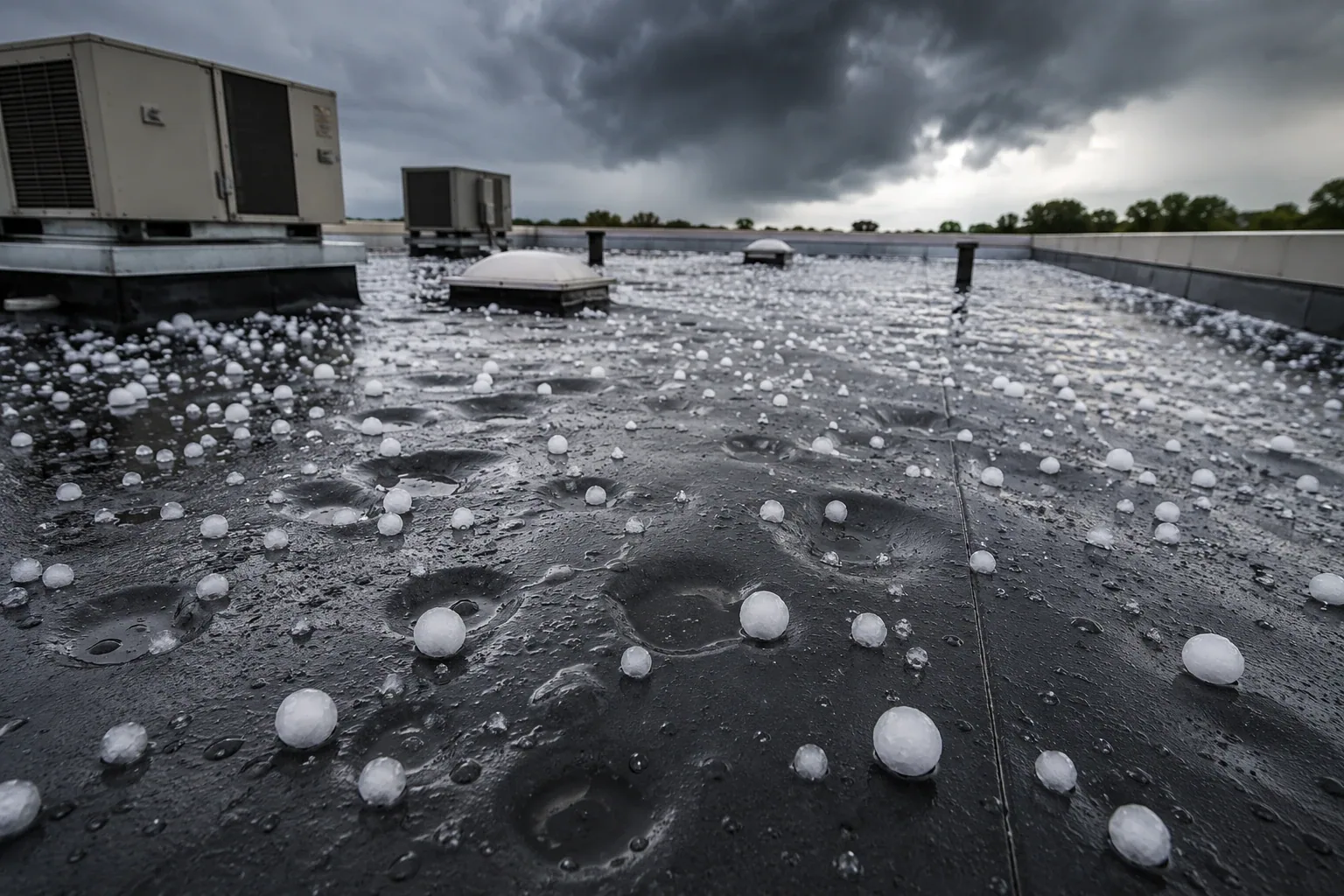
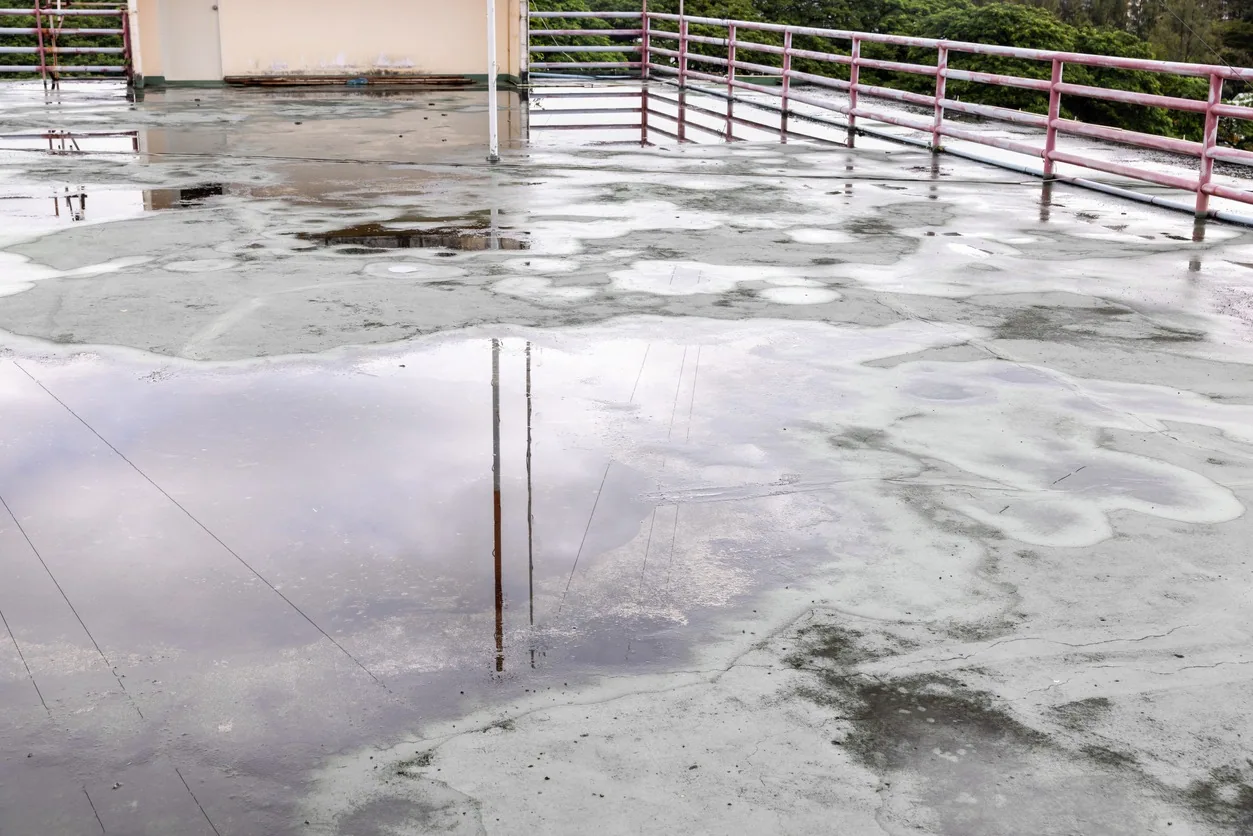
Map impacts across each roof material
We inspect membrane, metal panels, flashings, edge details, skylights, drains, rooftop units and previous repairs. The field record identifies dents, cracks, punctures, coating loss, displaced metal or other observable conditions and includes close and wide photographs. Impact evidence can vary with roof material and location; a visible mark does not automatically prove a leak. We record the roof zone and compare it with interior reports rather than labeling the full assembly damaged from a few observations.
On a membrane roof, we check seams, soft spots, splits and areas where impact may have reached cover board or insulation. On metal, we inspect panel seams, fasteners, curbs and penetrations for deformation or opening. A roof condition survey records what is visible and identifies testing needed below the surface. If hail affected an edge or flashing, a separate wind-related repair check can clarify adjacent displacement without combining two different findings.
We also consider the roof’s age and prior condition as context, not as a substitute for documenting the reported event. Earlier blistering, surface wear or a prior repair may predate the hail and should be recorded separately when evidence supports that distinction. If the owner has dated maintenance photos or inspection records, we compare them with the current observations and record differences by roof zone. This makes the file more useful for the facilities team and any later reviewer because it shows which conditions were new, which were already recorded and which remain unresolved pending testing.
The inspection report should connect each observed mark with the roof material and its function. A dent in exposed metal, a bruise in a membrane or granule loss on a surfacing system calls for different evaluation, and appearance alone does not establish that water integrity has failed. We photograph representative areas, map the distribution and compare with control locations where available. Any test or manufacturer review is listed separately from the visible findings. That lets the owner prioritize repairs based on confirmed condition instead of treating every impact as an identical replacement quantity.
Test before assigning a hidden damage quantity
Moisture below the membrane may not be visible from the roof surface. We compare the impact map with interior leaks, inspect nearby seams and drains, and identify where a test cut or other method can confirm concealed layers. A moisture survey helps target the investigation; sampling confirms the assembly. The estimate separates known punctures and repair areas from quantities that depend on what a test reveals.
Athens has hot, humid summers and frequent thunderstorms, so a roof affected by hail may also receive rain before an inspection can be completed. We record current exposure and the timing of any temporary cover. A storm’s regional footprint does not prove that a particular property sustained a specific type of damage. A site near Beechwood-Alps commercial area or the downtown business district receives the same address-based survey and photo documentation as any other facility.
Choose repair by confirmed condition
A small puncture or isolated split may call for a compatible patch after the substrate is dry and sound. Damaged flashing, loose edge metal or a broken curb detail needs its own repair method. If wet insulation, widespread impact or failing attachment extends beyond the visible area, we map the additional boundary and compare broader repair with replacement. A puncture repair scope addresses a defined opening; a replacement evaluation considers the assembly if multiple layers or the deck are affected.
We explain preparation, materials, access, equipment lifts, interior protection and weather timing that affect each option. If test results change the quantities, the field record shows which area expanded and why. Owners can review confirmed work separately from potential concealed repairs rather than assuming every visible impact requires the same treatment. For an occupied property near Prince Avenue, we also plan the roof route and staging with the facility contact before work begins.
Where a building has several roof elevations, we record each area independently so a clean section does not hide a damaged one elsewhere on the same address.
Close the work before another storm window
Spring and summer are active periods for damaging hail and wind in this region. The repair schedule defines how much roof can be opened, the tie-in that must be closed at shift end and the weather hold for lightning or rainfall. We stage compatible materials before starting and coordinate delivery with building operations. If the forecast moves into the work window, the crew secures the planned boundary and reports what can safely continue.
At completion, we inspect the repair, check nearby drainage and photograph the finished connection. The closeout lists areas inspected, repairs made, tests completed and any location that remains unresolved. The property manager can keep the record with maintenance history and compare a later storm report with the present baseline. Contact Commercial Roofing Athens to arrange a hail inspection, document the affected roof map and decide whether testing or repair should come next.
A roof map keeps representative impact marks, damaged accessories and unaffected comparison areas tied to their inspected zones.
Related Roofing Work
Frequently Asked Questions
Does hail always require a full roof replacement?
No. We inspect the roof material and surrounding assembly, then scope localized repair or broader work based on observed damage and confirmed concealed conditions.
How soon should a commercial roof be checked after hail?
Once roof access is safe, a prompt inspection can document the condition before temporary work or later weather changes the evidence. We coordinate timing with site operations.
Can hail dent metal without opening the roof?
It can leave visible deformation without a confirmed leak. We inspect seams, fasteners, flashings and penetrations to determine whether the assembly remains closed.
What if water appears inside after the hail event?
We map the reported area, inspect the roof above and nearby transitions, and identify whether a test is needed. Temporary protection and permanent scope are recorded separately.
Do you provide an adjuster with roof photos?
We can prepare dated observations, locations and repair quantities for the owner’s file. Coverage decisions remain with the policyholder and carrier.