Restaurant Roofing in Athens, GA
Home / Property Types We Roof / Restaurant Roofing
Restaurant Roofing
Kitchen service and guest seating set the workable hours for a restaurant roof project. We identify exhaust fans, grease-related maintenance, deliveries, dining entrances and any patio or queue beneath the roof area. Athens' commercial node at Barnett Shoals and College Station roads includes restaurants alongside grocery and retail uses; East Athens and Barnett Shoals and Downtown Athens offer different access settings. The manager confirms the actual site rules before we inspect seams, curbs, drains and equipment flashings or set a work boundary.
Inspect kitchen exhaust and roof details
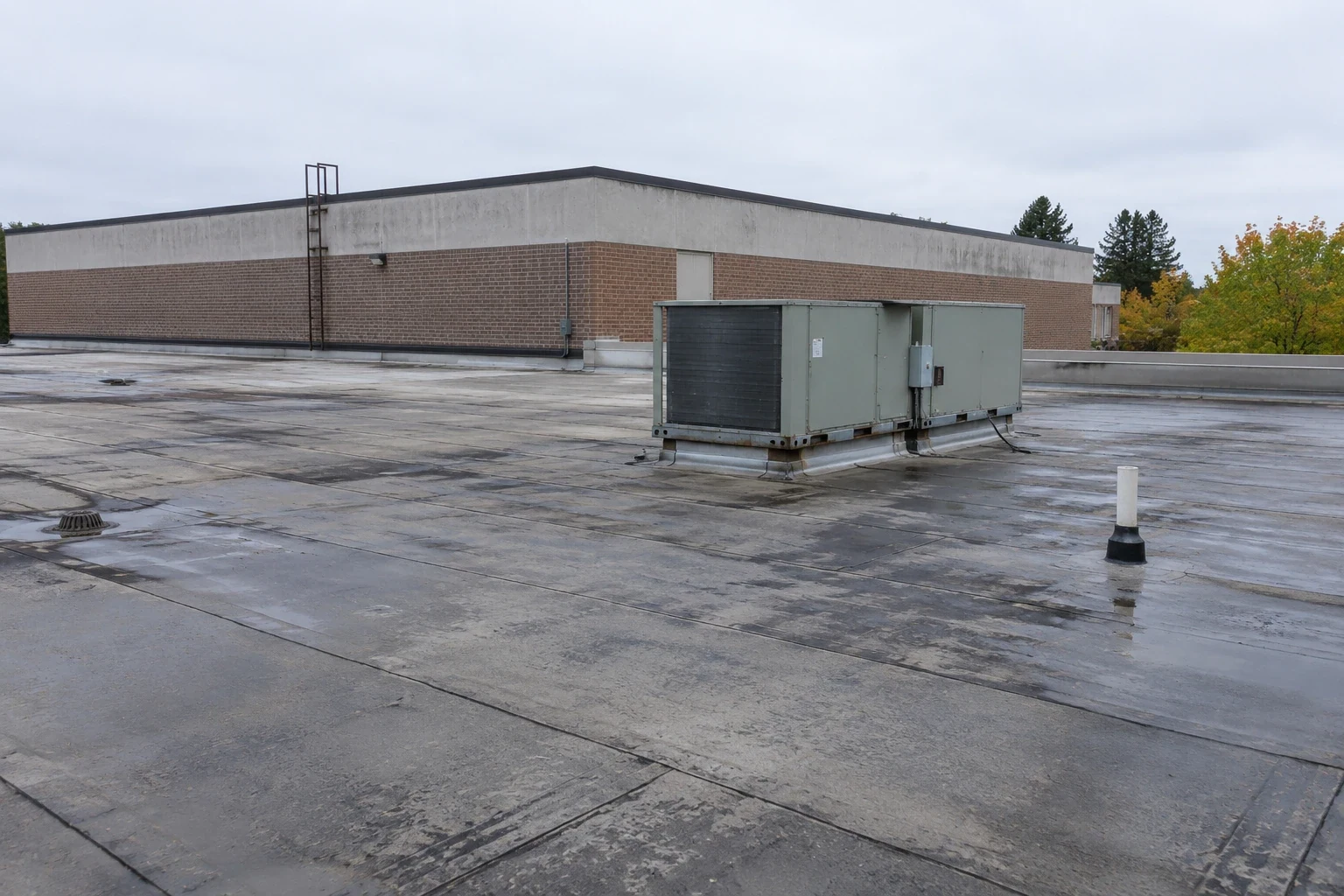
We review membrane condition around exhaust curbs, pipes, rooftop units, vents, drains and perimeter metal. Kitchen exhaust can carry heat, grease or residue to nearby roof surfaces, so we record the condition and coordinate cleaning responsibilities with the restaurant's service vendor. A roof inspection creates a location map and photographs of visible defects. If a leak report sits near a fan or duct, we inspect the flashing and adjacent seam before recommending a patch. Suspected wet insulation is confirmed before new material covers the area.
Interior reports help connect the work to restaurant operations. The manager can identify dining areas, food preparation, dry storage and electrical spaces that need protection. A ceiling mark may correspond to a drain, curb or another roof section, so we trace water movement and document the evidence. If a test opening is needed, the scope states its location, interior protection and the time the kitchen or dining area is affected. That keeps an investigation from surprising the staff during a service period.
Fit roof work between service periods
Before mobilization, the manager shares meal periods, deliveries, staff shifts and any event schedule that affects access. We set work windows for noisy removal, material lifts and equipment service, then define which doors, patio routes or parking spaces could be affected. If a crane pick crosses guest access, the exclusion zone and alternate route are ready before the lift. The plan names who can approve a temporary closure and who receives a same-day update if weather or roof conditions change.
Roofing proceeds by phased section with a protected tie-in at each shift end. A phased reroof plan identifies the roof area above the active kitchen or dining space and how the interior is protected. We schedule exhaust fan or HVAC isolation with the mechanical contact. A curb and equipment review ties the flashing detail to equipment clearance and service access. Daily cleanup clears fasteners, packaging and debris from employee and guest routes before the next service period begins.
Roof work over an active kitchen should account for exhaust operation, grease-related maintenance and the hours when deliveries or meal service are most sensitive. We confirm which hoods or rooftop units must remain available, where a lift or material route can be placed and whether interior protection is needed before a detail is disturbed. If a shutdown is required, the owner approves its timing and duration before it enters the schedule. These decisions belong in the written scope and daily handoff, where the manager can compare completed roof zones with the operating windows that were protected.
Keep outlets clear of kitchen discharge
Drains and scuppers need to stay open, especially where grease, leaves or construction debris can collect. We check outlet condition, roof slope and the path water takes past curbs and exhaust equipment. A drainage scope can address clogged outlets or height changes with the roof phase. The project map records where a downspout or gutter discharges so roof runoff does not move toward a guest entrance or loading area. Any adjustment is coordinated with property management and included in the written scope.
Exhaust systems need their own detail and maintenance access. We inspect curb corners, counterflashing and nearby coating or membrane for grease exposure, heat and movement. If an exhaust contractor needs to remove or clean a fan during reroofing, the schedule assigns the work order and verifies that the opening is protected. A new membrane must turn into a compatible flashing detail, and the owner needs a service path that does not compromise the finished surface. Turnover records the repaired exhaust curbs and any area requiring follow-up after equipment work.
Set a weather hold for the kitchen roof
Athens has hot, humid summers and frequent thunderstorms, while the regional severe-weather pattern includes damaging wind, hail and seasonal tornado risk. We limit tear-off to a section that can be made watertight and set the weather hold before material comes off. Rain can interrupt a cleaning or application window, and wind can delay crane picks. The manager receives notice if a planned service-hour window changes, especially when equipment or an entrance has a temporary restriction.
After weather passes, crews inspect tie-ins, drains, curbs and exposed edges before work resumes. If the restaurant reports a leak, the manager identifies the room and time; we compare it with the active roof area and trace the path before permanent repair. Athens’ warm-season storms make kitchen exhaust, receiving hours and customer routes part of the restaurant roof schedule, with a defined point for dry-in. Findings are tied to the inspected condition, with temporary protection separated from the final repair scope.
Choose repair or replacement with service hours in view
A failed fan flashing or isolated membrane split may be repaired when nearby material remains dry and stable. Recover can be considered when layers and drainage support retention. Repeated leakage, wet insulation or deteriorated edges may require removal and replacement. We compare the options and explain what changes cost and service impacts: removal, curb rebuilding, insulation, crane access, odor controls, kitchen shutdowns and after-hours labor. The scope defines which equipment vendor must be present and when the kitchen can return to normal service.
A grocery roof often needs refrigeration and inventory protection, while a hotel roof may require guest-route coordination. Restaurant work adds kitchen exhaust and food-service timing. We confirm each building's actual operation and do not assume the same schedule or access plan applies. Permanent work follows inspection and manager approval, with a daily update through the person assigned to coordinate the site.
Plan around the next service window
Share the roof plan, leak reports, exhaust maintenance schedule, service hours, delivery windows and any upcoming events. Identify the manager, kitchen contact, equipment vendor and person authorized to approve an after-hours phase. We can inspect the roof, map curbs and drains, and list testing or mechanical coordination needed before pricing repair or replacement.
Commercial Roofing Athens can prepare a written sequence that shows customer access, kitchen controls, material staging, weather holds and turnover checks. The manager can review the work window with staff before the first delivery. Contact us to schedule a restaurant roof walk in Athens, GA and coordinate the project around dining operations.
Frequently Asked Questions
Can the restaurant stay open while the roof is repaired?
Often, when the crew can isolate a roof zone and protect guests, employees and food-service areas below. We confirm dining hours and any temporary entrance change with the manager.
How do you work around kitchen exhaust?
We inspect the curb and flashing, coordinate any fan isolation with the service vendor and preserve a maintenance route. The roof detail is completed before equipment work is released.
Will roofing affect a dinner service or food delivery?
We set the work window against confirmed service and delivery times. Material lifts, noise and any access restrictions are shared with management in advance, with a contact for day-of adjustments.
What if grease or heat has damaged the roof surface?
We document the affected area and compare it with the exhaust condition, membrane and prior repairs. The scope identifies compatible repair materials and any cleaning or mechanical correction needed first.
Can drain repairs be included with the roof project?
Yes, if outlet cleaning or adjustment is included in the scope and sequenced before the surrounding membrane closes. We verify flow and flashing during the final walk.