Commercial Roofing for Hospitality Groups in Athens, GA
Home / Industries We Serve / Hospitality Groups

Hospitality Groups
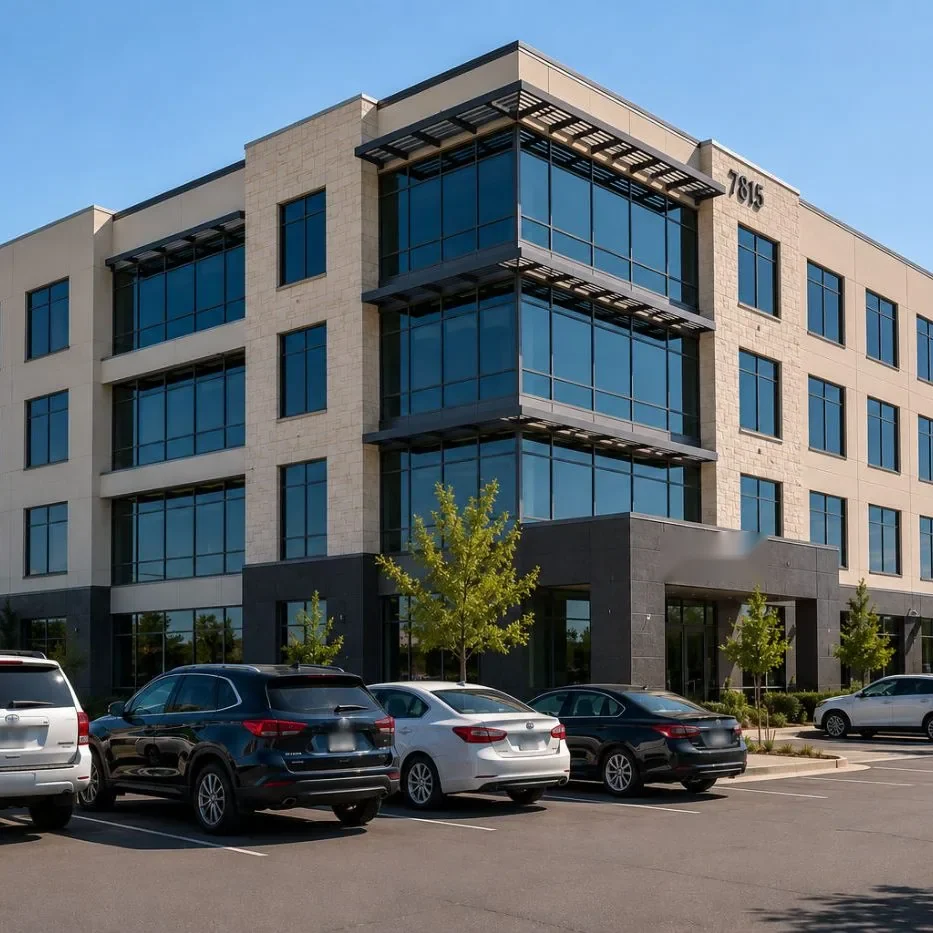
Guest check-in, housekeeping carts and a roofing material delivery need separate paths before work begins. We walk the property with operations, mark guest entrances and service access, then identify roof areas that can be phased without crossing active event or dining routes. Downtown Athens includes hotels, restaurants and the Classic Center among its occupied uses, while Watkinsville commercial area combines retail, office, dining and event space nearby. A property’s actual calendar determines the quiet window. We inspect the assembly and prepare a guest-aware work sequence before mobilization.
Keep arrival and service routes clear
The site walk records check-in doors, loading, linen delivery, kitchens, waste pickup and the route guests use between parking and occupied rooms. We locate roof access, staging and any crane position that could affect a porte-cochere or event entry. The hotel contact identifies quiet hours, sold-out dates, scheduled events and the person who can approve a route change. Those details become a mobilization plan with material delivery and daily cleanup assigned to specific windows.
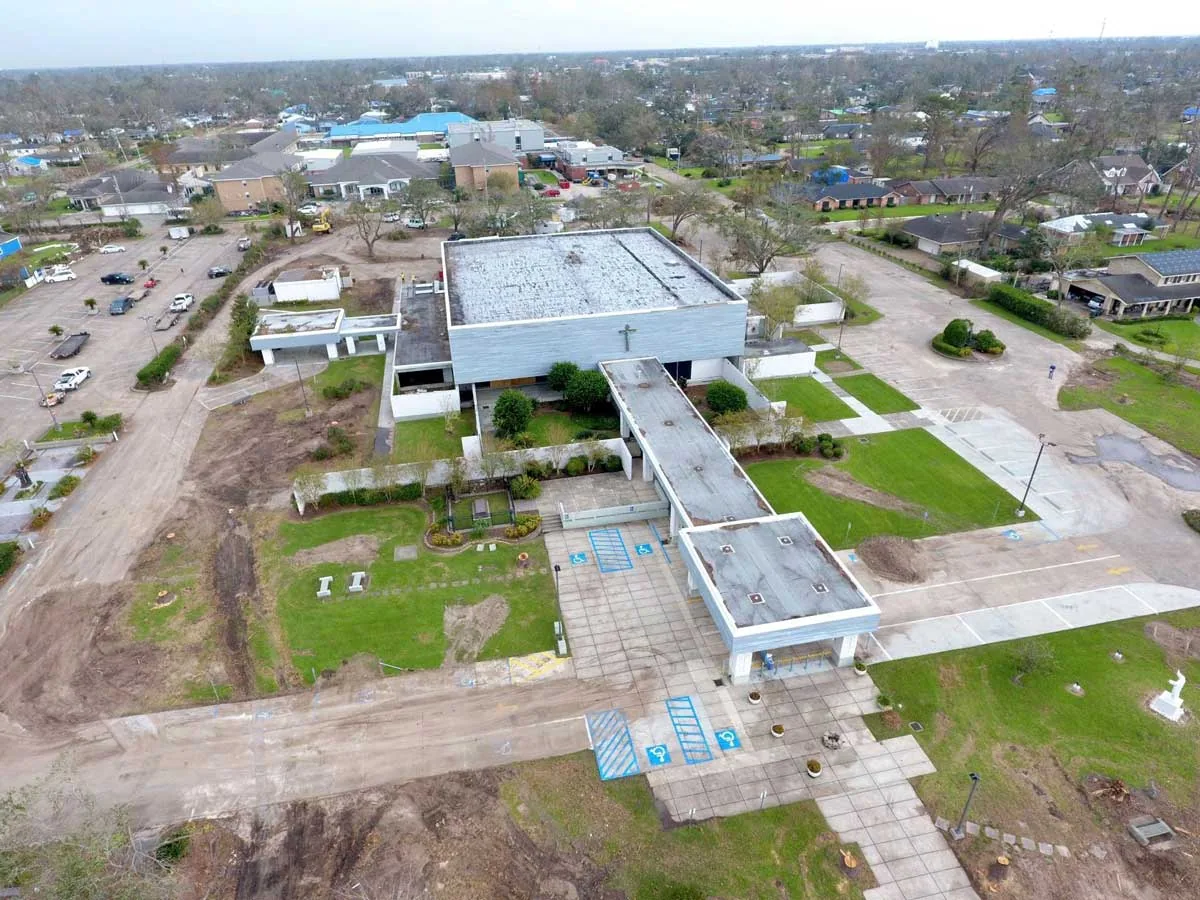
Hotels and event buildings can remain occupied during work when the owner approves separation, notice and the active roof boundary. We map rooms or spaces below each phase, record any protection requirements and coordinate with engineering staff before a unit is isolated. A Downtown Athens property can sit among storefronts and restaurants, so shared pedestrian movement may matter as much as the roof route. The manager sets access rules for that address and keeps guest communication under the property’s control.
Inspect above the guest complaint
A ceiling mark in a guest room or event space is a report to investigate, not proof of the nearest roof defect. We compare the room location with drains, seams, walls, skylights, curbs and prior patches, then document what is visible. If moisture may be under the membrane, we mark a sample area and explain how it affects the recommendation. A roof inspection gives operations a location-specific record before a repair is scheduled or a room is held out of service.
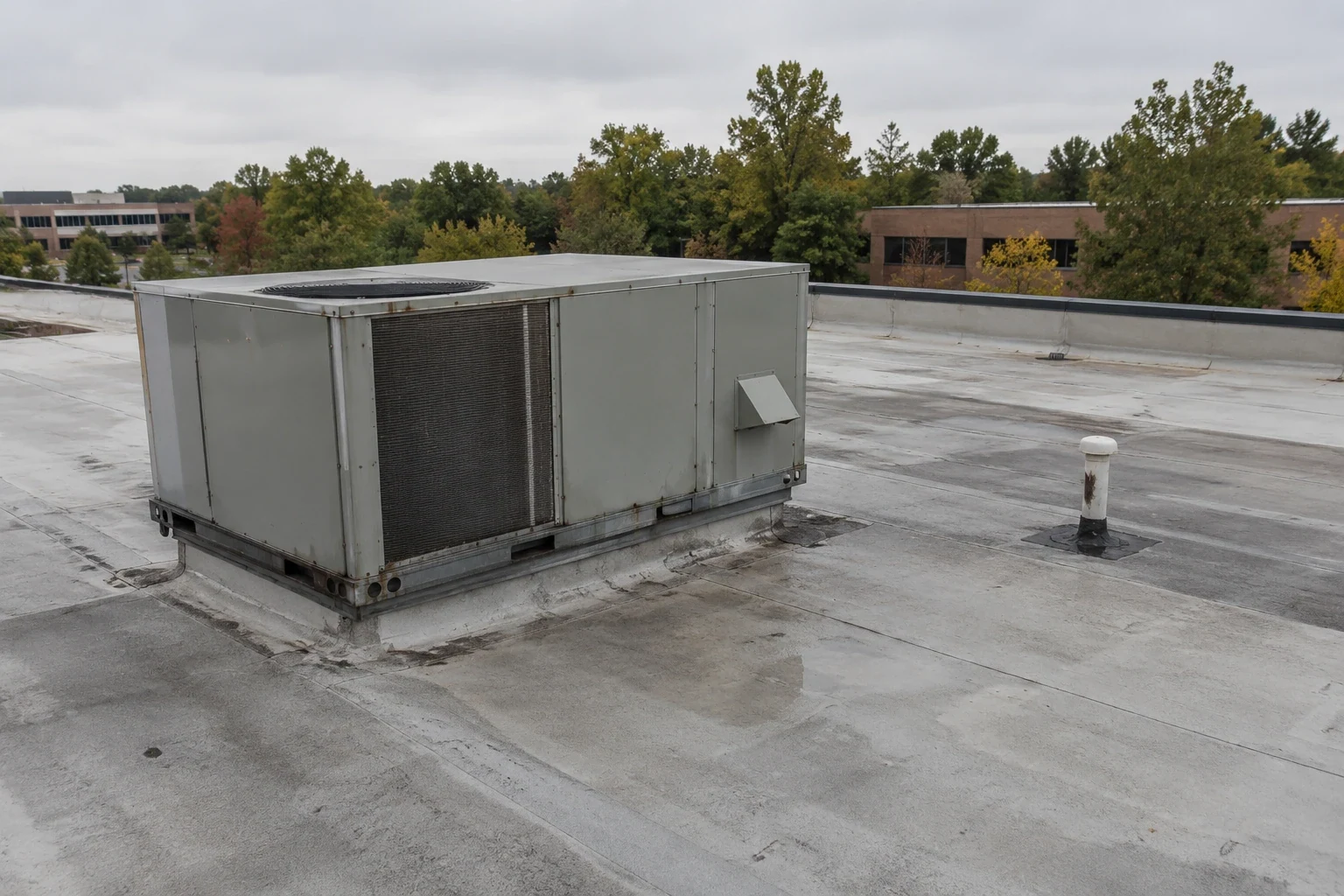
The survey also records rooftop equipment, exhaust, flashing and access constraints. Kitchen fans and HVAC units may need a separate service window, and the property engineer confirms whether a shutdown is acceptable. A test opening can help confirm hidden moisture or deck conditions that a surface walk cannot show. We distinguish the test result from an estimate assumption so the hotel can decide whether to protect, repair or replace that section without promising a room-release date before the roof condition is known.
Fit roof sections between reservations
The work sequence identifies which area begins first, how much can be opened and the tie-in required at the end of each shift. We coordinate material staging and noisy tasks with the property calendar, then mark who approves the next phase. When an event or high-occupancy period constrains access, the owner can schedule a smaller section or move the mobilization window. The crew records the daily boundary so the night manager knows what was protected and whether any route remains restricted.
Spring and summer bring active storm periods to Athens, with regional damaging-wind and hail exposure to account for during roof work. Before tear-off, we set a weather hold point and dry-in plan, including the amount of roof that can be protected during a shift. If conditions change, the crew stops at the planned boundary and informs the property contact. For a suitable assembly, coating restoration may be evaluated after inspection; broader deterioration may call for a replacement sequence.
For a group managing several lodging properties, a common closeout format makes it easier to see which roofs need follow-up and what budget window is approaching. Each property record still needs its own guest-area map, rooftop equipment list, access contact, repair history and weather stop point. We keep findings tied to the inspected building and distinguish an immediate leak response from a planned capital project. That separation gives operations staff a concise action list while asset managers can compare lifecycle priorities across their portfolio.
Coordinate exhaust, drains and rooftop service
Restaurant, laundry and mechanical equipment creates multiple roof transitions. We inspect fan curbs, service clearances, pipe supports, drains and membrane around each unit, then identify any detail needing repair before new roofing begins. The engineering contact marks units that cannot shut down during guest hours. When a crane pick is required, its timing and swing area are coordinated with parking, loading and scheduled functions before the delivery is released.
We confirm roof access and property check-in rules, document the affected section and use temporary protection where conditions permit. Permanent repair is then scoped from the inspection. This gives the general manager a clear update about what has been stabilized and which work needs a separate room, kitchen or event window.
Release the building with a clear closeout
At the end of a phase, we inspect tie-ins and flashings, verify drainage paths, remove debris and return the approved service route to operations. The closeout includes photos, roof zones completed and any open test or follow-up. The property manager can coordinate room release or event setup against that record instead of relying on a verbal status. If another roof section remains, the next access window is confirmed before materials are moved.
For several hotels, a multi-site schedule can coordinate survey visits and reporting, while every address keeps its own roof map and reservation calendar. A restaurant operator or management company may share a commercial campus but retain separate hours and approvals. We document the site contact and decision at each location so one property's access permission is never carried to another.
When the work is close to a ballroom, restaurant patio or guest drop-off, the event lead can flag setup and teardown times that do not appear on a room-occupancy calendar. We add those intervals to the route plan, then confirm the barrier and delivery position during the daily briefing. This keeps roofing logistics connected to the property’s actual event turnover rather than a broad assumption about quiet hours.
Schedule around the property calendar
Provide the address, occupancy calendar, event dates, service-door rules, roof plans and the engineering contact for equipment. We will map guest routes and staging, inspect the roof, and identify which phase can fit the next work window. If the building has an upcoming event, include its setup and teardown times so material and crane movement can be placed accurately.
Commercial Roofing Athens can prepare a guest-aware scope with weather holds, daily cleanup and documented turnover. Contact us to schedule a roof walk before room blocks or events are committed.
Frequently Asked Questions
Can roof work take place while hotel rooms are occupied?
Yes, if the manager approves access, noise periods, separation and the daily boundary. We map the occupied areas below each phase and confirm any service interruption with engineering.
How do events affect a roof schedule?
Setup, guest arrival and teardown can constrain lifts, deliveries or noise. We put those dates in the mobilization plan and confirm which roof section can proceed without crossing the event route.
Can kitchen or laundry equipment stay in service?
The property engineer identifies units and exhaust that cannot shut down. We inspect their curbs and clearances, then coordinate any isolation only during an approved window.
What does an emergency roof call include?
We confirm safe access, inspect and document the affected area, and apply temporary protection where conditions allow. Permanent repairs are defined after the roof condition is understood.
How do multiple properties share a roof plan?
A consistent schedule and report can help compare sites, but each property keeps its own roof findings, event calendar, access route and approval contact.