Commercial Roof Heat and UV Damage Repair in Athens, GA
Home / Roof Damage Repair / Commercial Roof Heat and UV Damage Repair
Commercial Roof Heat and UV Damage Repair
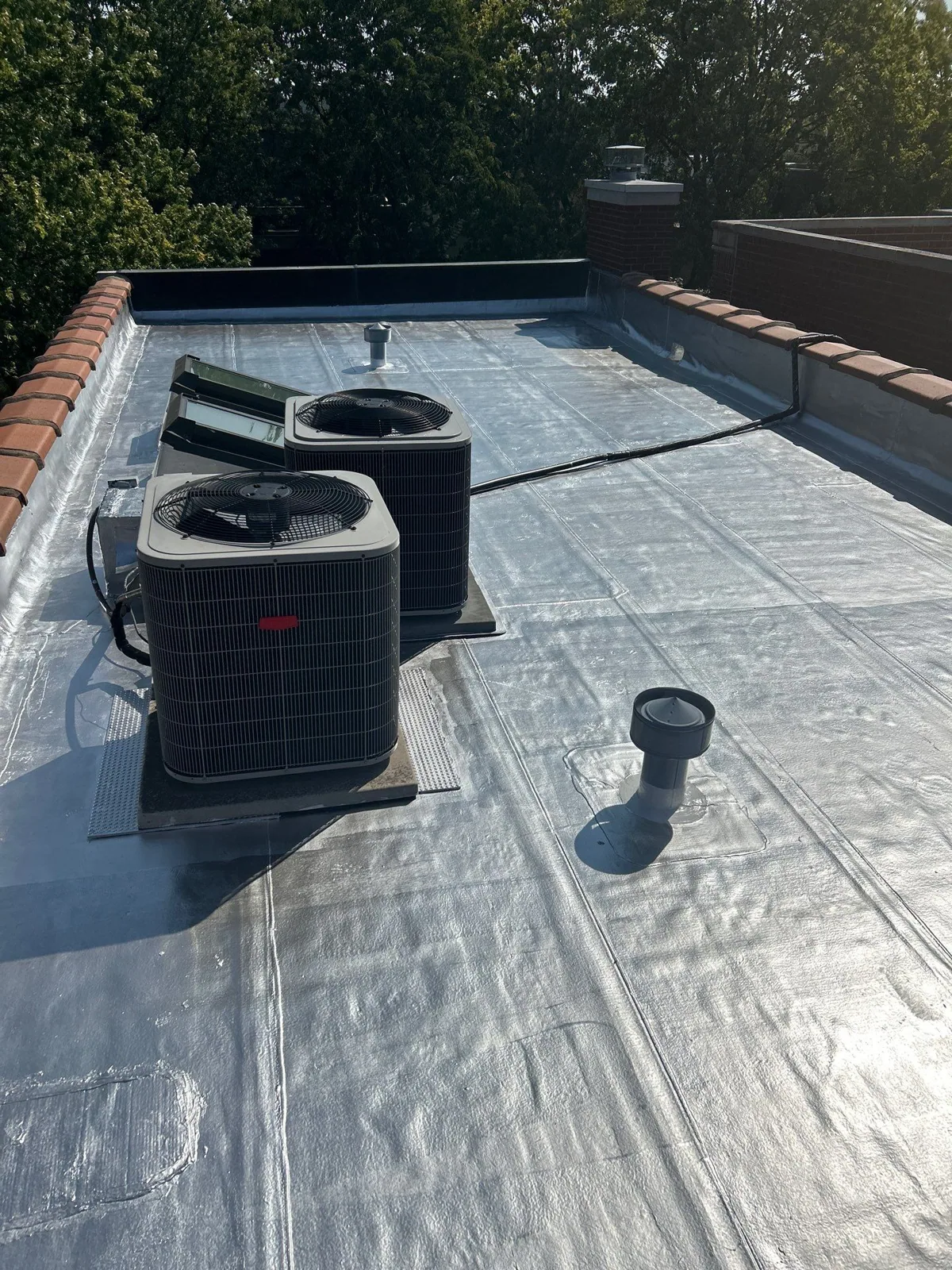
A chalked surface or faded color is a reason to inspect the roof, not enough by itself to call for coating or replacement. We look at membrane flexibility, seam condition, exposed reinforcement, flashing, fasteners and prior repairs, then map deterioration by area. Athens has hot, humid summers and frequent warm-season storms. A building along the Atlanta Highway corridor or a campus facility near the Normaltown commercial area needs its own roof survey, access plan and assembly record before a heat-related scope is selected.
Distinguish weathering from a system failure
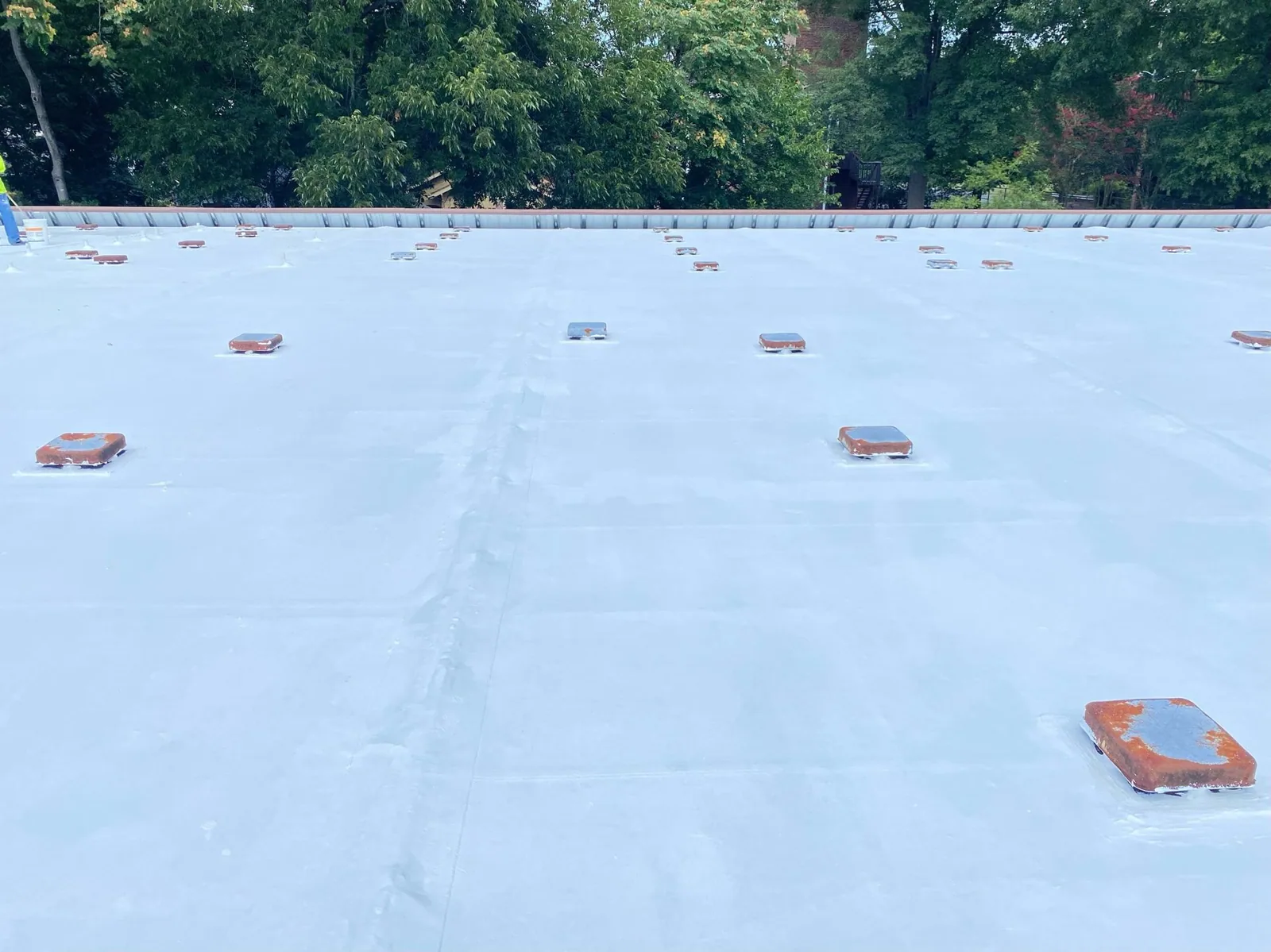
We inspect the exposed field membrane for brittleness, surface cracking, erosion, delamination, exposed reinforcement and areas where a prior coating has lost adhesion. At laps and transitions, we look for split seams, open flashing, loose termination and movement that may allow water entry. The photos show the condition and its extent rather than using color or age as a substitute for evaluation. A condition inspection records the roof zones and identifies any location needing closer testing.
Heat and sunlight affect exposed roof materials, but their visible effect varies with system, maintenance, drainage and prior repair history. We identify the membrane where possible and verify the appropriate repair product and preparation. If records do not identify the assembly, the report records what can be confirmed in the field and whether a test or technical review is needed. A chalky surface may be cleanable or suitable for restoration, while a cracked, saturated or poorly attached layer may need removal.
Surface wear is assessed in more than one direction. We check whether cracks follow seams or span the membrane field, whether exposed reinforcement is limited to a small area and whether earlier repairs remain bonded at their edges. The inspection also records areas shaded by equipment and locations that receive direct sun throughout the day. Those observations help separate a local installation or movement issue from broader exposure and keep a coating recommendation tied to the surface that will actually receive it.
Check below the weathered surface
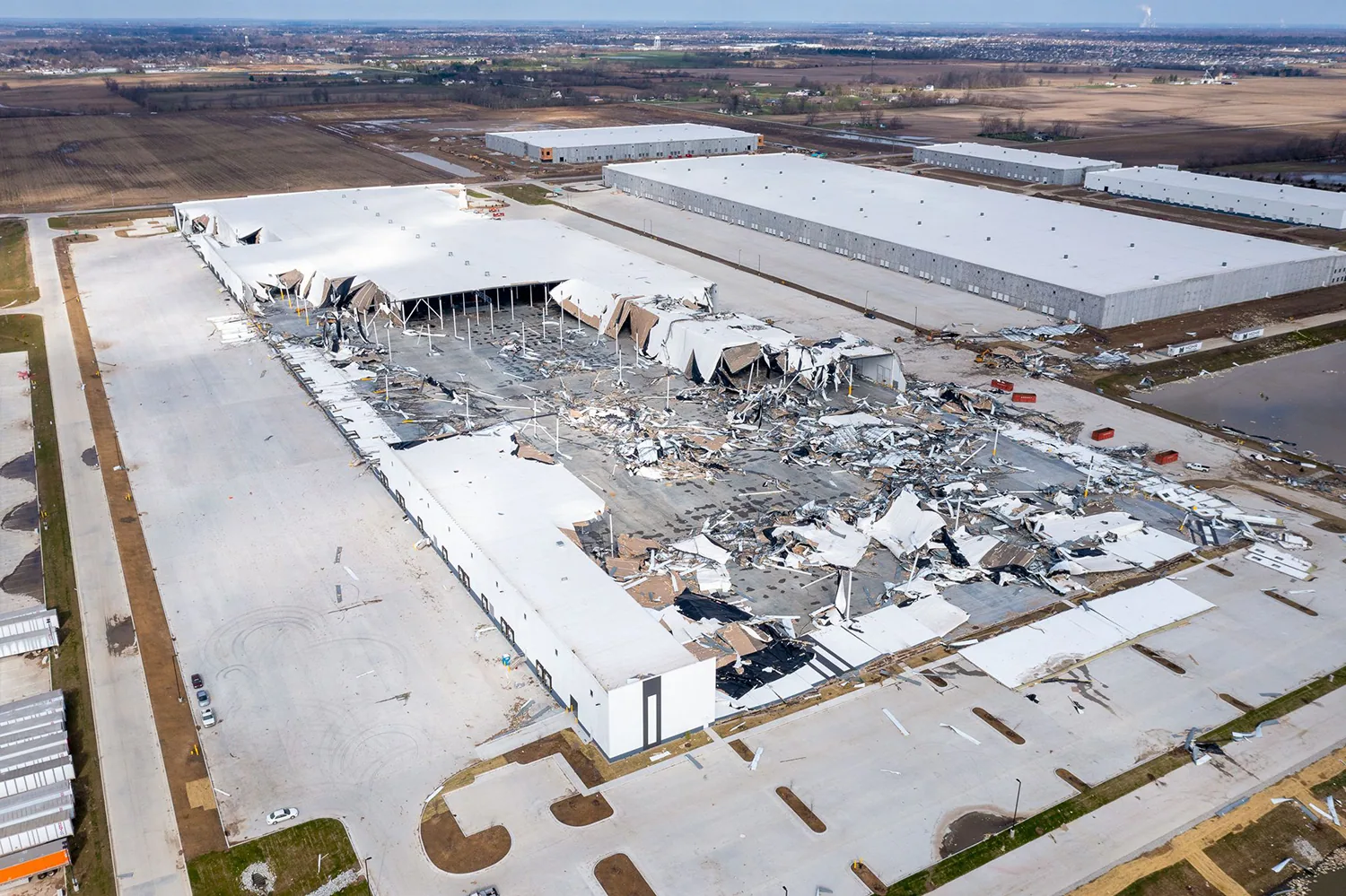
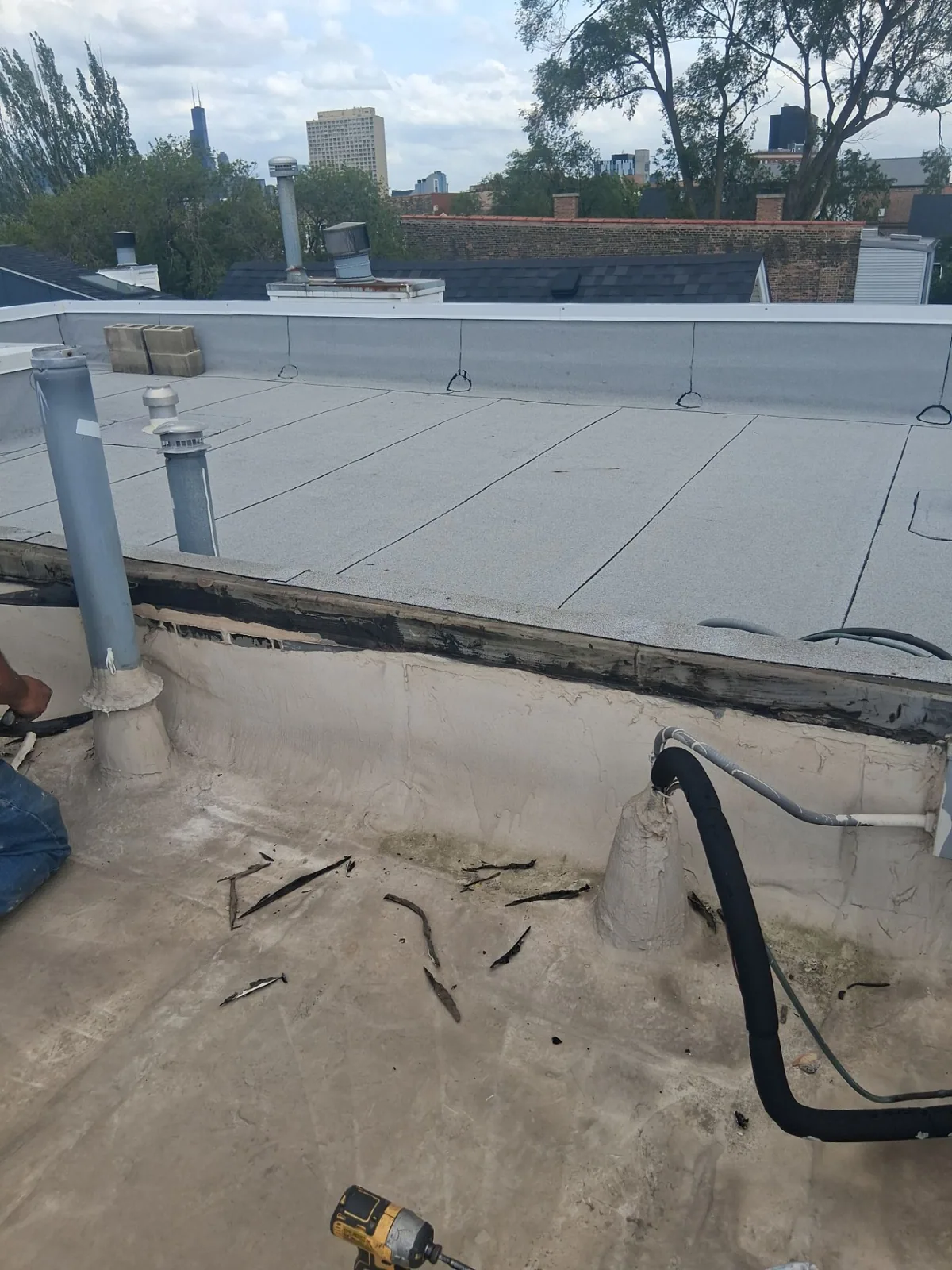
Surface wear does not show whether insulation and deck remain dry. We inspect around seams, drains, curbs, skylights and wall transitions for signs of water entry, then compare those observations with interior reports. If moisture may be concealed, we identify a sample area and explain which repair decision depends on the result. An infrared moisture survey can help target investigation, but a test opening confirms what lies below the membrane.
In Athens, frequent warm-season rain can reach an exposed weak point soon after a sunny period. We document the current roof condition and any temporary protection separately from assumptions about when deterioration began. If water remains at low points, a ponding-water review can identify a drainage issue that accelerates wear. Hail marks, if present, belong in their own impact assessment rather than being treated as ordinary sun exposure.
Compare repair, restoration and replacement
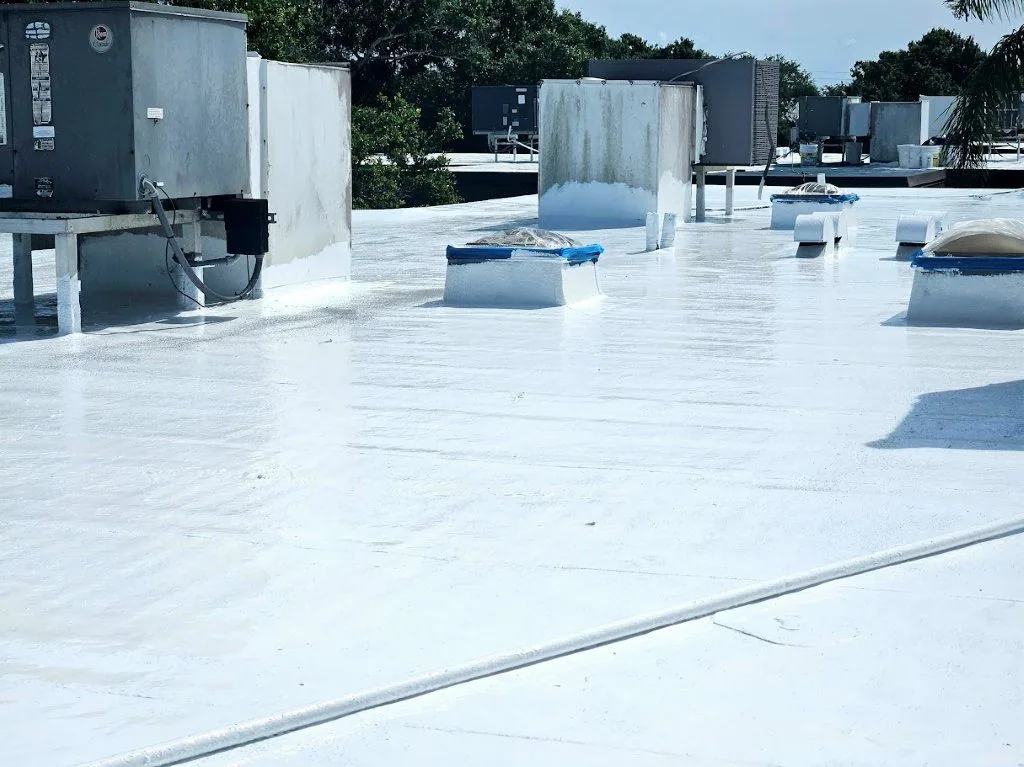
A localized surface split or failed flashing can often be repaired when the surrounding material remains sound. A roof coating is considered only when the assembly is dry enough, well attached and prepared to receive the selected product. We test adhesion, address open seams and confirm drainage before quoting a restoration. A coating evaluation is not a substitute for correcting wet insulation, weak attachment or a deck issue.
If deterioration extends through several roof sections, the proposal compares repair, recover and replacement against what inspection found. A recover review checks existing layers, moisture, height and transitions; a replacement plan addresses removal and new assembly where needed. The scope names tear-off, substrate repair, insulation, edge metal, equipment coordination and access as cost or schedule drivers. Any quantity that depends on a test stays separate until that result is known.
Before any restoration product is selected, we identify what the manufacturer requires for substrate preparation, test patches and curing conditions. Existing sealants or coatings may need removal where they are incompatible or poorly attached. We document the preparation boundary and any area that must dry before application, then explain how drains, curbs and roof edges will be protected during work. This makes the scope specific to the surface condition and avoids treating material coverage as a substitute for correcting a failed detail.
Choose conditions that support installation
Repair materials need the surface and ambient conditions required by their installation instructions. We schedule cleaning, drying, priming, welding or coating within a suitable window and define how much roof can be open at once. Athens’ warm-season storms make a dry-in point and forecast hold part of the work plan. Material delivery, equipment access and rooftop unit service are coordinated before the crew begins so a weather delay does not leave an unprotected edge.
At a facility on the Lexington Road corridor or near Piedmont Athens Regional, the property contact confirms deliveries, occupied areas and any restricted route. We check the completed seam, flashing and drainage path at the end of each phase, photograph the tie-in and remove debris. If field conditions change, the crew secures the agreed boundary and records what remains rather than applying a product over a wet or unprepared surface.
Track exposed areas through service
A maintenance record can show how quickly a weathered area changes and which repairs remain effective. We map the inspected zones, record photos and identify follow-up intervals agreed with the owner. Future technicians can then compare new cracking, seam movement or drainage issues with the prior visit. A small patch that remains stable may need observation, while a change in moisture or attachment can move the area into a repair scope.
We confirm the roof is safe to access, document the opening and use temporary protection when conditions permit. Permanent work follows an inspection of the affected assembly. Contact Commercial Roofing Athens to survey heat and UV wear, confirm whether the surface can be restored and map the next step for the specific building.
A recurring inspection can document whether exposed areas are stable or continuing to degrade. We compare the same roof zones over time, recording surface cracks, seam separation, loose coating, open penetrations and changes around rooftop service paths. If conditions worsen, targeted testing can determine whether damage is limited to the surface or extends into insulation and deck. The owner can then choose a maintenance response, restoration or replacement based on observable evidence. Keeping the photos with dates and repair records also helps separate gradual weathering from a new leak report.
Frequently Asked Questions
Does a faded roof need a coating?
Not automatically. We check adhesion, membrane condition, moisture, drainage and repairs before deciding whether the assembly is suitable for a coating.
Can UV wear cause a leak?
Surface degradation can contribute to cracking or exposed reinforcement, but a leak assessment must locate the actual opening or failed detail. We map the condition and test concealed layers when needed.
How do you know whether insulation is wet?
We review surface and interior evidence, then mark areas for sampling when moisture below the membrane could change the scope. Imaging can guide the test but does not replace confirmation.
Can a coating go over a previous coating?
Only after the existing coating is checked for adhesion, compatibility and moisture. Preparation and repair of open details come before any new layer is applied.
What changes the repair price?
Tear-off, wet insulation, deck condition, surface preparation, access, equipment lifts, edge details and work hours affect the scope. We list test-dependent quantities separately.