Commercial Ponding Water Roof Repair in Athens, GA
Home / Roof Damage Repair / Commercial Ponding Water Roof Repair
Commercial Ponding Water Roof Repair
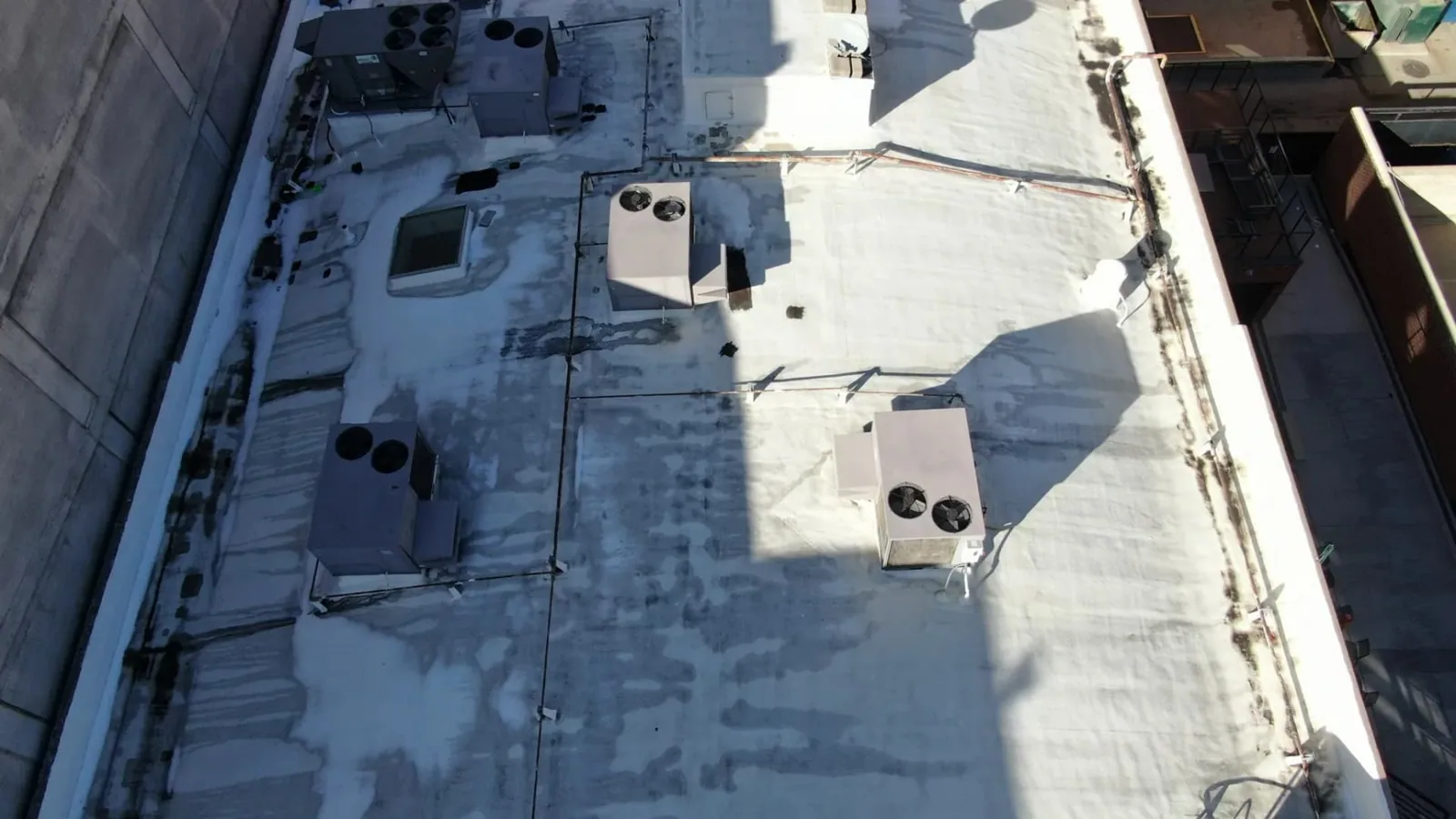
From roof access to the lowest pond, we follow the drainage route toward each outlet before setting repair limits. Water still standing after the roof should have drained calls for a level-by-level check, not sealant over the low point. Athens’ hot, humid summers bring frequent thunderstorms, so a roof near Downtown Athens or Athena Industrial Park can face repeated wetting between service visits. We document depth, extent and nearby details, then determine whether the issue is blocked drainage, deflection, slope or a combination.
Follow the water to its outlet
We begin at the low area and follow the roof plane toward drains, scuppers, gutters and downspouts. The inspection records debris, clogged strainers, damaged bowls, closed valves, insufficient openings and places where flashing interrupts flow. We check whether downspouts discharge correctly and whether water backs up at an outlet. The owner’s maintenance contact can share cleaning history or photos after rainfall, but we compare those records with the current roof before selecting a repair.
A drain that appears clear may still sit above a depressed membrane or connect to a restricted line. We check visible slope and look for signs that the deck or insulation has compressed, then identify where measurement or further evaluation is needed. A drainage repair review can address an outlet defect, while failed flashing may hold water at a wall or curb transition. The scope names the actual cause established in the field rather than treating every pond as a drain problem.
Separate surface water from assembly damage
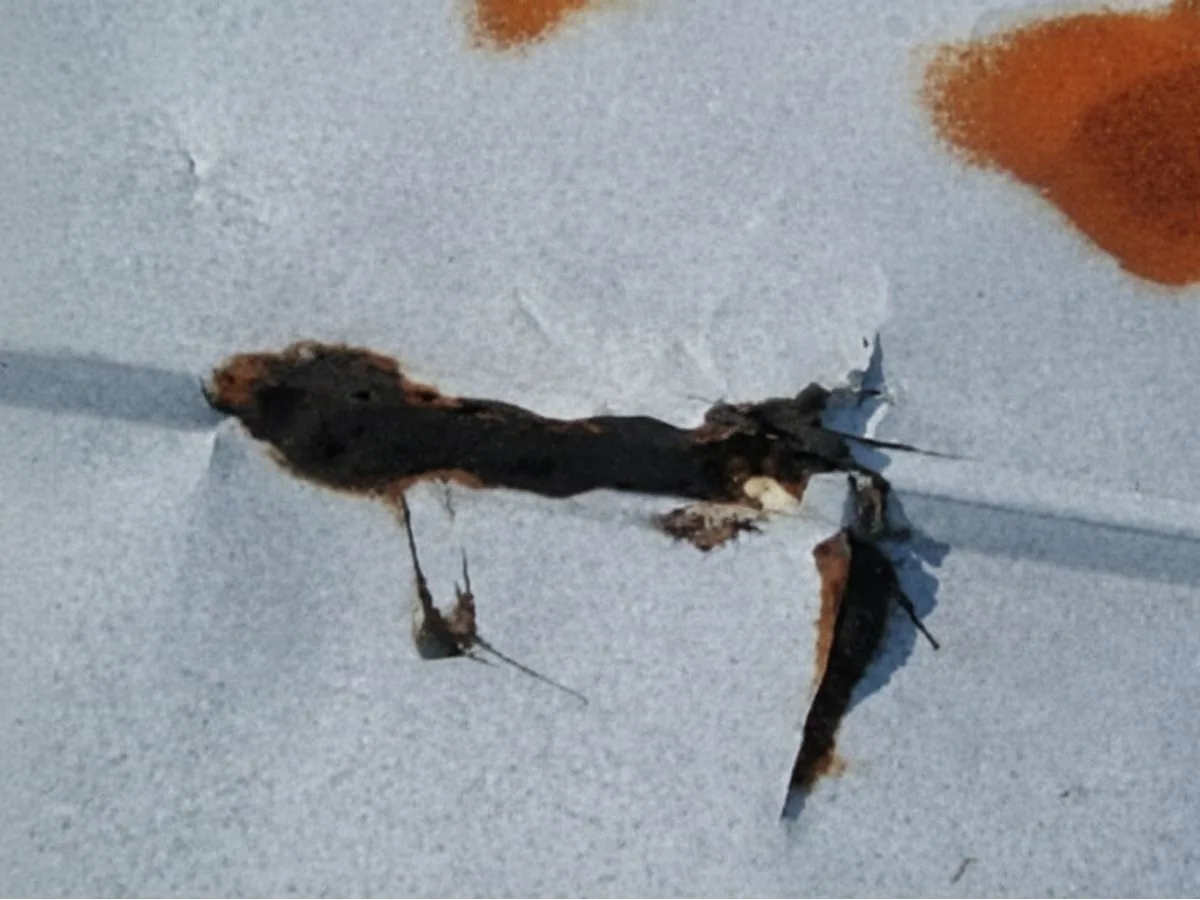
Standing water can accelerate deterioration at seams, patches, penetrations and coating transitions. We inspect the wet area and its boundary for open laps, blisters, soft membrane, surface erosion or trapped debris. The field record shows where water remains and how it relates to the roof system. If the membrane is damaged, we evaluate the detail after the surface is clean and dry enough to inspect. A condition survey can include photographs and a roof map for the owner’s maintenance file.
Moisture below the membrane is a separate question from visible ponding. We identify locations that may need sampling and explain whether a test would affect repair, recover or replacement. Infrared imaging can help target an investigation, but a moisture survey does not prove the roof assembly is dry or establish structural capacity. If deflection or load is a concern, we flag the need for qualified structural review rather than attributing it to membrane failure.
Find why the low area persists
A pond can result from blocked drainage, inadequate slope, a misplaced drain, settlement, deflected deck or added layers that altered the roof plane. We compare visible conditions with available plans and repair history, record pond boundaries and check whether the condition changes across roof sections. We do not infer a deck problem from water alone. Where a measurement or test is needed, the report names what should be confirmed and which design or scope decision depends on it.
Athens-Clarke County’s commercial properties include office, science, manufacturing, retail and flex uses, from downtown buildings to industrial campuses. That variety matters because equipment density, access and roof geometry differ by property. A low area beside rooftop units at a plant may require coordination with maintenance, while a commercial building near the Atlanta Highway corridor may need a different access window. We inspect the actual roof rather than applying one correction to a district or building type.
Correcting a low spot begins by checking elevations, drains, overflow paths and the condition of the roof layers around it. Adding material at the surface without understanding the water route can move the problem or add weight without restoring drainage. We identify whether the outlet is obstructed, the slope has changed, the substrate is deflected or the roof assembly needs a broader correction. If structural movement is suspected, the owner should have the appropriate design professional evaluate it before a repair is selected. The written scope records the intended water path after work.
Choose a correction that restores drainage
If debris or a restricted outlet is the cause, clearing and repairing the drain path may be enough. If water collects because of low slope or a persistent depression, the scope may need tapered insulation, drain relocation, a cricket or substrate correction. Those options depend on deck condition, existing layers, attachment, transitions and code requirements. A localized repair addresses a defined defect; widespread moisture or failing layers may warrant a broader replacement review.
We explain what must be removed, what remains and how the new drainage plane connects to curbs, walls and roof edges. If the assembly is dry and stable, a recover can be evaluated only after checking added height, deck capacity, drains and transition details. Applying material over an uncorrected low point can leave water trapped and hide deterioration. The proposal records those conditions and the follow-up checks needed to confirm the correction works after a rainfall.
Protect the work until water can move again
Repair timing depends on dry substrate conditions, weather and safe access. Athens receives frequent warm-season storms, so the crew sets a work boundary and drying period before applying adhesive, flashing or coating. The schedule identifies what can be opened in a shift, how the tie-in is secured and which drain must stay clear during the work. If rain approaches, the field lead follows the hold point and protects the repaired section before leaving the roof.
We first confirm safe access, locate the interior report and apply temporary protection where conditions permit. The permanent scope follows inspection and may require a separate drainage correction beyond stopping the immediate leak. The owner receives a status showing which area is stabilized, which outlet or low point remains under review and what additional test or design input could alter the work. If wind has also displaced edge metal or exposed insulation, we document those findings in a separate wind-damage inspection.
Schedule a ponding-water survey
Share the roof plan, drain locations, leak history and photographs taken after rain. We will map the standing water, inspect the roof plane and outlets, and identify whether cleaning, testing or structural review is needed. If the property is occupied, include roof access and equipment schedules so the survey can avoid interrupting operations.
Commercial Roofing Athens can prepare a drainage repair or replacement scope with clear boundaries, dry-in requirements and follow-up observations. Contact us to walk the roof and trace the water path before further work obscures the drainage evidence.
Related Roofing Work
Frequently Asked Questions
Does standing water always mean the roof needs replacement?
No. We first locate the drainage restriction or low area and inspect the membrane and underlying layers. A localized outlet repair may be enough, while widespread deterioration can change the recommendation.
How long should a commercial roof take to drain?
That depends on roof design, rainfall and the condition of the drainage system. We document the observed pond and compare it with slope, outlets and the owner’s roof records.
Can you add a drain to remove a pond?
A new or relocated drain may be an option after checking deck, structure, piping, slope and code requirements. We identify the design questions and coordinate with the owner’s qualified team.
Can coating solve a low spot?
A coating can restore a suitable surface after preparation, but it does not correct a persistent depression or blocked outlet. We trace the water path of ponding before selecting a coating scope.
What if water remains after the drain is cleared?
We check the roof plane, insulation and deck for conditions that keep water from moving. Measurement or testing may be needed before the repair method is set.