
Commercial Tornado Damage Roof Repair in Athens, GA
Home / Roof Damage Repair / Commercial Tornado Damage Roof Repair
Commercial Tornado Damage Roof Repair
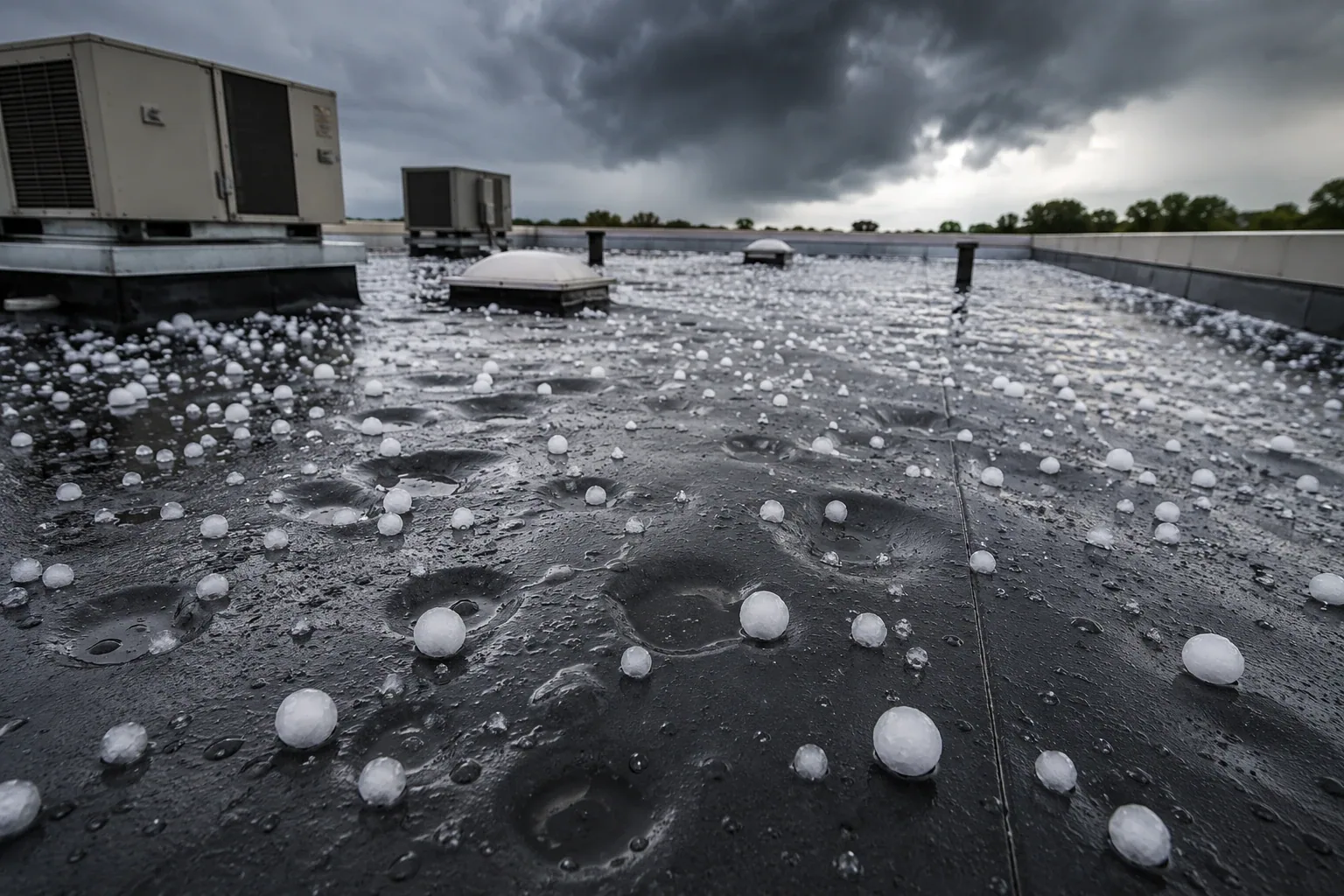
Once emergency officials release a property, the first roofing task is to identify which areas can be entered and which must remain closed. We confirm the address, coordinate the access route and document roof conditions by section before moving loose material or applying a cover. Most tornadoes in the north-central Georgia warning region occur from March through May, so a post-event roof walk checks edges, seams, flashings and rooftop equipment before repair is scoped. At a building near Prince Avenue or Commerce I-85 industrial corridor, we record observed damage at that site and distinguish it from nearby reports.
Coordinate clearance and access
Storm response, utility isolation, unstable walls, debris and damaged roof access can all change whether an inspection can proceed. We ask the owner or incident lead which areas have been released and whether fire, structural or environmental teams remain on site. The route to the roof is checked from the gate or entrance through the hatch, ladder and work zone. If an area is restricted, we mark it as uninspected and return after the responsible authority confirms safe entry.
For a building with broken glazing or exposed interior areas, the site contact identifies safe paths for staff and restoration teams. We inspect only from a safe route and wait for the incident lead to release areas with unstable debris or a compromised deck. A field assessment can begin with visible conditions and the owner’s event record, then expand as areas are released. Do not authorize permanent restoration until required building and structural reviews are complete.
The building owner keeps the clearance record with the emergency response log for later scope review.
Map openings and displaced components
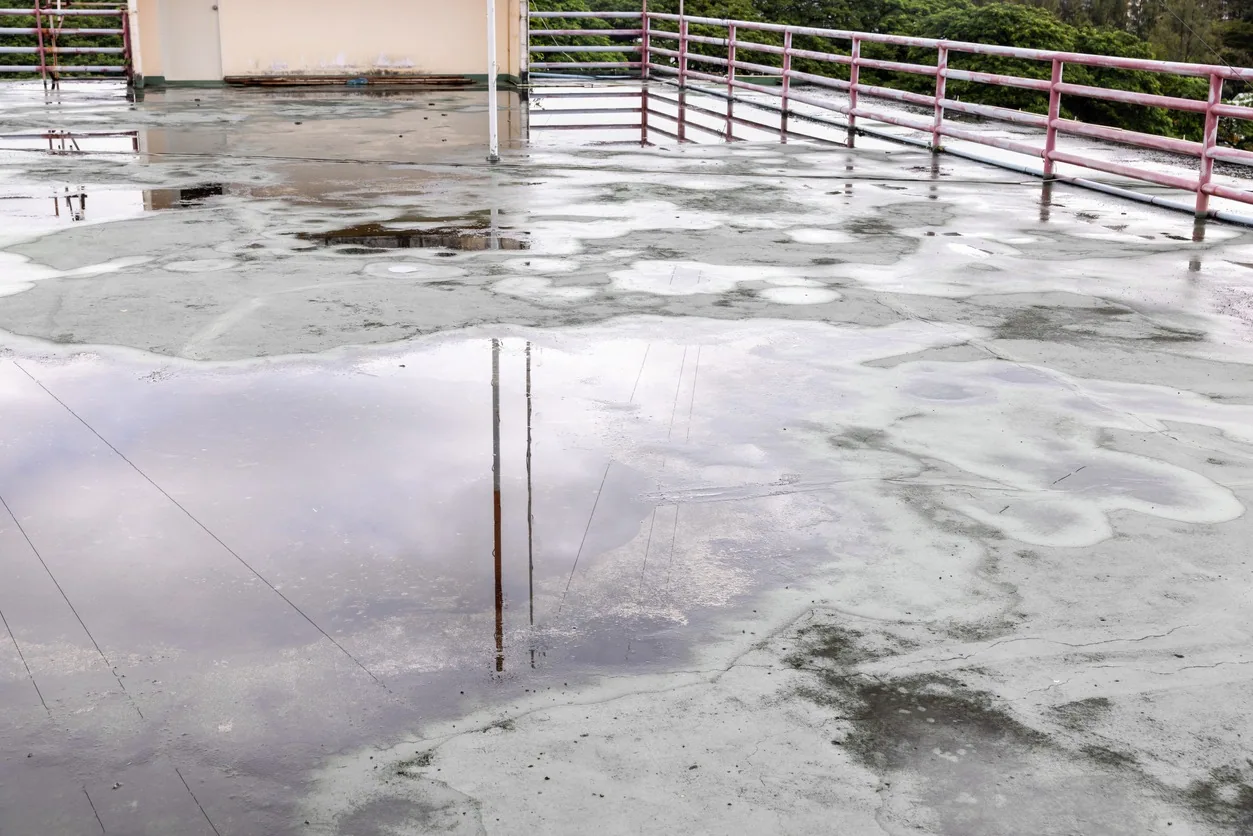
When access is safe, we photograph openings, missing or shifted metal, separated seams, damaged flashing, displaced equipment, punctures and debris impact. The roof plan identifies each observation by elevation and section. We record whether insulation, cover board, deck or supports are visible, damaged or not yet assessable. That map gives the restoration lead a reference for temporary protection and keeps a small opening distinct from a larger area where layers or structure need review.
Inside, the nearest ceiling mark guides the search; we compare it with roof seams and details and trace how water can travel across insulation or deck. A roof assessment records the likely path and identifies testing needed to confirm concealed damage. If a membrane opening is isolated, a puncture repair may be part of the permanent scope; a displaced transition can require a separate flashing evaluation.
Some damage is visible immediately, while other conditions appear only after loose components are removed or the membrane is opened. We keep each observation in sequence with its photograph and record whether the surface was cleaned, covered or altered before inspection. This is especially useful when restoration involves several contractors, because the owner can distinguish original impact from later work. If the event left debris across a broad area, we record the zone reviewed and the portion still inaccessible rather than describing an unverified roof-wide condition.
After emergency responders release the property, the first roof record should distinguish open holes, displaced metal, loose membrane, damaged rooftop equipment and debris. We avoid moving unstable components until the responsible safety contact confirms the work area. Temporary coverage is sized to the opening and attached without placing crews in an unsafe position; it is documented as stabilization, not the permanent assembly repair. A section map helps the owner coordinate structural, mechanical and roofing evaluations and prevents a temporary patch from disappearing inside a larger restoration scope.
Stabilize exposed areas after inspection
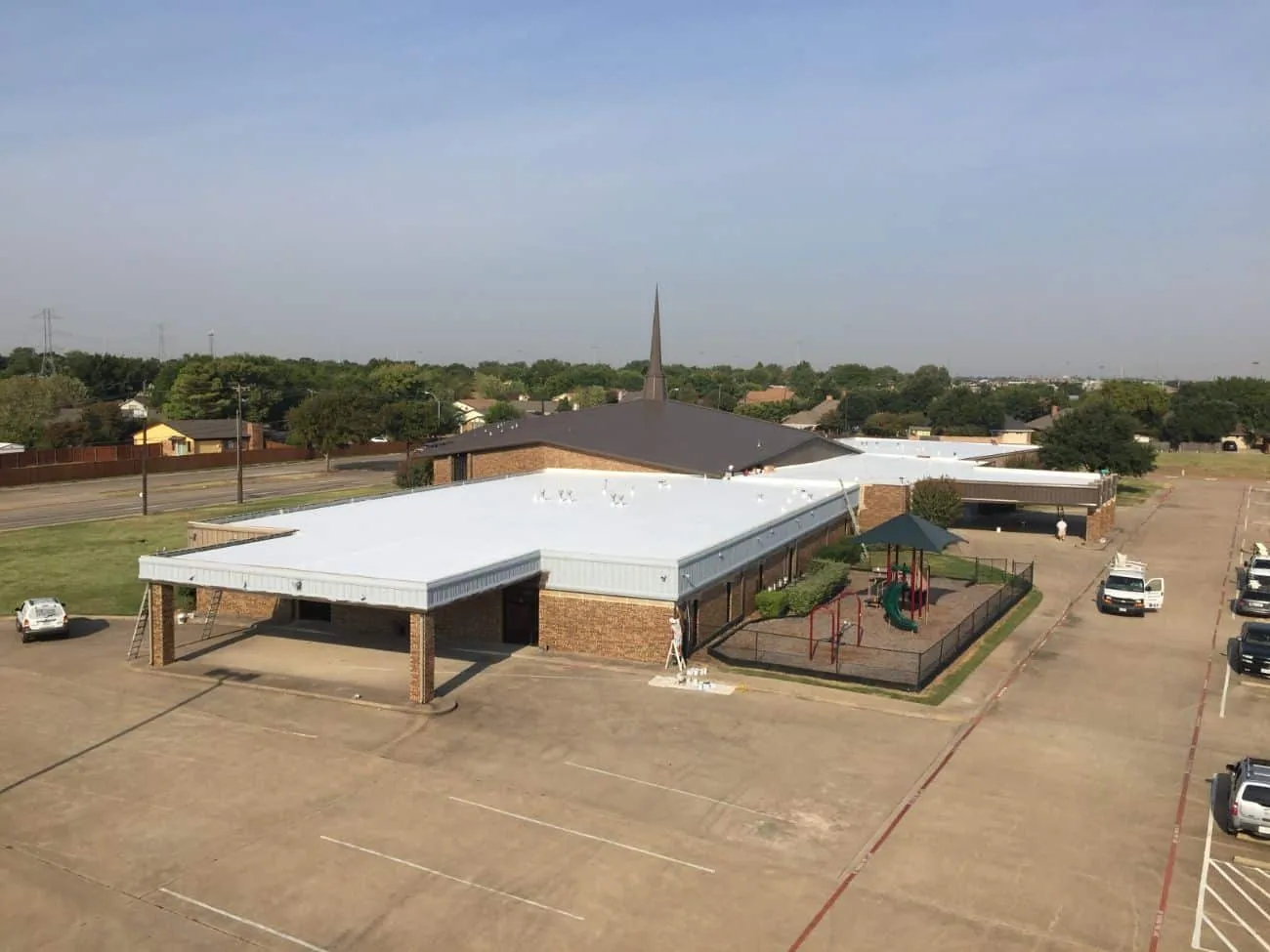
Temporary protection can limit additional water entry when the roof is safe to access and weather permits. We photograph the exposed area before stabilization, mark the limits of the temporary cover and tell the owner what remains open. This short-term step does not complete the restoration. The status record states which section can be protected and what follow-up inspection remains.
Athens has frequent warm-season thunderstorms, so an uncovered opening can face another rain window while permanent repair is being designed. We stage materials and agree on a dry-in point before work proceeds. If conditions worsen, the crew secures its active boundary and communicates what remains protected. An occupied property near Downtown Athens may need pedestrian routes separated from debris movement; industrial sites near Commerce industrial corridor have production and delivery routes to coordinate.
Separate roof repair from structural restoration
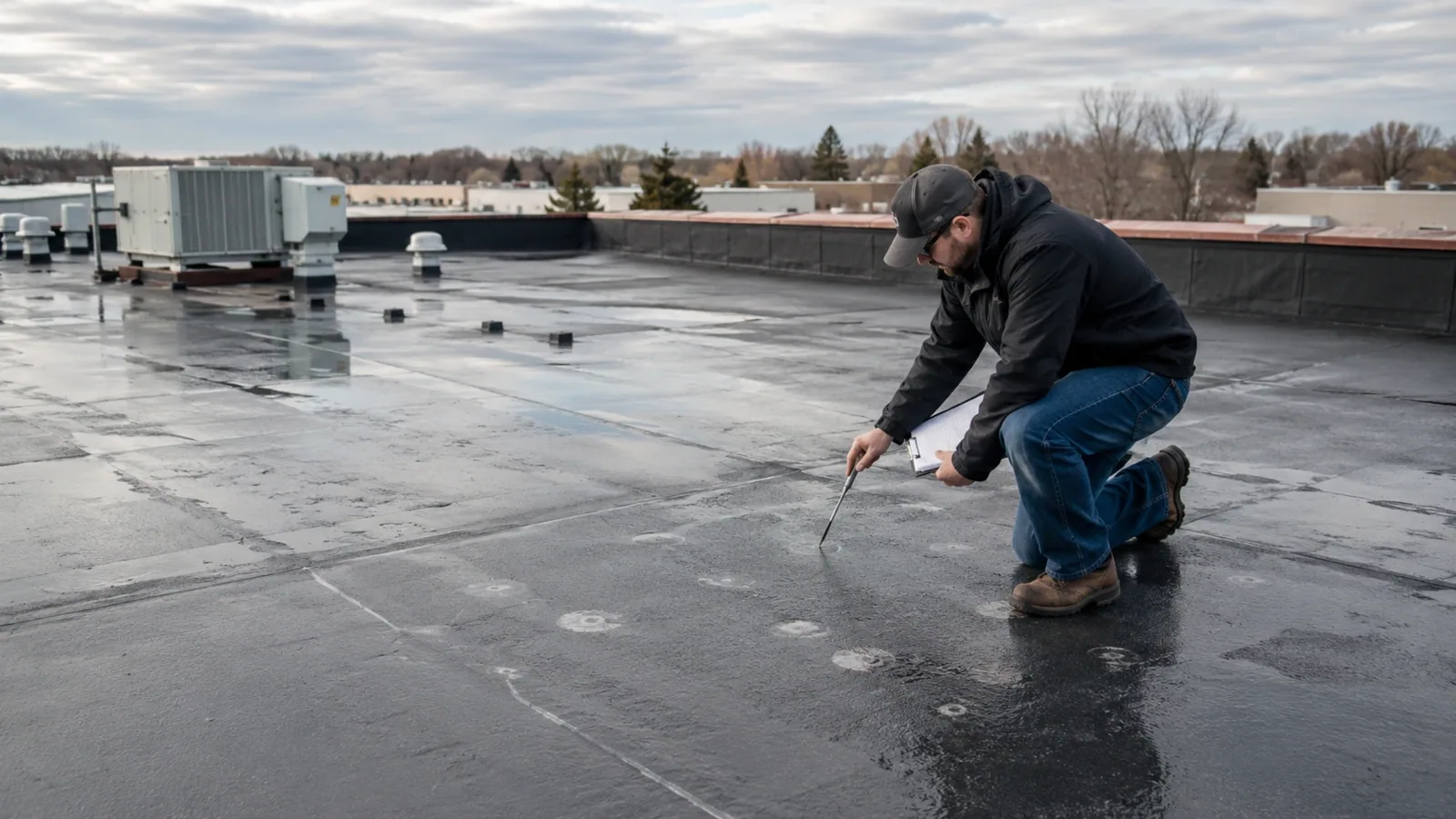
We inspect membrane, insulation, deck, edge metal and penetrations to define roofing work. Structural review is needed where framing or deck capacity may have been affected; roofing observation alone cannot clear a damaged structure. When the supporting assembly is sound and the damage is confined, repair can restore the roof. If multiple layers, attachment or large sections are compromised, we map the boundary and compare replacement. The scope separates confirmed roof quantities from engineering decisions and hidden conditions that require a test.
A repair plan may include membrane patches, flashing, edge details, drainage correction and temporary interior protection coordination. Broader damage can be handled through a replacement scope after the deck and assembly are ready. We identify material delivery, equipment lifts, occupied spaces and access limits that influence cost and schedule. The property contact approves the work sequence and any change after concealed damage becomes visible.
Track the return from emergency to permanent work
The response record contains event details provided by the owner, areas inspected, photographs, temporary measures, permanent repairs and locations still restricted. At completion, we check seams, perimeter, penetrations, drains and tie-ins, then remove roofing debris from the approved route. A closeout map helps facilities staff compare a later leak or repair with the post-event baseline rather than reconstructing the sequence from memory.
In Athens, public, university, health, retail and manufacturing uses may each need a different return-to-operations plan. The specific owner sets building access and reopening requirements, while the roofing scope records its finished boundary. If testing or engineering remains open, that status stays visible in the file. Contact Commercial Roofing Athens to schedule an inspection after clearance and establish which roof phases can safely proceed.
The owner can share this phased record with maintenance, restoration and procurement staff, each of whom may need a different next action.
The roof map can also identify the best point for a later test or follow-up visit.
Each released zone is added to the roof map with its access status and the inspection point that remains outstanding.
Related Roofing Work
- Commercial Roofing Along Prince Avenue, Athens, GA
- Commercial Roofing in Commerce’s I-85 Industrial Corridor
- Commercial Roof Inspection
- Commercial Roof Membrane Puncture Repair
- Commercial Roof Flashing Failure Repair
- Commercial Roofing in Downtown Athens, GA
- Commercial Roofing Across Commerce’s Industrial Corridor
- Commercial Roof Repair
Frequently Asked Questions
Can you inspect a roof while emergency crews remain on site?
Only in areas released for safe access. We coordinate with the incident lead and defer to fire, utility and structural authorities where hazards remain.
Does regional tornado risk mean this building was struck?
No. Regional risk helps explain why inspection planning matters, but property-specific damage requires an address-based field assessment and supporting observations.
What if the roof deck might be damaged?
We stop at the safety boundary, document visible conditions and coordinate a structural review. A roofing inspection does not determine whether compromised framing is safe.
Can temporary covering go on before the final estimate?
After the area is released and conditions permit, we can install temporary protection, map its boundary and record what remains exposed. Permanent quantities follow inspection and any required testing.
How are several damaged sections recorded?
We mark each roof zone on the map, photograph its condition and separate temporary protection, repair work and unresolved testing by location.